











































A War Mismanaged, A Nation Bleeding — And a Northern Elite That Must Answer
Let’s stop pretending this is just “another security challenge.” It isn’t. It is a sustained national humiliation.
By Olumide Fashina
Let’s stop pretending this is just “another security challenge.” It isn’t. It is a sustained national humiliation.
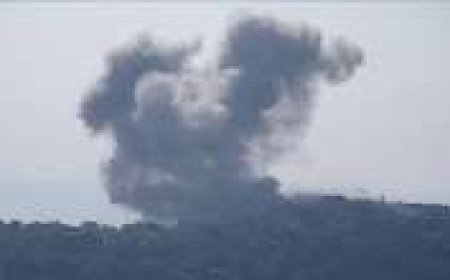
Nigeria is not merely under attack; it is being outmaneuvered, outthought, and—painfully—outfought within its own territory. The repeated killing of senior military commanders by ISWAP is not only tragic, it is deeply disgraceful. Armies do not routinely lose their leadership in active theatres unless something is fundamentally broken—intelligence, coordination, command. In this case, it appears to be all three.
The pattern is no longer arguable. Insurgents strike first. They choose the time, the place, and the targets. They hit military formations with confidence—often within or around fortified positions—and withdraw before any meaningful resistance is mounted. That is not guerrilla luck. That is operational superiority. And it should alarm anyone paying attention.
What follows is even more disturbing in its predictability: condolences, vague assurances, recycled promises of “decisive action.” Enough. A country cannot mourn its way out of a security collapse. At some point, accountability must replace sympathy.
The truth is blunt: the current security architecture is failing. When bases are repeatedly breached, when commanders are exposed, when troops are left reacting instead of anticipating, it points to either intelligence compromise or systemic negligence—possibly both. The notion that insurgents are tracking troop movements—through informants, compromised systems, or drone surveillance—is no longer speculative. It is the only explanation consistent with the evidence.
And where, exactly, is the technological response? In an era where even non-state actors deploy drones and real-time surveillance, Nigeria’s countermeasures feel embarrassingly outdated. Where is persistent aerial surveillance? Where are drone countermeasures, signal interception systems, real-time intelligence platforms? You cannot fight a 21st-century insurgency with a 20th-century mindset and expect anything other than failure.
Then comes leadership. The hard truth: when outcomes are consistently poor, leadership must change. Not ceremonially. Not quietly. Decisively. Commanders who preside over repeated losses without visible strategic adaptation cannot remain in place out of habit or sentiment. War is not a place for comfort. It is a place for results.
But the most uncomfortable truth lies beyond the battlefield.
For over two decades, a powerful class of northern politicians, traditional rulers, billionaires, and influence brokers has watched this crisis metastasize on their own soil. Too many issued statements instead of solutions. Too many managed optics instead of outcomes. Too many treated a burning region like a distant inconvenience—until the fire became impossible to ignore.
Let’s be clear: silence in the face of collapse is complicity.
A region does not bleed this long without elite failure. Where was the sustained pressure for reform? Where was the unified demand for modern security infrastructure? Where was the serious investment—public and private—in intelligence, education, deradicalization, and community resilience? Influence in Nigeria is not weak. It has simply been selectively applied.
If the North has produced some of the most powerful figures in Nigeria’s political and economic history, then it must also accept a share of responsibility for the prolonged decay of its security environment. Leadership is not defined by titles—it is measured by outcomes. And the outcomes, by any honest standard, are catastrophic.
Yet Nigeria still behaves as though it must fight this war alone. This is a transnational threat with global implications. The capabilities exist—across the United States, Europe, Israel, China, Russia—but Nigeria’s engagement remains hesitant, fragmented, and far from strategic. Pride does not win wars. Capability does.
What is unfolding is not just a military failure—it is a slow erosion of state credibility. Investors are watching. Communities are fracturing. Trust is thinning. And every fallen soldier is a brutal reminder that the cost of inertia is paid in blood.
Nigeria does not lack brave men and women. It lacks a system that consistently protects and empowers them.
Until that changes—until intelligence is rebuilt, technology is embraced, leadership is held accountable, and elites are forced beyond rhetoric into measurable action—this cycle will persist. More attacks. More funerals. More hollow assurances.
And eventually, something even more dangerous: the normalization of failure.
That is the real threat. Not just that Nigeria is bleeding—but that those with the power to stop it have grown dangerously comfortable watching it bleed.
Olumide Fashina is a Lagos-based public affairs commentator writing on power, institutions, and legitimacy in Nigeria.
What's Your Reaction?