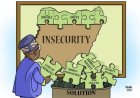










































Tension As US Issues Fresh Security Alert In Nigeria
-The US Department of State has asked non-emergency US government employees and their family members to leave the US Embassy in Abuja, citing deteriorating tense security situation across the country.
...classifies 23;states as high risk areas, restricts embassy operations
The PUNCH ---------The US Department of State has asked non-emergency US government employees and their family members to leave the US Embassy in Abuja, citing deteriorating tense security situation across the country.
The Department made this known in an
updated travel advisory issued on Wednesday, urging Americans wishing to travel to Nigeria, from April 8, 2026, should reconsider travel to the country due to crime, terrorism, kidnapping, and civil unrest.
The advisory classified the overall travel advisory for Nigeria as “Level 3: Reconsider Travel,” while some states are at “Level 4: Do Not Travel.”
It also added Plateau, Jigawa, Kwara, Niger, and Taraba States among the 23 “Do Not Travel” States or where travel is strongly discouraged.
Earlier, “On April 8, 2026, the Department of State authorized non-emergency U.S. government employees and U.S. government employee family members to leave U.S. Embassy Abuja due to the deteriorating security situation.
“Reconsider travel to Nigeria due to crime, terrorism, unrest, kidnapping, and inconsistent availability of health care services. Some areas have increased risk.”
Level 4 states that U.S. citizens are urged to avoid include, in the North, Borno, Jigawa, Kogi, Kwara, Niger, Plateau, Taraba, Yobe, and northern Adamawa states, due to terrorism, crime, and kidnapping.
Others listed included, Bauchi, Gombe, Kaduna, Kano, Katsina, Sokoto, and Zamfara states, citing unrest, crime, and kidnapping.
“The security situation in these states is unstable and uncertain due to civil unrest. Widespread violence between communities and armed crime, including kidnapping and roadside banditry.
“Security operations to counter these threats may occur without warning,” the advisory said.
In Southern and Southeastern Nigeria, the department urged citizens to avoid Abia, Anambra, Bayelsa, Delta, Enugu, Imo, and Rivers states (excluding Port Harcourt) due to crime, kidnapping, and unrest.
“Crime is widespread in Southern Nigeria. There is a high risk of kidnapping, violent protests, and armed gangs,” the advisory added.
The advisory noted that violent crimes, including armed robbery, carjacking, and kidnapping for ransom, are widespread and U.S. citizens are perceived as wealthy and are frequent targets.
It said terrorist attacks remain a threat across the country, including at markets, shopping centers, hotels, places of worship, and public gatherings.
It furthermore, described health services in Nigeria as limited and inconsistent, with medical facilities generally not meeting U.S. or European standards.
The State Department, however, urged U.S. citizens considering travel to Nigeria to enroll in the Smart Traveler Enrollment Programme for important updates, exercise caution while traveling, avoid demonstrations and large gatherings, and establish personal safety and “proof of life” protocols.
What's Your Reaction?