


































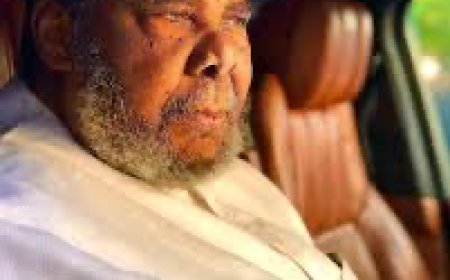










Professor Benson Omenihu Oluikpe
Professor Benson Omenihu Oluikpe’s ninetieth birthday offers a rare occasion to celebrate the confluence of intellectual grandeur, exemplary discipline and enduring human warmth.
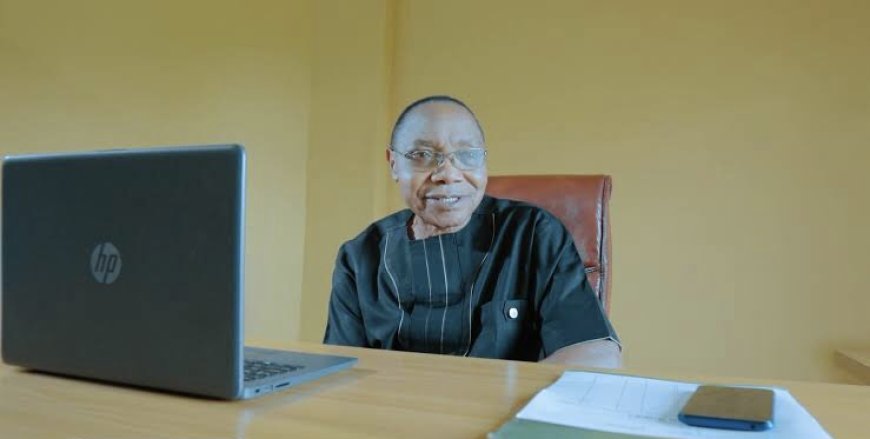
Prof Chris Agbedo
Professor Benson Omenihu Oluikpe’s ninetieth birthday offers a rare occasion to celebrate the confluence of intellectual grandeur, exemplary discipline and enduring human warmth. His life is an eloquent chronicle of scholarship pursued with rigour, knowledge accumulated with purpose, and service rendered with distinction. Within the distinguished architecture of his personality, linguistic erudition coexists with personal austerity, professorial authority with unassuming humanity, and the wisdom of nine decades with the remarkable agility of a man whose years seem reluctant to dictate the rhythm of his living. For me, this milestone resonates far beyond the ceremonial celebration of longevity. It is an occasion to honour my teacher, my mentor and my bosom friend; a man whose intellectual stature commands admiration, whose disciplined lifestyle inspires respect, and whose enduring friendship has enriched my life in ways no catalogue of academic achievements could adequately capture.
As he celebrates his ninetieth birthday, we salute not merely the nonagenarian but the scholar; not merely the professor but the pedagogue; not merely the academic administrator but the mentor; and, beyond all these distinguished identities, the bosom friend whose humanity lends warmth to his formidable intellect. For me, this celebration carries a particularly intimate significance. I write not as a distant admirer peering through the windows of another man’s accomplishments, but as a former student, a beneficiary of his academic tutelage, a mentee shaped by his intellectual presence, and a friend privileged to know the man behind the professorial robes.
*The Making of a Linguistic Colossus*
Born on 22 October 1936 in Isiala Ngwa, in present-day Abia State, Professor Oluikpe’s life story is a compelling testament to the transformative power of education, the discipline of purposeful living and the enduring rewards of intellectual perseverance. His educational odyssey, extending from Adventist schools in southeastern Nigeria to distinguished institutions of higher learning in the United States, was no casual excursion through the corridors of knowledge. It was the painstaking construction of an intellectual edifice whose foundations would support decades of scholarship, teaching and service.
His academic formation at the Adventist College of West Africa, Andrews University, the University of Michigan and Howard University equipped him for the demanding enterprise of linguistic scholarship. In 1973, he joined the University of Nigeria, Nsukka, as a lecturer in English Linguistics. Through the years, he ascended the academic ladder, attaining the rank of professor in 1982. That ascent was not simply a progression through the hierarchy of university appointments; it was the public recognition of a mind committed to the rigorous interrogation of language and the patient cultivation of knowledge.
Yet, academic rank, impressive as it may be, tells only a fraction of the story. The true measure of a scholar lies in what the mind discovers, what the pen preserves, what the classroom transmits and what the character exemplifies. In all these dimensions, Professor Oluikpe has left a distinguished imprint.
The Linguist and His Living Library
In Professor Oluikpe, one encounters a rich reservoir of knowledge, a veritable intellectual treasury in which linguistic theory, scholarly method, pedagogical experience and the wisdom of long engagement with ideas converge. To describe him as knowledgeable is to offer an understatement; to call him an intellectual giant is to approach, though perhaps not exhaust, the magnitude of his scholarly stature.
His publications testify to the breadth and practical orientation of his intellectual enterprise. Thesis Writing: Its Form and Style, 1979, addressed one of the enduring challenges of higher education: the conversion of research into disciplined, coherent and academically defensible writing. His Igbo Transformational Syntax (1981) and English in Igboland: A Contrastive Study of English and Igbo Syntax, 1981, engaged with the structural dimensions of language in a multilingual environment, bringing the relationship between English and Igbo into systematic scholarly focus. These works, among others, represent contributions to a tradition of linguistic inquiry in which language is not merely spoken, heard and forgotten, but examined, analysed and documented.
There is something profoundly admirable about a scholar who can move from the intricacies of syntactic structure to the practical demands of thesis writing, from the abstract architecture of language to the concrete needs of the student. Such intellectual versatility is not an accidental endowment. It is cultivated through reading, reflection, discipline and the sustained willingness to submit one’s assumptions to the exacting scrutiny of evidence.
Professor Oluikpe’s mind is, in this sense, a well-stocked library whose shelves have been assembled over decades of intellectual labour. Still, a library becomes truly consequential when its contents are made available to others. His career as a teacher and academic leader ensured that knowledge was not hoarded as private treasure but deployed in the service of learning.
My Teacher, My Mentor, My Friend
For me, however, the story of Professor Oluikpe transcends bibliographical records and institutional histories. It enters the more intimate territory of personal gratitude, where memory becomes testimony and admiration acquires the unmistakable accent of lived experience.
During my undergraduate years at the University of Nigeria, Nsukka, Professor Oluikpe served as Head of Department. I encountered him, therefore, not merely as a name on the academic register or an author whose works occupied library shelves, but as a teacher and departmental head whose presence formed part of the intellectual environment in which my own scholarly consciousness was taking shape.
The relationship that began within the formal architecture of university education has endured beyond the boundaries of studenthood. Teacher became mentor; mentor became bosom friend. And in that evolution lies one of the most beautiful dimensions of academic life: the possibility that an encounter initially defined by institutional hierarchy may mature into a relationship sustained by mutual regard, intellectual affinity and personal affection.
A teacher may open the door to knowledge, but a mentor helps the student recognise the possibilities concealed within his own intellectual capacities. A friend, in turn, brings the relationship into the larger human sphere, where affection enriches respect and familiarity deepens admiration. To have known Professor Oluikpe in these intersecting capacities is to appreciate the man in dimensions that no curriculum vitae, however comprehensive, can adequately capture.
I celebrate, therefore, not only the scholar whose academic achievements command respect, but also the teacher whose place in my intellectual biography remains indelible, the mentor whose significance transcends the lecture hall, and the friend whose companionship has become a treasured part of life’s journey.
Some debts cannot be discharged by words. They can only be acknowledged through gratitude, fidelity to the values one has learnt, and the effort to pass the light forward. This tribute is my modest acknowledgement of such a debt.
The Departmental Patriarch and Academic Statesman
Professor Oluikpe’s contribution to the University of Nigeria was not confined to the lecture room. His service as Head of the Department of Linguistics and Nigerian Languages, Coordinator of Use of English, Associate Dean and Dean of the Faculty of Arts placed him at the intersection of intellectual leadership and institutional responsibility.
To head a department is to assume stewardship over people, ideas, standards and the future of a discipline. To lead a faculty is to negotiate the competing demands of academic excellence, administration, collegiality and institutional growth. Such responsibilities require more than erudition. They demand judgement, composure, firmness of purpose and the ability to uphold standards amid the pressures of institutional life.
His participation in national English-language curriculum development and syllabus-related work further connected his scholarship to the broader educational enterprise. These engagements remind us that the university does not exist merely to confer degrees. It exists to cultivate minds, advance knowledge and contribute to the intellectual resources upon which a society’s development depends.
In 2003, Professor Oluikpe retired from active service. His departure from regular university duties, however, did not signify the retirement of his intellectual stature or the cancellation of his scholarly contributions. Shortly afterwards, the University of Nigeria conferred upon him the title of Emeritus Professor—an honour that recognised his place within the institution’s enduring academic community.
Emeritus status is a particularly fitting designation for a scholar whose intellectual identity cannot be confined to the timetable of active service. The classroom may release the professor from routine obligations, but it cannot revoke the knowledge accumulated, the scholarship produced or the influence transmitted across generations.
The man may retire from office; the office cannot retire his legacy. The university may bid farewell to his daily presence, but its intellectual history continues to bear the imprint of his service.
The Discipline of the Man
If Professor Oluikpe’s scholarship commands admiration, his personal discipline inspires a different, equally profound respect. He is a man of rigorous self-discipline, one whose habits reflect a deliberate commitment to the principles by which he chooses to live. In an age that often celebrates excess, expediency and the pursuit of immediate gratification, such constancy is both remarkable and instructive.
His vegetarianism is no passing experiment or fashionable declaration. It is a way of life embraced with a conviction that deserves recognition. To describe him as a vegetarian to the core is to acknowledge the consistency with which he has made this personal choice part of his everyday existence. His example reminds us that discipline is not merely an abstract virtue to be praised in speeches; it is a practice embodied in repeated decisions, often made quietly and without applause.
There is a revealing consonance between intellectual discipline and disciplined living. The scholar who subjects arguments to scrutiny must also cultivate the patience to resist intellectual carelessness. The teacher who demands rigour from students must appreciate the value of consistency. And the individual who lives by deliberate principles demonstrates that conviction acquires substance through practice.
Professor Oluikpe’s self-discipline is, in this regard, part of the larger architecture of his character. It speaks of a man who has cultivated habits, sustained commitments and maintained a distinctive personal regimen across the decades. Such constancy is worthy of celebration, not because every individual must imitate his choices, but because the integrity of a life is often revealed in the fidelity with which its owner lives by considered convictions.
Ninety, Yet Agile: The Defiance of the Years
And then there is the phenomenon that invites affectionate wonder: the ageless, agile man of ninety.
Chronological age has its arithmetic, and Professor Oluikpe’s ninety years cannot be negotiated away by poetic language. Yet age is not a complete biography. The passage of time measures duration; it does not, by itself, measure vitality, curiosity, presence or the animating spirit of an individual.
Here is a nonagenarian whose agility challenges the casual assumptions that often accompany old age. Here is a man whose years invite reverence, but whose liveliness invites delight. The number ninety may stand prominently on the celebratory banner, but it does not tell the entire story of the man beneath it.
His example offers a welcome corrective to the tendency to reduce older people to their years, as though longevity were merely a long retreat from life’s active possibilities. Professor Oluikpe reminds us that ageing need not erase individuality, personal discipline or the capacity to remain vibrantly engaged with one’s world.
His is a life in which longevity and discipline meet, where the wisdom accumulated over decades is accompanied by a presence that continues to inspire affection and admiration. We celebrate the years, certainly, but we also celebrate the spirit that animates them.
A Legacy Beyond the Birthday
A ninetieth birthday is an occasion for celebration, but it is also an invitation to consider what a life leaves behind. The balloons will deflate, the ceremonial greetings will subside, the photographs will settle into family albums, and the birthday cake will become a pleasant memory. What endures is the substance of the life being honoured.
For Professor Oluikpe, that substance is found in his scholarship, his teaching, his academic leadership, his disciplined personal example and the relationships he has sustained. His publications form part of the record of Nigerian linguistic inquiry. His service belongs to the history of the University of Nigeria. His mentorship lives on in the intellectual trajectories of those who encountered him. And his friendship survives in the affectionate memories of those privileged to know him beyond his formal academic identity.
The deepest legacy of a teacher is not simply the information students remember, but the intellectual habits they acquire and the possibilities they learn to pursue. The deepest legacy of a mentor is not the perpetual dependence of the mentee, but the confidence to think, question and create independently. And the deepest legacy of a friend is the affection that remains meaningful through the changing seasons of life.
In these respects, Professor Oluikpe’s ninetieth birthday offers an opportunity to celebrate the many strands of a remarkable life without reducing it to a catalogue of appointments and publications.
As a former student, I am grateful for the place he occupies in my academic formation. As a mentee, I recognise the value of the intellectual inheritance represented by his example. As a friend, I rejoice in the human bond that has endured beyond the formalities of university life. These are not competing perspectives; they are complementary windows through which I behold a man whose significance is at once scholarly, personal and enduring.
Dear Professor Oluikpe, as you enter your tenth decade, may the years ahead bring you continued vitality, serenity of mind, the warmth of family, the fellowship of friends and the satisfaction of seeing scholarship flourish in younger hands. May the books you have written continue to speak, the knowledge you have shared continue to illuminate, and the affection you have inspired continue to return to you in abundant measure.
Ninety years is a magnificent milestone. Yet the finest tribute to a life of scholarship is not the number of years celebrated, but the depth of gratitude it evokes and the continuity of influence it secures.
Happy 90th birthday, my teacher, my mentor, my friend and our distinguished academic patriarch. May your days remain bright, your steps remain agile, your mind remain richly furnished, and your heart remain buoyant with the quiet joys of a life well lived.
Long live Professor Benson Omenihu Oluikpe, Emeritus Professor of the University of Nigeria, Nsukka—a colossus of the intellect, a paragon of discipline and a cherished friend!
Ode to the Giant @90
O Giant of the Word, whose thoughts take flight,
Whose mind has mined the depths of learning’s light,
From syntax’s maze to scholarship’s domain,
Thy books endure, thy wisdom shall remain.
Teacher, mentor, friend—thy gifts transcend the years,
Thy disciplined steps defy the age’s fears;
Ninety candles burn, yet still thy spirit soars,
A living flame that time itself adores.
Rise, Oluikpe! Let grateful voices sing,
Let Nsukka’s hills with joyous echoes ring;
Though office ends, no years can dim thy name,
Nor silence generations kindled by thy flame.
May health attend thee, peace thy pathway bless,
May friendship crown thy days with happiness;
Long may thy agile feet life’s garden roam—
A giant in our hearts, forever scholar, forever home!
What's Your Reaction?