






























Tinubu’s Surrogates and Off-the-Stage Politics
A president's campaign is not a relay race, in which the candidate passes the baton to surrogates and expects to cross the finishing line
Political Musing of Thursday Back page of October 22, 2026
By Ike Abonyi
"A president's campaign is not a relay race, in which the candidate passes the baton to surrogates and expects to cross the finishing line" – Anonymous.
In democracies worldwide, electioneering centres on the visibility of the candidates seeking the people’s mandate. Consequently, politicians are expected to possess strong oratorical skills and the ability to persuade voters to support them at the polls. However, the entry of the ruling All Progressives Congress (APC) into Nigeria’s political landscape in 2015 altered this practice. The late Muhammadu Buhari emerged alongside one Lai Mohammed, a lawyer who gained prominence for his apparent ability to transform an unpopular product into a preferred choice in the marketplace. Lai Mohammed’s emergence also introduced political surrogacy as a significant, though notorious, feature of our political system. The surrogates’ principal role is to present brazenly deceptive claims in defence of weak and ill-prepared candidates while making additional allegations intended to discredit their opponents. As a result, candidates no longer feel compelled to prepare for presidential debates or unscripted questions, except in carefully arranged settings where they are presented to the public as figures they are not. After Buhari came Bola Tinubu, who has taken the use of proxies in political campaigns to an even higher level, leaving the public with little more than the spectacle created by the surrogates. Surrogacy has become so prominent in our politics that candidates now recruit individuals who previously excelled at attacking them, expecting those figures to retract their earlier statements and brazenly redirect their attacks toward political opponents. Within the APC, the principle of standing by one’s words appears to have disappeared. For example, if Nuhu Ribadu, Daniel Bwala, Reno Omokri, Festus Keyamo, Fani-Kayode, and others had remained consistent with their previous statements, they would not be working for Tinubu today, considering what they once said about him. One consequence of the APC’s influence on national politics is that reputation and integrity no longer seem to matter for either candidates or their spokespersons.
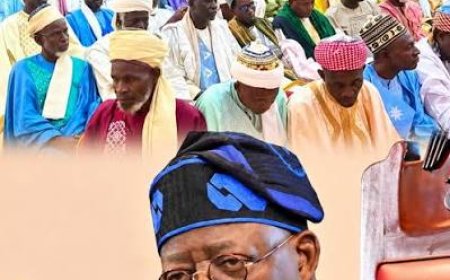
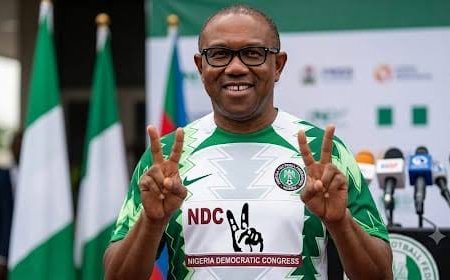
In a democracy, seeking re-election is not merely a matter of political calculations, elite bargaining, endorsements, or party machinery. It is an opportunity for a leader to engage citizens, account for his record, justify his decisions, and convince voters that he merits another term. When a presidential candidate appears to depend more on political surrogates as an intermediary than on direct engagement with the electorate, a fundamental question emerges: Is the candidate genuinely seeking the people’s mandate, or presuming that the machinery of power can secure victory without their active consent? When applied to President Bola Tinubu's strategy for seeking re-election ahead of the January 16, 2027, poll, this raises questions about political accountability, the substance of public engagement, and the connection between incumbency and popular legitimacy. Using surrogates to present an incumbent president to the people suggests that the candidate is unwilling to meet them directly. The reality is that surrogates can help conduct a campaign, mobilise voters, and forge political alliances. However, they cannot fully replace the candidate's personal obligation to account for his leadership. Tinubu's campaign has a considerable organisational framework, including a presidential campaign council headed by Abdulaziz Yari and a women's campaign council inaugurated by his wife, Remi Tinubu. The APC has also announced a campaign flag-off in Kaduna for October 24, 2026. These are legitimate instruments of campaigning. The issue is whether they will support direct engagement by the presidential candidate or replace it. This distinction matters because it is the candidate, not the campaign council, who is asking Nigerians to grant him another four years. Ministers can defend policies, governors can mobilise, and supporters and spokespersons can clarify the government's positions. Yet none of them can personally answer for the President's decisions in the manner the President himself can. The issue, therefore, is not the elimination of surrogate campaigning. It is ensuring that surrogates do not insulate the candidate from scrutiny, as Tinubu’s behind-the-scenes politics appears to do. President Tinubu may have succeeded in drawing many opposition figures into his party, but the reality is that his second-term campaign will be assessed on more than the number of governors supporting him, the scale of his campaign organisation, or the number of endorsements he secures for media exposure. Instead, he will be evaluated by how directly he presents his record, addresses criticism, and explains what another term would mean for Nigerians. His supporters may contend that political organisation and delegated representation are standard elements of contemporary campaigns. Critics, however, may argue that an incumbent seeking reelection has a particular responsibility to confront the people whose lives his policies have influenced. Both the campaign’s organisational capacity and the candidate’s readiness to engage warrant scrutiny. If, for example, the Nigeria Democratic Congress (NDC) presidential candidate Peter Obi is making an impression and winning Nigerians’ support, it is not necessarily because of his oratorical skill or persuasive ability, but because he makes himself available to listen to and engage with the people, empathise with them, and speak to them directly.
Something is deeply wrong if Tinubu’s nearly four-year tenure has increased the population of the poor in our midst from 87 million to more than 140 million, leaving the country as the poverty capital of the world, yet he remains unavailable to explain his government's plans for the next four years and instead sends surrogates to amplify falsehoods to the public. The issue is not whether surrogates can campaign on Tinubu’s behalf. They clearly can. The issue is whether they can speak for Tinubu—and whether Nigerians should be asked to renew a presidential mandate without hearing directly from the person seeking it. A second term is not an entitlement granted by political allies. It is a mandate that must be requested and gotten from the electorate. Voters deserve more than promises communicated through other people's voices. Anyone seeking another term must be willing not only to address the people but also to listen to them. Confusing elite backing with public approval can become a serious political liability. Political endorsements can create a striking false impression of nationwide support.
Governors may activate party structures, legislators may pledge their allegiance, and influential figures may announce their backing. Even traditional rulers may dance to your music, but political elites and ordinary voters do not necessarily have the same priorities. They do not represent the electorate's mood. A large rally shows that a campaign can mobilise people, but it does not necessarily indicate how voters will act in the privacy of the polling booth. This distinction is especially significant in Nigeria's 2027 election, in which the ruling party's political organisation and the opposition's capacity to engage voters are both central to the contest. A president may communicate through technology, release statements, and assign official responsibilities to others. Yet digital communication and political representation cannot fully substitute for opportunities to ask direct questions, face public scrutiny, and engage meaningfully with citizens. When people already feel detached from government, a campaign conducted largely through surrogates can reinforce that sense of disconnection.
The political issue is whether the incumbent is attentive to these varied constituencies or depends too heavily on political allies to understand and react to the people.
It is disrespectful to reduce citizens to spectators in their own democracy. The central risk of a campaign that relies too heavily on surrogates extends beyond ineffective political communication. It lies in the possibility of treating voters as an audience to be controlled rather than as citizens whose consent must be earned. Ultimately, President Tinubu must recognise one fundamental truth: "A second-term mandate is not a reward for the loyalty of surrogates; it is a judgment on the incumbent’s performance and its impact on the lives of the people." Therefore, if the President is avoiding direct engagement with the public, it may suggest that he has little to present after four years, and the consequences will be reflected at the ballot box. May God have mercy.
What's Your Reaction?