









The Role Of The Church In Ensuring Good Governance In Nigeria
The biblical Exodus is not merely a story of geographical movement; it is a movement from oppression to freedom, from political bondage to human dignity, and from the rule of Pharaoh to a covenantal community governed by justice.
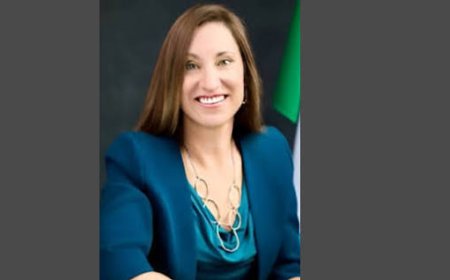
By: Rev. Fr. Benedict Agbo
PROLEGOMENON FOR THE 2027 ELECTIONS
Theme: Shepherding God's People through the Polls: From Egypt to the Promised Land
Occasion: NCDPA 2026 Annual General Meeting
Date: 10 November 2026
Venue: Madonna Retreat & Conference Centre, Nkpor, Anambra State
INTRODUCTION: FROM EGYPT TO THE PROMISED LAND
The biblical Exodus is not merely a story of geographical movement; it is a movement from oppression to freedom, from political bondage to human dignity, and from the rule of Pharaoh to a covenantal community governed by justice. The question before us is whether Nigeria's democratic journey is taking its people towards the Promised Land or merely changing the identity of their taskmasters.
Our theme, Shepherding God's People through the Polls, places a special responsibility on the Church. Elections are not merely political events; they are moral decisions about the future of the people. The Church must therefore move beyond occasional statements to deliberate, organised and non-partisan civic engagement.
A. DE IURE: THE CHURCH, THE PRIESTHOOD AND POLITICAL RESPONSIBILITY
1. The Biblical Mandate of Shepherding
In Exodus 3:7–10, God sees the affliction of His people, hears their cry, knows their suffering and intervenes. These four verbs—seeing, hearing, knowing and acting—define the prophetic character of shepherding. A shepherd cannot remain indifferent to the suffering of the flock. The Church's concern for governance is therefore an extension of her pastoral responsibility.
2. The Canonical Boundaries of Clerical Political Engagement
Canons 285 and 287 of the Code of Canon Law regulate clerical involvement in civil offices and political parties. The priest must avoid partisan entanglement, but non-partisanship must never be confused with political silence. A priest may make moral judgements about candidates, policies and public conduct without becoming a campaign agent. The distinction is between prophetic moral engagement and partisan political participation.
3. The Church's Right to Moral Judgement
Gaudium et Spes, nos. 75 and 76, recognises the responsibility of citizens in public life and affirms the Church's right to make moral judgements when fundamental human rights and the salvation of souls demand it. The Church does not identify herself with any political system or party, but she cannot surrender her moral voice to political authority. Our neutrality must be towards political parties, not towards truth, justice and human dignity.
B. DE FACTO: THE NIGERIAN POLITICAL PROBLEMATIQUE
4. State Capture and the Crisis of Democratic Institutions
Nigeria is increasingly experiencing a democracy in which the institutions meant to restrain power are being subordinated to political interests. The legislature is weakened by executive dominance; the judiciary is increasingly drawn into political power struggles; electoral institutions face a crisis of public confidence; and political networks exercise influence beyond democratic accountability. This is state capture: government over the people by a politically connected minority, operating under the appearance of constitutional democracy.
5. Political Deceit, Religious Optics and the Weaponisation of the Courts
Our political culture has become dangerously theatrical. Religious symbolism, prayer meetings and pilgrimages are increasingly deployed as instruments of political image-making. But after three years in office, the President owes Nigerians more than religious optics: he owes them an account of his stewardship, his achievements, failures and promises. Prayer cannot substitute for performance, and piety cannot become an alibi for poor governance.
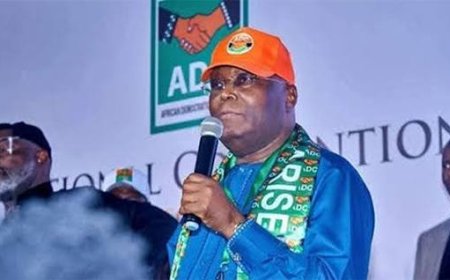
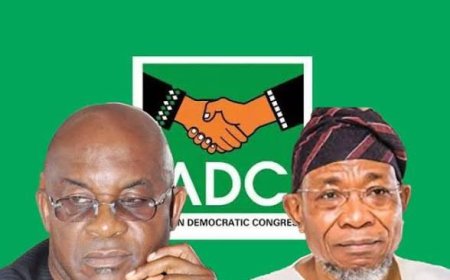
Equally troubling is the weaponisation of the courts against political opposition. The continuing legal battles surrounding the African Democratic Congress (ADC), including the recent Federal High Court decision affecting its leadership and presidential nomination, illustrate how judicial processes can become instruments of political uncertainty and exclusion. The judiciary must not become the battlefield through which electoral competition is strangled.
6. Electoral Credibility and the INEC Voters' Register
The credibility of an election begins with the credibility of its register. INEC's handling of the voters' register and allegations of artificial intelligence-generated registrations has raised serious public questions. Reports indicate that its verification process flagged approximately 1.5 million suspicious records, of which 1,277,252 were reportedly confirmed invalid and removed, while about 268,000 remained pending further verification. The media's allegation of two million fake registrations must not be confused with INEC's confirmed figures. Nevertheless, the central issue remains: Nigerians need a transparent, independently verifiable and trusted register before 2027.
7. Public Debt, Fiscal Opacity and the Burden on Future Generations
Nigeria's debt burden has become a major governance scandal. Public debt stood at approximately ₦159.35 trillion at the end of March 2026. The 2026 budget provides ₦15.8 trillion for debt servicing out of a total appropriation of ₦68.32 trillion. IMF reporting also indicates that federal interest payments consumed more than half of federal revenue in 2025. The problem is not borrowing alone, but opaque borrowing, weak budget transparency, poor implementation and the growing sacrifice of public services to debt obligations. A nation cannot borrow its way into prosperity while leaving its citizens poorer.
8. Targeted Christian Persecution and the Failure of State Protection
The persecution of Christians in Nigeria must be confronted honestly. Churches have been attacked, clergy kidnapped, Christian communities displaced, and worshippers killed in recurring violence. Open Doors' 2026 World Watch List reported 3,490 Christians killed in Nigeria for faith-related reasons during its reporting period. These figures, alongside reports by USCIRF, expose a grave pattern of targeted anti-Christian violence and official failure to provide adequate protection.
Many affected communities and Christian advocates describe this pattern as Christian genocide. Whatever the final legal classification, the moral and political reality cannot be concealed by euphemisms. The state has a duty to protect every citizen, investigate attacks, prosecute perpetrators and end impunity. Religious persecution must not be reduced to political convenience or explained away when the victims are Christians.
9. Foreign Interests, Geopolitical Competition and National Sovereignty
Nigeria's governance crisis also exists within a wider geopolitical contest. Foreign powers pursue strategic, economic and security interests; international lending creates obligations and dependencies; and external interventions in other countries—from Libya and Iraq to Afghanistan and Syria—remind us that foreign involvement does not automatically produce democratic renewal. Nigeria must therefore protect its sovereignty, scrutinise the conditions attached to loans and international agreements, and ensure that national resources and policies serve Nigerians rather than external interests. A country that loses control of its political and economic choices risks mortgaging its future.
10. The Prophetic Interventions of the Catholic Bishops
The Catholic Bishops' Conference of Nigeria has repeatedly raised concerns about insecurity, poverty, corruption, electoral credibility and national leadership. These interventions are important, but episcopal communiqués must not remain documents for ecclesiastical archives. They must become instruments of public enlightenment and pastoral action at diocesan, deanery and parish levels.
C. THE WAY OUT: FROM PROPHETIC PRONOUNCEMENTS TO CIVIC ACTION
11. Prophetic Preaching, Political Enlightenment and National Equity
The pulpit must recover its role as a platform for moral and civic formation. Priests must help citizens understand governance, public accountability, electoral responsibility and the moral implications of political choices. This should include town-hall engagements and public conversations with political office-seekers.
National equity must also become part of this conversation. The Muslim-Muslim presidential ticket was a grave political error in a religiously plural nation because it weakened the principle of symbolic inclusion and national balance. The North-South rotation arrangement, though not a constitutional provision, remains a useful political convention for managing national trust. Its application must be fair and consistent. Within the South, the principle of micro-zoning should recognise the South-South, South-West and South-East, whose prolonged marginalisation in the presidential power equation remains a legitimate national concern.
12. The Catholic Church's Grassroots Capacity
The Catholic Church possesses one of the most extensive organised grassroots networks in Nigeria. Available figures identify 60 ecclesiastical jurisdictions—nine metropolitan archdioceses and 51 dioceses—with 5,112 parishes and 11,869 mission stations in the 2022 statistical record. This geographical spread gives the Church an extraordinary capacity for voter education, civic enlightenment, peaceful mobilisation and election observation. Yet we have not sufficiently converted this demographic and institutional strength into coordinated civic engagement. The challenge is not lack of structure; it is the effective deployment of the structure we already possess.
13. Non-Partisan Engagement in Politically Divided Communities
Our parishes contain members of different political persuasions. Civic engagement must therefore be conducted without turning the Church into a platform for endorsing parties or candidates. The Church should establish common standards of integrity, competence, accountability and respect for human dignity by which every candidate can be assessed. We must challenge all political parties by the same moral principles.
14. Lawful Civic Mobilisation and Electoral Accountability
Citizens must understand that democracy does not end with voting. Peaceful protest, public petitions, lawful demonstrations, election observation and demands for accountability are legitimate democratic instruments. The Church should educate citizens on their rights and responsibilities while insisting on lawful, disciplined and non-violent civic action.
15. The Lesson of the United States Midterm Elections
The United States midterm elections of 3 November 2026 offer a useful reminder that electoral power remains a mechanism for holding governing parties accountable. The electorate can use the ballot to express approval, dissatisfaction or a demand for change. The lesson is not that Nigeria should copy another country's political system, but that citizens must never surrender their electoral power to incumbents.
16. Democratic Despair and the Temptation of Military Intervention
A dangerous consequence of persistent democratic failure is the growing nostalgia for military intervention. Some citizens are becoming so disillusioned with the irresponsible leadership of a small group of political criminals hijacking power under a democratic facade that they are tempted to prefer military rule. This is a profound indictment of our democracy, not an argument for dictatorship. A democracy that makes its citizens nostalgic for authoritarianism has suffered a crisis of legitimacy. The solution is democratic renewal, not another cycle of military oppression.
D. CONCLUSION: SHEPHERDING BEYOND THE POLLS
17. The Threefold Responsibility of the Priesthood
Our priestly responsibility is expressed through the threefold munera: munus sanctificandi, munus docendi and munus regendi—sanctifying, teaching and governing. These functions must speak to the realities of our people. We sanctify through worship, teach through formation and govern through pastoral leadership. None of these responsibilities permits indifference to injustice. As Luke 16:8 reminds us, the children of light must not be less prudent and purposeful in their affairs than the children of this world.
18. Do Not Burn the Scroll: The Church's Duty of Truth-Telling
Jeremiah 36 presents a powerful image of political intolerance. King Jehoiakim cut the prophetic scroll and threw it into the fire because he rejected its message. God instructed Jeremiah to write it again. The truth could not be destroyed by destroying the document.
Fr Kunle Dukiya's article, “Do Not Burn the Scroll: Cardinal Onaiyekan, the Presidency and the Politics of Truth-Telling,” offers a contemporary reflection on this prophetic responsibility. Its central lesson is that the government must answer the message rather than attack the messenger. The Church must speak for the poor, challenge the government and scrutinise the opposition without becoming the instrument of either. The Cardinal's reported counsel to opposition leaders also reminds us that those who seek power must offer credible leadership, unity and a coherent programme for national renewal. The Church must belong to the people, not to the government or the opposition.
19. The Need for a United Priestly Voice
The NCDPA must move from isolated interventions to coordinated national engagement. A united voice does not mean partisan uniformity; it means a shared commitment to truth, justice, credible elections and the common good. Our strength lies in our communion, our geographical reach and our moral independence.
20. Constitutional Restructuring and the Question of Leadership
The constitutional renegotiation advocacy associated with Tony Nnadi and NINAS raises fundamental questions about Nigeria's defective political structure. These questions deserve serious attention. But my analogy is simple: before changing the vehicle, we must first get a good driver. Constitutional restructuring and the search for competent, accountable leadership are complementary, not competing, national priorities. A good driver cannot make a defective vehicle perfect, but a better vehicle in the hands of a reckless driver will still endanger its passengers.
21. A Five-Point NCDPA Action Plan for 2027
I propose that the NCDPA translate this address into five practical commitments:
1. Parish voter verification: Organise parish-level voter education and encourage eligible Catholics to obtain, verify and protect their voter registration and PVC status.
2. Candidate accountability: Hold town-hall meetings at deanery and local-government levels for House of Assembly and House of Representatives candidates, and diocesan-level engagements for senatorial and governorship candidates.
3. Polling-unit mobilisation: Identify and prepare non-partisan parish and ward volunteers to serve as polling-unit marshals, promote peaceful participation and support lawful electoral observation.
4. JDPC election observation: Strengthen diocesan and parish Justice, Development and Peace Commissions to recruit and train observers, document incidents and transmit verified polling-unit results, including EC8A result records.
5. Peaceful electoral accountability: Where announced results contradict properly documented polling-unit results, support lawful petitions, public accountability and peaceful civic demonstrations. Electoral theft must not be rewarded with silence.
FINAL CHALLENGE: WHO WILL SHEPHERD THE PEOPLE?
The Exodus generation needed more than a leader who could confront Pharaoh; it needed a people prepared for freedom and responsible nationhood. Nigeria likewise needs more than a change of political personalities. It needs institutions, citizens and leaders committed to justice, accountability and the common good.
As priests, we must not become Pharaoh's chaplains, nor the opposition's campaigners. We must be shepherds of the people, interpreters of truth and guardians of conscience. Our responsibility does not end when the ballot boxes are closed or when a new government is sworn in. It continues wherever human dignity is threatened and public trust is betrayed.
May we have the courage to see, hear, know and act. May we refuse to burn the scroll. And may our people, through responsible leadership and active citizenship, finally move from the Egypt of political bondage towards the Promised Land of justice, freedom and human dignity.
Thank you, and God bless Nigeria.
What's Your Reaction?