

































Parallel Kingship In Enugu Ezike Where Govt- Recognised Igwes Play Second Fiddle To Onyishis
Enugu Ezike, the second largest "native town" in West Africa is in Igbo-Eze North Local Government Area of Enugu State. It shares borders with Benue and Kogi States
Enugu Ezike, the second largest "native town" in West Africa is in Igbo-Eze North Local Government Area of Enugu State. It shares borders with Benue and Kogi States
Palm wine tapping and farming are the main occupations of the people. The Enugu Ezike palm wine is arguably the best in the country with the broth tasting better than the ones from Udi in Udi Local Government Area or Ukehe axis in Igbo Etiti Local Government.
In Enugu Ezike, except those who did not grow up at home, children of primary school age are thought how to tap palm wine hence it is hard to find an Enugu Ezike man who never tapped palm wine before making it in life.
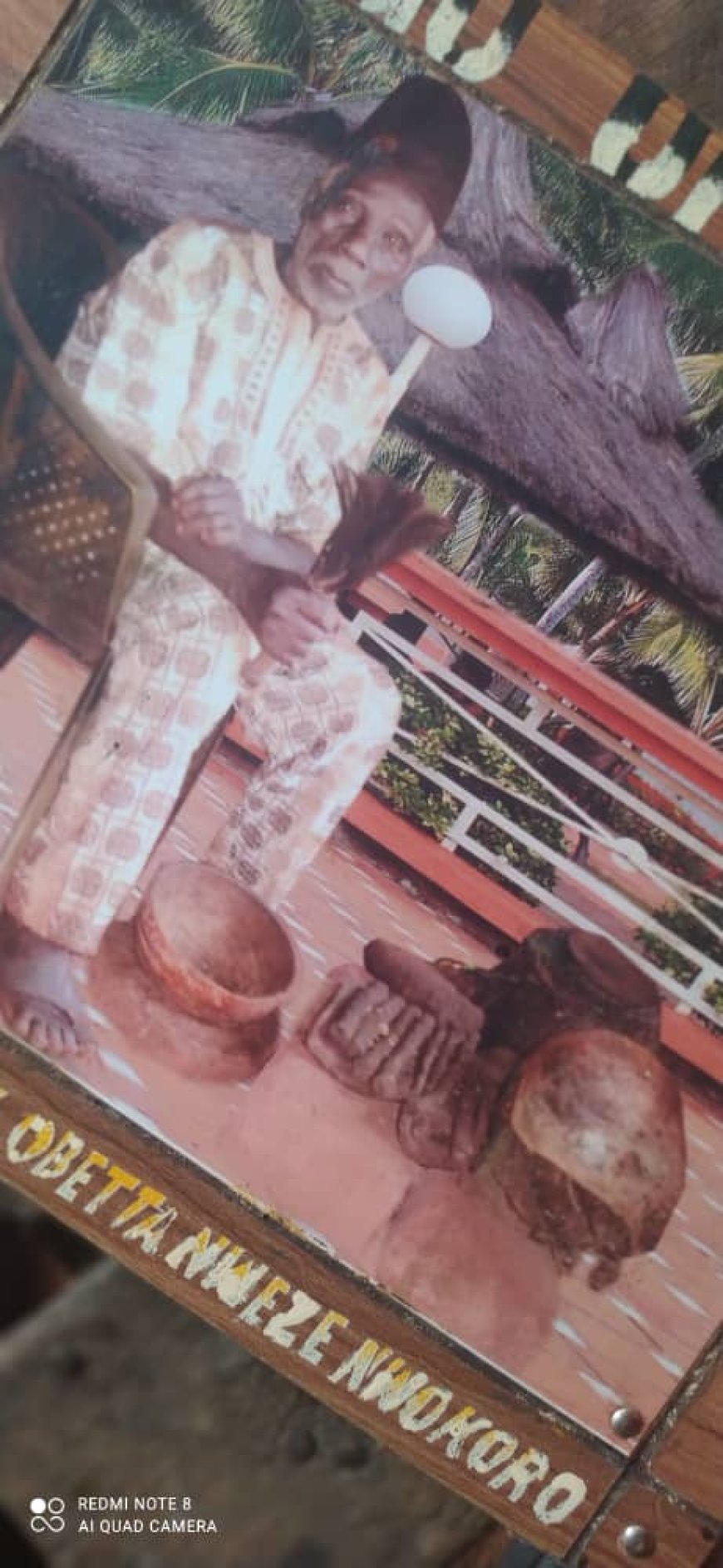
Enugu Ezike with 36 villages under one Onyishi as overall head, has a unique system of traditional rulership. The Onyishi, is the oldest man in the community, serving as the temporal, spiritual and cultural leader of the town. The same applies for each village where the oldest man, holds sway. The government established traditional ruler, Igwe took its root from the colonial masters who needed pliable leaders at the grassroots for tax collection purposes. They built the traditional rulers officially and called them Warrant Chiefs
in line with the Emirate System in the North and Oba stools in the West where the traditional kingship system was in place. The Colonial Masters created the Regional House of Chiefs to give effect to their plan for tax collection.
However, in Enugu Ezike, the role of the government appointed chiefs become contentious because they lack legitimacy and acceptance by their "subjects" who pay allegiance to the Onyishi.
Ezike Oba, as Enugu Ezike is popularly known, originally had four kindred clans
namely Umuitodo, Ozzi, Essodo and Ezzodo. The four clans are from one progenitor known as Ezike Oba, with Ezzodo as the oldest in seniority. Umuitodo and Ozzi are from same parents but Umuitodo is the elder brother of Umuozzi while Ezzodo and Essodo.are from their own mother.
Ozzi is the largest of the other communities which are traditionally and culturally related with one another, coming from one father, Ezike Oba. Enugu Ezike, which had one Onyishi as traditional ruler until the early eighties, now has over 36 autonomous communities each with its Onyishi and another government - recognised Igwe whose job is not clearly defined. The Onyishis are the de- facto traditional rulers, as gerontocracy is the form of governance, while the so- called Igwes are de- jure. Although separated by the government appointed leaders, they still observe same cultural norms even as the Onyishi Ezike Oba, still hold regular meetings with his fellow Onyishi's in the other 36 loose villages/ communities and exercise their traditional functions in accordance with traditions.
The Onyishi Imufu who doubles as Agu Umuitodo for example has his Council of Elders known as Oha, composed of the oldest man from each clan/ kindred or family. The Igwe Imufu Community is not a member of Oha Imufu as he has his other elder brothers who represent him at the various levels of Oha Umunna (family) or Imufu in general, hence he is bound by decisions reached at Oha Imufu or Umunna.
The immediate past Chief of Naval Staff, Rear Admiral Emmanuel Ogalla for example is from Enugu Ezike. In spite of his enormous powers while in office as a Service Chief, he knew his bounds in Umopu, Enugu Ezike or Ogrute Ezocha. He has both the Onyishi and Igwe but his Igwe is inferior to the Onyishi. Rear Admiral Ogalla grew up in the village at the time the Igwe system was being introduced and the system is yet to take roots, unlike the Onyishi system which started with the progenitor, Ezike Oba.
PARALLEL AUTHORITIES OF ONYISHI AND IGWE
The Regional House of Chiefs were disbanded by the Army when they took over power in 1966 and with the creation of states, the then military governor of Anambra State, Col Robert Nnaemeka Akonobi, introduced traditional stools in autonomous communities. Before this,
The first two appointed traditional rulers for Enugu Ezike included Urama Onoja, from Aji, in Essodo and Ooda Idoko from Igogoro They were the Onyishi Enugu Ezike who were recognised as traditional rulers of Enugu Ezike at different period before the splitting of the town into four autonomous communities by the old Anambra State government.
The government created the first four traditional rulers in Enugu Ezike in the eighties and gave the four kindred clans including Umuitodo, Ozzi, Essodo and Ezzodo autonomous status with Sunday Eze Iyida; James Ogbonna Mamah a.k.a Ifesinachi; Simeon Itodo a.k.a Osisi and Hyacinth Odo, imposed as their Igwes respectively. Today, the number of communities and their Igwes are over 38 and more people are still seeking new autonomous communities to carve out their own kingdoms for their own aggrandisement. Most of the autonomous communities were created with Oluwole (fake) Constitutions, hence their Igwes lack respect from their "subjects" who give allegiance to the Onyishis.
These days, the roles of Igwes in their communities are undefined as they depend on so many factors Viz: the Igwe's popularity; organisational ability as well as mindset and exposure among others. Most of the Igwes are wealthy but stark illiterates - the typical "money miss- roads" who were used by politicians to cause divide- and- rule system for themselves. Some lack exposure and cannot express themselves in the presence of government representatives that visit their communities or palaces to pay homage hence they are treated lowly by their subjects. Some unpopular Igwes who got their stools through bribery or influence peddling in government circles use the police to intimidate people, especially in cases where they have vested interests
Generally however, they are supposed to be government representatives in their communities. They are expected to play critical roles in security and community developments.
POWERS OF THE ONYSHI
On May 3, 1993, after the creation of the new autonomous communities, the Onyishi of Ugbaike ,who doubled as Onyishi Enugu Ezike, Abugu Urama Ojobo, decided to recognise some illustrious sons of the town with traditional titles. Those honoured included the former Presidential Liaison Officer for old Anambra State under the Shehu Shagari's administration, Professor John Eze, a former Commissioner in the old Anambra State and later Secretary General of the pan- Igbo sociocultural organisation, Ohanaeze Ndigbo, Chief Nduka Eya, a prominent journalist and former special assistant to the then petroleum minister, late Professor Jibrin Aminu, Chief Maduka Ugwu; late Chief B. C. Onuora and Chief Onoima Iyidah among others. However, the then newly appointed traditional rulers including late Igwe James Mamah, Igwe Simeon Osisi Itodo; Igwe Sunday Eze Iyida and Igwe Hyacinth Odo, came together to oppose the move. Their opposition was based on the fact that the Onyishi Ezike Oba, was no longer a government recognised traditional ruler, and thus had no powers to bestow chieftaincy titles on illustrious/ indigenous people of Enugu Ezike.
The opposition by the newly recognised traditional rulers led to serious tensions leading to fears of possible breakdown of law and order. However, the then Police Commissioner in the the state ordered the deployment of riot policemen from divisions in the old Nsukka Cultural Zone including Isi- Uzo, Igboetiti, Uzo Uwani Nsukka and old Igbo Eze Local Governments respectively to provide security cover for the recipients of the traditional titles from the Onyishi Enugu Ezike.
The Onyishi Ezike Oba, Agu Abugu Urama Ojobo, then, imposed a fine of a cow on Igwe James Mamah a.k.a Ifesinachi and his colleagues, following which they later killed a cow before they were pardoned for opposing the Onyishi Enugu Ezike.
Some of the recipients including Chief Maduka Ugwu, Agubata Enugu Ezike; were later approached to be bestowed with chieftaincy titles by some of the Igwes but they politely declined recieving titles from them apparently due to non-recognition of their authorities.
The role of the Onyishi in the development of Enugu Ezike communities is rooted in the community's history, which is as old as the people. The Onyishi in - Council can amend customary laws that are no longer in tune with modern society. The Igwes are not members of the Onyishi Council of Elders unless they are the oldest male member of their kindred families or hold the Oduatu title. The Igwe can not bless kola nuts or pray with kola nuts in the presence of the Onyishi.
The Onyishi does not visit the Igwe. It's the Igwe that goes to his Onyishi in Council when he needs their cooperation to implement certain government policies. In Imufu Community for example, Onyishi Ugwuanyi Onu, who doubled as Onyishi Enugu Ezike, abolished the custom which forbade women from cooking for their husbands during their mensural cycles.
Onyishi Omeh Nwa Okenyi also, reduced the mourning period of widows from nine months to one month as recently as 1986 following a controversial funeral ceremony for a woman who died while mourning her husband. Till date, nobody has altered such laws or practices.
The Onyishis are the highest traditional authorities in Enugu Ezike, responsible for overseeing the community's cultural, security and social activities or development.
While one can defy the order or authority of his Igwe, he or she cannot disobey the order of the Onyishi or Onyishi in Council and get away with such show of disrespect or disobedience.
Unlike the Igweship position, the Onyishi's stool is not contestable, as the sole determinant is by seniority of age, hence the eldest man in the village or community assumes the role. When it is difficult to identify the oldest man among peers, divination is used to identify an Onyishi, hence it is not contested.
The Onyishi is the custodian of Ndishi, which is a spiritual being believed to punish individuals who engage in extramarital affairs, particularly married women or men who sleep with married women both within and outside Enugu Ezike town.
The Omabe (masquerade) festival is a significant cultural event in Enugu Ezike, celebrated every five years and it is only the Onyishi in- council that can fix or determine dates for Omabe festivals as well as coordinate such events which feature masquerades, music, and men's dance groups in Enugu Ezike. The Omabe festival serves as a purification rite, driving away evil spirits and promoting unity among the community as there are competitions over the best masquerade groups. The competing masquerades include agbeji and mgbedike groups.
The four most heinous offences or taboos in Enugu Ezike include adultery, stealing, poisoning and unmasking of masquerades and they all attract heavy punishments to serve as deterrence. A man or married woman who commit adultery can be killed by Ndishi or lose his or her eldest son, except the culprit confesses his or hers sins before Ndishi spirit at the Onyishi's palace and undergoes costly and shameful cleansing rituals to appease the Ndishi spirit which is said to cause madness or death in those who violate this taboo.
The only way to appease the Ndishi is through public confession to Onyishi in Council and performance of rituals beginning from the Onyishi's palace in the presence of the other members of the elders' council and ending at the nearest oldest person to the woman's husband or culprit.
The Onyishi Enugu Ezike, now at Uda in Ezzodo, exercises authority over his fellow Onyishis in the whole of the 36 villages or communities. Onyishi Enugu- Ezike holds court at regular intervals with his subordinate Onyishis from the 36 communities and decide traditional cases that come to them, be they land matters or other cultural issues of inheritance among others. Cabinet members of Onyishi Enugu Ezike include the onyishis from the component parts of the native town and their Nkpozis (provosts) whọ also act as community messengers. Decisions reached at Onyishi Enugu Ezike are passed down the line in the communities or villages of Enugu Ezike by the village Onyishis- in- Council, through the respective Nkpozi.
Each of the Onyishis has by- cameral cabinets with the elder- most ones sitting inside the palace while the younger ones also known as Udes, Ijogbaras or Umu- ude as the case may be, sit outside in their canopies.
In Imufu Enugu Ezike, the inner circle of Onyishi's cabinet are made up of 13 elders from the three component quarters, with Onaje, the first son providing four members; Umu Ossai - four members while Umu Owaa, which is more populated than the other two clans has five members.
The inner members or members of Oha Uuchi can sit at any time to decide punishments for arrested or identified thieves, adulterers and cases of poisoning which are exclusive to them. Families or heads of extended families are banned from treating cases of Nidishi, (adultery); stealing or poisoning as such cases are exclusively reserved for members of the Onyishi's inner circle of elders.
The Imufu General Assembly meets three times in a year at Onyishi's palace attended by the Onyishi in- Council, the Igwe- in- Council and other members of Imufu Town Union, the Egal (youths) and Ikorobia to resolve and take final decisions on controversial issues that affect the community. On such occasions, the Igwe and the town union president are given special seats even as the general meetings are presided over by the President General, PG, of the town union.
It is at the Onyishi's palace that communities impose security levies; select members of such security outfits as well set up rules and met punishments to deviants.
SECURITY
Under the Enugu State Neighbourhood Watch Group Law, the Igwes are incharge of maintenance of security but this is only on paper because the imposition of security levies and selection of Neighbourhood Watch group members can only be done at the Onyishi's palace.
POWER OF THE IGWES
Igwes, on the other hand, are government-appointed traditional rulers who serve as de jure leaders, even as they often require validation of their actions by the Onyishi. The Igwes are like bishops without cathedrals, while the Onyishis are the de- facto traditional monarchs that preside over the affairs of their people and govern them.
The Igwes can only attend government functions and receive government functionaries that visit their communities but cannot initiate or execute projects that require payment of levies or provision of free lands without the authority of their Onyishis. Except an Igwe also emerges as the eldest male member of his clan or family, he cannot attend cabinet meetings at the Onyishi's palace, unless invited by the Onyishi -in- Council over an issue that requires his attention. The Onyishi in- Council can also invite other prominent and patriotic citizens for purposes of seeking advice from them while taking decisions or deciding controversial issues or matters affecting the peace of the community, but nobody attends such meetings (izu) because of his material wealth or influence.
However, the Igwes also, have their own cabinets members, who they select among friends and supporters, but they do not command much influence in their families. Decisions reached at the Igwes cabinet meetings are not binding on any village or community hence they seek approval or support of the Onyishis over such matters or government policies. The Onyishi does not go to the Igwe. Rather, it is the Igwe that seeks the attention of the Onyishi and bows for him. Under the law establishing the Neighbourhood Watch Security outfit, in Enugu State, the Igwes are incharge of security in their various communities but this is on paper in Enugu Ezike. The Igwe is not incharge of security or custodian of culture in Enugu Ezike because they have no authority over their subjects.
ANCESTRY OF ENUGU EZIKE
There are varying accounts of Enugu Ezike's ancestry, but the most popular belief is that the progenitor of Enugu Ezike, known as Ezike Oba, originated from the old Benin Kingdom in the present-day Edo State before migrating northwards. One narrative suggests that Ezike Oba was a son of the Oba of Benin and heir apparent to the throne. Another version is that Enugu Ezike is related to Enugu Ukwu in the present Anambra State. Till date, the Enugu Ukwu man treats an Enugu Ezike man as his brother. The Enugu Ukwu man readily narrate stories of how the adventurous Ezike Oba, left Enugu Ukwu to seek greener pastures in Enugu Ezike and even point to the land where Enugu Ezike left for his brother, in Enugu Ukwu, while migrating northwards.
What's Your Reaction?