









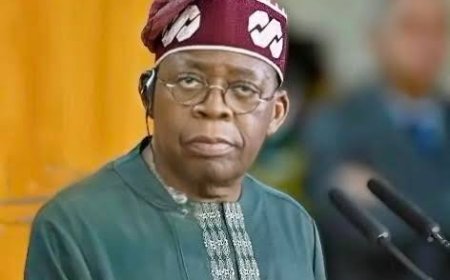











2027 ELECTIONS: Tinubu Faces ‘Political Earthquake’ In 2027, Says ADC Chieftain Sokonye Davies
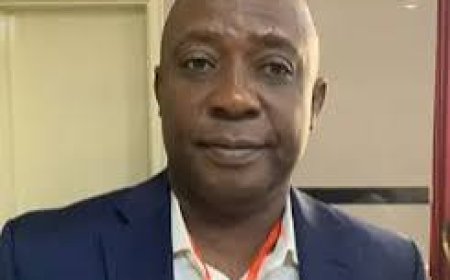
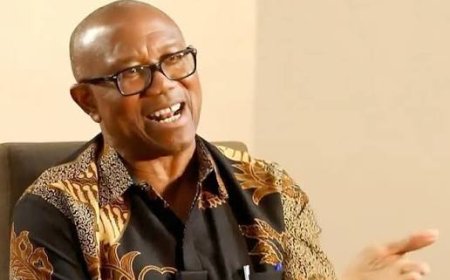
The political battle for Nigeria’s 2027 presidential election has begun to take shape, and for Dr. Sokonye Davies, a senior figure in the African Democratic Congress, ADC, the stakes could not be higher.
The political battle for Nigeria’s 2027 presidential election has begun to take shape, and for Dr. Sokonye Davies, a senior figure in the African Democratic Congress, ADC, the stakes could not be higher.
Davies believes the next election will determine the country’s direction for years to come. In an extended interview in Port Harcourt, the secretary of the ADC’s Membership, Revalidation, Mobilization and Registration Committee said the vote would amount to a national referendum on governance, economic management and the integrity of Nigeria’s democratic institutions.
“The destiny of Nigeria is at stake,” he said.
Davies spoke at length about electoral reforms, the leadership of the Independent National Electoral Commission, INEC, the growing coalition around the ADC, and the evolving political dynamics ahead of the next election cycle. His comments reflected both the confidence and urgency within opposition circles as parties begin positioning themselves for what could become a fiercely contested national race.
Questions Over Electoral Reforms
One of the issues Davies raised during the interview was the recent amendment of the Electoral Act and its provisions regarding electronic transmission of election results.
In his view, the timing and structure of the legislation raise concerns about implementation.
“There is no timeline to sign a law. The earlier the Act is signed into law, the better,” he said, arguing that electoral reforms should ideally occur shortly after an election, when flaws in the system can be assessed and corrected before the next cycle begins.
Davies further said the new law should have made real-time electronic transmission of results compulsory across the country.
“The Act should have been very clear on mandatory transmission of election results in real time,” he said. “Making e-transmission the major thing rather than the manual transmission.”
He acknowledged that logistical challenges could arise in certain areas but said such concerns should not weaken the central role of electronic collation in modern elections.
INEC Leadership and Public Perception
Davies also questioned the appointment of Prof. Joash Amupitan as chairman of the Independent National Electoral Commission, saying the decision could create perceptions of bias.
“I don’t think any Nigerian, whether of opposition parties or not, sees anything right in the appointment of the present chairman of INEC,” he said.
Davies argued that appointing a figure who previously represented the president in legal matters could undermine public confidence in the electoral process.
“No matter how credible the person is, it opens up for questioning,” he said.
He also criticized the federal government’s decision to appoint former INEC chairman Prof. Mahmud Yakubu as an ambassador, describing the move as problematic given lingering debates about the conduct of past elections.
“This is very bad optics,” he said. “It sends the wrong message.”
Building an Opposition Coalition
Although critics have accused the ADC of moving too slowly in organizing its opposition strategy, Davies insisted the party is deliberately focusing on building a strong institutional framework before entering the campaign season.
“We are not silent at all,” he said. “We are busy putting things in place.”
Davies said recent political developments, including the Area Council elections in the Federal Capital Territory, had reinforced the need for opposition parties to strengthen their preparations.
“It is good that the FCT election came now,” he said. “It has shown us part of their intentions.”
According to him, the ADC intends to present what he described as a credible alternative capable of mobilizing voters across the country.
“We must be intentional in what we do and how we do it,” he said.
The Presidential Race
Speculation has intensified in recent months over who might emerge as the ADC’s presidential candidate.
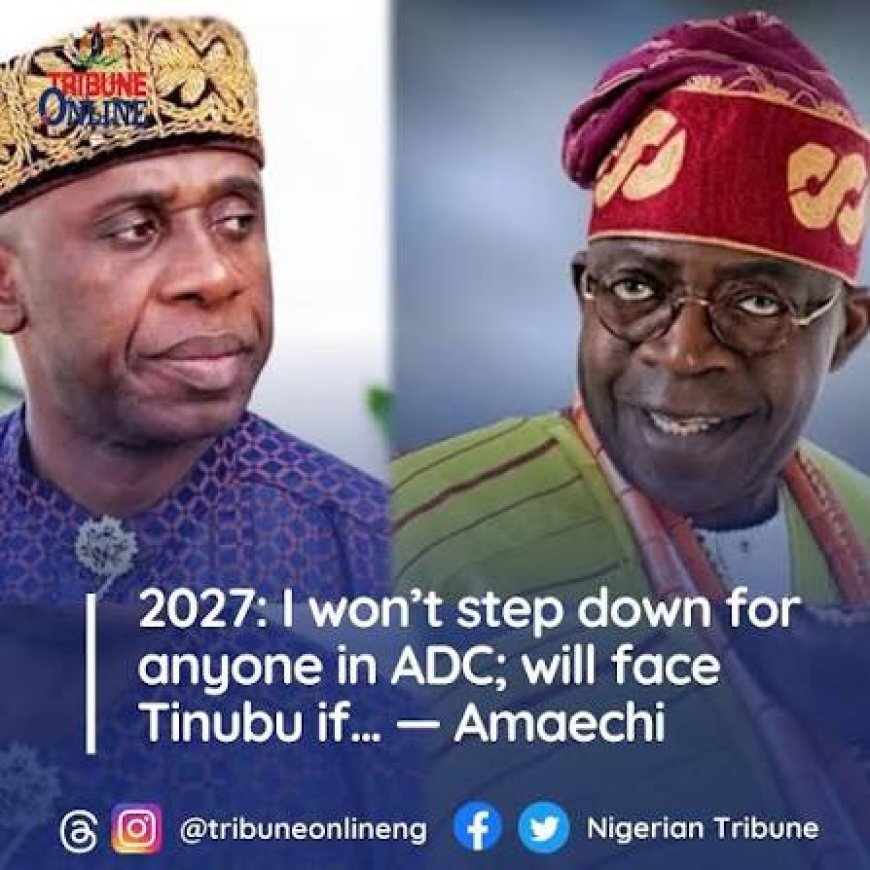
Among the names frequently mentioned are former vice president Atiku Abubakar, former Anambra State governor Peter Obi and former Rivers State governor Rotimi Amaechi.
Davies declined to narrow the contest to those figures alone.
“I will not limit the quest of who becomes the ADC flag bearer to just three people,” he said.
He said the party would follow established guidelines and timelines before selecting its candidate, adding that the process would be guided by the leadership of the ADC national chairman, Senator David Mark.
“With Senator David Mark in charge, the process will be credible,” Davies said.
Rotation Versus Competence
Another recurring issue in Nigerian politics is the informal arrangement that rotates the presidency between the country’s northern and southern regions.
Davies said while regional balance remains an important consideration, competence and leadership ability should ultimately take precedence.
“As somebody from the south, that will make sense to me,” he said of maintaining regional balance.
“But must we maintain power balance on the altar of expediency and rotation?”
He suggested that voters should prioritize candidates capable of delivering economic development and institutional reform.
“Let the conversation not be on the length of tenure but on capacity to deliver services,” he said.
Rivers Politics and National Implications
Davies also addressed the ongoing political tensions in Rivers State, where a prolonged conflict between Governor Siminalayi Fubara and Federal Capital Territory Minister Nyesom Wike has shaped the state’s political climate.
He argued that the rivalry has distracted the state government from pursuing economic opportunities.
“Let this governor tell us how much foreign direct investment he has brought to the state,” Davies said.
He also suggested that the political dynamics surrounding the conflict could influence future elections in the state.
“There is a pay day for everybody,” he said.
A Warning About Nigeria’s Political Direction
Beyond party politics, Davies warned that Nigeria’s democratic system could face challenges if opposition voices are weakened or marginalized.
He criticized what he described as a growing trend in which elected officials defect from one party to another without consulting the voters who elected them.
“It is lazy thinking to say that when you capture a governor, you have that state’s mandate,” he said.
Davies argued that the legitimacy of democratic institutions depends on respect for electoral mandates and transparent political processes.
Looking Ahead to 2027
For Davies, the coming election cycle represents a decisive moment for the country.
He predicted that Nigerians would ultimately use the ballot box to determine the direction of governance.
“Tinubu’s day of reckoning is February 20, 2027,” he said.
Whether that prediction proves accurate remains to be seen. But as opposition parties begin to mobilize and political alliances evolve, the contest for Nigeria’s next presidency is already emerging as one of the most consequential elections in the country’s recent history.
What's Your Reaction?