
















ABIN AL-AJIBI’ (A THING OF WONDER!): THE NEW GOSPEL IN THE NORTH
Something remarkable appears to be happening on Nigeria’s religious landscape, particularly in the North.
By Jonathan Ishaku
Something remarkable appears to be happening on Nigeria’s religious landscape, particularly in the North. Increasingly, some of the most visible Christian evangelists on social media are Hausa and Fulani converts from Islam.
Abin al-ajibi!—a thing of wonder!
Whether this represents a large demographic movement or simply a phenomenon made more visible by social media requires careful study. But its growing visibility is difficult to ignore. Hausa-language Christian testimonies, apologetics, debates and evangelistic messages now circulate widely on Facebook, YouTube, TikTok and other platforms. Some of their most energetic voices come from backgrounds historically associated with Islam.
There is an intriguing historical irony here.
THE COLONIAL WALL AND ITS AFTERMATH
During British colonial rule, Christian missionary expansion into parts of the predominantly Muslim North was restricted by colonial policy. The British authorities were anxious not to disturb the political and religious order they inherited, particularly within the emirate system. Missionary penetration into Muslim areas was therefore much more constrained than in many parts of Southern Nigeria and the Middle Belt.
The objective was essentially political stability. Christianity was perceived as potentially disruptive of an established order upon which indirect rule depended.
More than a century later, however, technology has rendered many of those old geographical and institutional barriers irrelevant.
The missionary no longer requires permission to enter an emirate. The evangelist can enter through a smartphone.
Facebook, TikTok, YouTube, WhatsApp and other digital platforms have created a religious marketplace that colonial administrators could scarcely have imagined. Ideas once separated by geography and social boundaries now encounter one another every day on the screen.
And something else makes the development particularly interesting.
Some of these new Christian voices are not merely enthusiastic converts. They bring with them knowledge acquired from their previous religious upbringing. Some are conversant with Arabic, Islamic theology and the Qur’an, while also becoming increasingly grounded in Biblical theology. Consequently, their evangelism sometimes assumes a comparative and apologetic character quite different from conventional Pentecostal preaching.
Meanwhile, many older Christian communities in Southern Nigeria and the Middle Belt have moved increasingly towards institutionalised Christianity—the established denominations, Pentecostal ministries and huge urban mega-churches. The new convert, by contrast, often possesses the zeal traditionally associated with someone who believes he has discovered something transformative and wants everyone to hear about it.
That combination—conversion experience, linguistic competence and digital technology—is producing what might reasonably be called a new gospel phenomenon in the North.
BUT CONVERSION RUNS BOTH WAYS
It would, however, be misleading to present this as a one-directional religious movement.
Christians also convert to Islam. They always have. Indeed, Christian-to-Muslim conversion has long been part of Nigeria’s religious experience and has periodically attracted considerable publicity.
What appears comparatively novel, at least in its present public visibility, is the emergence of Hausa and Fulani converts from Islam who openly identify as Christians and, in some cases, become evangelists themselves.
But we must distinguish visibility from statistical reality.
Social media can magnify a phenomenon enormously. Ten energetic evangelists with large online followings may appear to represent thousands. What we are witnessing therefore deserves serious sociological and demographic research before conclusions are drawn about its numerical scale.
Nevertheless, even without knowing the numbers, the phenomenon has implications for Nigeria’s delicate inter-religious relations.
WHEN FAITH BECOMES COMPETITION
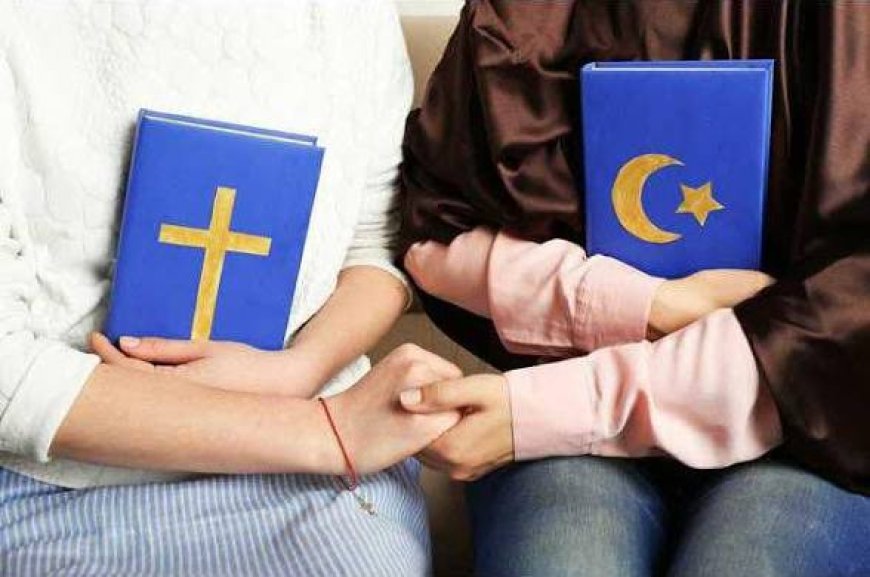
Nigeria's two dominant religions exist in unusually close proximity. In many communities, Christians and Muslims live on the same streets, attend the same schools, work in the same offices and sometimes belong to the same extended families.
Conversion therefore does not occur in a vacuum.
Where religious identity overlaps with ethnicity, politics and access to power, conversion can easily be interpreted not simply as an individual's exercise of conscience but as a gain for one community and a loss for another.
That is where danger begins.
As conversions become more visible, there is a possibility that religious leaders on either side could retreat into competitive extremism—each attempting to protect its constituency, territory or influence against the perceived advance of the other.
Nigeria cannot afford such a development.
Every Nigerian must remain free to profess, practise and propagate a religion within the law—and equally free to change that religion or profess none. Conversion must never become justification for intimidation, threats, violence or discrimination.
The appropriate response to changing religious demographics is therefore neither panic nor triumphalism.
It is freedom under law.
THE STATE MUST BE NEUTRAL—BUT NOT INDIFFERENT
This is where the Nigerian state has an important responsibility.
Government should not intervene to determine which religion gains or loses adherents. Neither should it become the protector of one faith against another. Its responsibility is to protect citizens and preserve a constitutional order in which different beliefs can coexist.
But neutrality does not mean indifference.
Authorities should pay close attention to inflammatory preaching, threats against converts, incitement, hate speech and attempts to mobilise religious communities against one another. The law should apply equally whether the offender wears a cassock, clerical collar, turban or flowing gown.
Nigeria's secular constitutional order cannot survive if governments themselves become denominational actors.
The state should therefore work with responsible Christian and Muslim leadership to strengthen inter-religious dialogue—not merely through ceremonial meetings after violence has occurred, but through permanent structures of communication, early warning and conflict prevention.
Even more important is social justice.
Religious peace cannot be sustained by dialogue alone where communities believe that public appointments, education, employment, land, political representation or government resources are distributed according to religious identity. Equity is itself an instrument of peace.
A CHALLENGE TO CAN—AND TO MUSLIM LEADERSHIP
The Christian Association of Nigeria (CAN) must also recognise that developments such as these enlarge its responsibilities.
It cannot function merely as an umbrella organisation of church hierarchies. As Christianity becomes more socially and ethnically diverse, CAN must increasingly concern itself with Christians who exist outside the security of large established denominations—including vulnerable converts and small communities living in religiously sensitive environments.
Recent controversies surrounding killings and insecurity in Northern Nigeria should have demonstrated the importance of credible documentation, rapid response, responsible advocacy and sustained engagement with government and Muslim leadership.
The same challenge applies to Muslim organisations.
They must defend the right of Islam to preach and persuade while simultaneously accepting the right of another Nigerian to reject Islam without forfeiting his security, citizenship or humanity.
Christians must accept precisely the same principle when one of their own embraces Islam.
Religious freedom cannot mean freedom for people to join my religion but outrage when they leave it.
PERHAPS THE GREATER WONDER
There is, finally, another way to look at this emerging phenomenon.
The Hausa Christian and Hausa Muslim remain Hausa. The Fulani Christian and Fulani Muslim remain Fulani. The Berom, Ngas, Yoruba, Igbo, Kanuri or any other Nigerian does not acquire different blood because he changes religion.
Perhaps therein lies the greater abin al-ajibi.
For generations, Nigerians have allowed religion to harden ethnic and political boundaries. Yet these new movements across religious lines remind us that those boundaries are not as immovable as we sometimes imagine.
The person we describe today as belonging to "the other religion" may tomorrow worship beside us. The family we classify politically as Christian or Muslim may contain both.
Perhaps, therefore, these conversions—in both directions—should teach Nigeria something larger than which religion is gaining adherents.
They should teach us humility.
Let Christians preach Christianity. Let Muslims preach Islam. Let those who are persuaded convert according to conscience. Let those who are not persuaded remain where they are. And let the state protect them all equally.
Above all, let this new encounter between Nigeria's great faiths produce not another battlefield, but a new ethic of coexistence.
If people drawn from the same ethnic stock can cross religious boundaries while remaining brothers, sisters, neighbours and Nigerians, perhaps the real — abin al-ajibi—the true thing of wonder— would be for the country finally to discover that religious difference need not mean permanent enmity.
And perhaps that would be God's greater gift to Nigeria: not the triumph of one faith community over another, but the triumph of peace over hatred, reconciliation over division, and our common humanity over religious bigotry.
What's Your Reaction?