















FASHOLA: From Denying His Own Words To Becoming Tinubu's Political Defence Lawyer
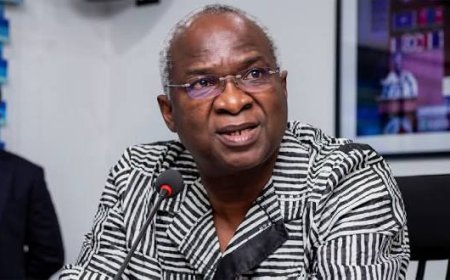
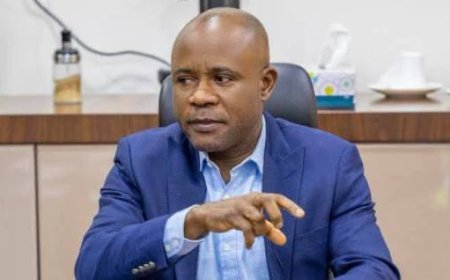
Babatunde Raji Fashola's latest defence of President Bola Ahmed Tinubu over the electricity promise is yet another disturbing demonstration of how some Nigerian politicians sacrifice intellectual honesty, accountability and credibility at the altar of political loyalty
By Stephen Onuh Uwodi
Babatunde Raji Fashola's latest defence of President Bola Ahmed Tinubu over the electricity promise is yet another disturbing demonstration of how some Nigerian politicians sacrifice intellectual honesty, accountability and credibility at the altar of political loyalty. A man who once presented himself as a voice of reason and a technocrat capable of speaking truthfully about governance now appears increasingly comfortable stretching arguments, dissecting words and manufacturing excuses whenever his political camp is under pressure.
Fashola's insistence that he did not hear Tinubu promise 24-hour electricity is not the most troubling part of this controversy. The bigger issue is the apparent double standard with which he approaches political promises, depending on whether the politician making them is his ally or his opponent.
Nigerians have not forgotten Fashola's own political history. When he was in opposition, he was among those who made bold declarations about how quickly Nigeria's electricity crisis could be solved under a serious and competent government. He reportedly argued that the power problem could be fixed within six months. Yet, when he subsequently served as Minister of Power under Muhammadu Buhari's administration for years, Nigerians did not witness the kind of transformation that his earlier confidence suggested was achievable.
And when he was confronted with his own earlier pronouncement, rather than demonstrate the humility and intellectual honesty expected of a public servant by acknowledging the gap between his rhetoric and the realities of government, he was accused of vehemently denying or distancing himself from the statement.
That history makes his present performance even more difficult to defend.
The man who demanded evidence but became an interpreter of political promises
Fashola's controversy over the six-month electricity claim is not a matter of mere political disagreement. In May 2016, and again in December 2018, he publicly denied saying that a serious government could solve Nigeria's electricity problem within six months. He insisted that his original remarks concerned connecting residents of Lekki to a specific Independent Power Project, rather than fixing Nigeria's entire electricity sector.
Whether one accepts his explanation or not, the political lesson is glaring: Fashola was prepared to challenge the interpretation of his own words with considerable force, demand recordings and insist that the public distinguish between what he actually said and what critics attributed to him.
Now, when Tinubu's campaign promise is being scrutinised, Fashola is once again insisting that Nigerians must interpret political statements narrowly, carefully and with the benefit of caveats.
Tinubu's statement was straightforward enough to deserve serious scrutiny. He said Nigerians must have electricity, must no longer pay estimated bills, and should not re-elect him if he failed to deliver, unless he provided adequate reasons for his failure. Fashola is now emphasising that qualification and arguing that Tinubu never promised 24-hour electricity.
But the question is this: why must Nigerians always be required to interpret the promises of politicians in the most generous, forgiving and convenient manner possible, while the same politicians and their allies are often merciless in criticising the promises and performances of their opponents?
A campaign promise is not a legal puzzle designed to be solved by political loyalists after the election. It is a public commitment intended to inspire confidence, attract votes and establish expectations of governance.
Four years overseeing power, and eight years in the Buhari administration
Fashola served as Minister of Power, Works and Housing from November 2015 to May 2019, and subsequently served as Minister of Works and Housing from 2019 to 2023. That means he was part of the Buhari administration for eight years, although his direct power portfolio was from 2015 to 2019.
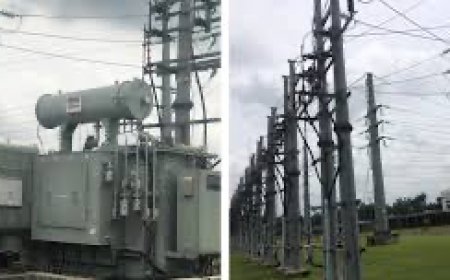
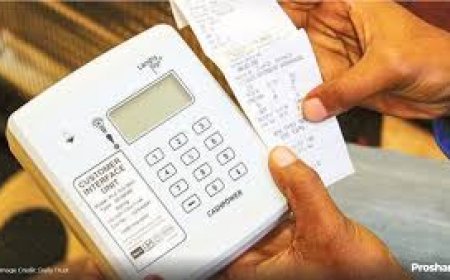
During those years, Nigerians continued to struggle with unreliable electricity, electricity rationing, collapsing transformers, inadequate transmission infrastructure, exorbitant electricity bills and the frustrating dependence on generators. Nigerians spent enormous amounts of money on fuel, diesel, generators, inverters and other alternative sources of electricity simply to survive.
Fashola cannot reasonably claim that he was a mere spectator during that period. He occupied one of the most consequential ministerial positions in the country and had the opportunity to contribute to addressing one of Nigeria's most enduring economic and infrastructural problems.
Nobody is suggesting that Fashola alone was responsible for every failure in Nigeria's electricity sector. The sector has structural, financial, regulatory, infrastructural and operational challenges. But if a politician confidently criticises previous governments and presents himself as someone who understands how to fix a national problem, he must also be prepared to accept accountability when his own opportunity to deliver produces results that fall short of public expectations.
The problem with Nigerian politicians is that they are often bold when making promises, aggressive when criticising opponents and extraordinarily defensive when their own records are examined.
Tinubu's electricity promise is not a semantic exercise
Fashola's argument that Tinubu never promised 24-hour electricity does not resolve the central question of whether the President has fulfilled his campaign commitment.
Tinubu told Nigerians: "You must have electricity." He also promised an end to estimated billing and challenged Nigerians not to vote for him again if he failed to deliver, subject to the qualification he subsequently stated.
The reasonable question is not whether the President used the exact phrase "24-hour electricity." The reasonable question is whether Nigerians have experienced a sufficiently meaningful, measurable and nationwide improvement in electricity supply to justify the promise he made.
Electricity is not a privilege reserved for the President's residence, the homes of ministers, wealthy politicians, business elites or a handful of neighbourhoods enjoying relatively stable supply. It is a fundamental necessity for economic development, education, healthcare, manufacturing, commerce and the survival of ordinary households.
Fashola's personal experience with Eko Disco, which he says has improved electricity supply to his home, cannot be used as a yardstick for the experience of millions of Nigerians. He himself acknowledged that other people's experiences might differ from his own.
A minister, former minister or political ally enjoying improved electricity in his neighbourhood does not automatically mean that the national electricity crisis has been resolved. Nigerians in rural communities, urban slums, commercial centres, industrial zones and residential estates deserve to have their experiences equally recognised.
Fashola should stop treating political loyalty as intellectual honesty
What Nigerians find increasingly disappointing is the apparent transformation of Fashola from a politician who once spoke forcefully about governance and competence into a political defender who seems eager to find technical explanations for the shortcomings of his political allies.
There is nothing wrong with defending a political leader when the criticism is unfair. But there is everything wrong with defending a leader by diminishing the expectations of citizens, splitting hairs over campaign language and turning accountability into a debate about carefully selected words.
Fashola should be reminded that Nigerians do not need political interpreters to explain away their daily hardships. They need electricity. They need functioning infrastructure. They need governments that deliver tangible results.
The same intellectual rigour, insistence on evidence and accountability that Fashola demands when defending Tinubu should be applied to his own public statements, his own ministerial record and the entire Buhari administration in which he served.
If he believes Tinubu's electricity promise has been fulfilled, he should present verifiable nationwide evidence, not merely recount his personal experience with Eko Disco. If he believes the President deserves more time, he should say so openly as a political argument, rather than pretending that the controversy can be settled by insisting that he did not hear the words "24 hours."
Nigerians are tired of political elites who treat campaign promises as disposable rhetoric, who demand accountability from opposition politicians but shield their own leaders from scrutiny, and who appear to believe that political loyalty should take precedence over truth.
Fashola should remember that credibility is built through consistency, not convenient interpretations. You cannot demand strict accountability from political opponents while becoming a professional excuse-maker for your political allies. Nigerians deserve honesty, not political gymnastics; accountability, not endless explanations; and competent leadership, not politicians who believe that changing the interpretation of a promise is the same thing as fulfilling it.
The electricity crisis is real. The suffering of Nigerians is real. No amount of television argument, political spin or semantic manipulation will make those realities disappear.
And Nigerians have every right to hold both Fashola and Tinubu accountable for the words they have spoken, the responsibilities they have occupied and the results they have delivered.
What's Your Reaction?