










Atiku and The Subsidy Card By Olusegun Adeniyi
“Whatever may be his motivation, not a few Nigerians are delighted that Atiku is hitting Tinubu where it hurts because while the removal of fuel subsidy may have brought more money into government coffers, it has only worsened the plight of the ordinary citizens.
“Whatever may be his motivation, not a few Nigerians are delighted that Atiku is hitting Tinubu where it hurts because while the removal of fuel subsidy may have brought more money into government coffers, it has only worsened the plight of the ordinary citizens. More money to the federation account has also encouraged irresponsible behaviour at all levels of government even when most Nigerians are finding life difficult. Yet, to the extent that the decision to end fuel subsidy regime and merge the exchange rates was never going to be cost-free, I had warned this government not to continue with the template of the past”.
While campaigning for the Peoples Democratic Party, PDP, presidential ticket in the recently concluded 2011 general election, former Vice President Atiku Abubakar came up with what I considered the most fundamental statement I have heard from any Nigerian politician on how to redirect our economy and put public finance on the path of sustainability.
Highlighting his plan, Atiku said: “Oil revenue is highly volatile and exhaustible. We must have a plan to wisely use it to build capacity for the future—invest in infrastructure and in the people—and not consume it today. We would also encourage all state governments to set an agenda and timeline within which they would no longer depend on oil revenue for recurrent expenditure. Our regional governments did not get oil revenue but massively developed the country. We must return to the responsible path. The FGN would develop an incentive system (grants-in-aid) to encourage states which are succeeding in making the transition. This agenda is fundamental to motivating all tiers of government to develop the non-oil sectors of the economy and hence diversify the economy.”
Although I was not in the country at the period Atiku made the proposition, I thought it would set the agenda for the electioneering campaign. I imagined that the media and other political contenders would take on Atiku and in the process create the basis for fighting the election on a contestation of ideas. That never happened. Now that the elections are over, I believe we should reopen the debate which is central to the future of our country… Politics
After one year away on a Fellows Programme in the United States, following the death of my principal, President Umaru Musa Yar’Adua, I returned to Nigeria in June 2011. By then President Goodluck Jonathan had assumed office. And on 29th September of that year, I wrote the foregoing in a column titled, ‘The Atiku Abubakar Formula…1’. It was the beginning of what I planned to be a long series. Unfortunately, after the second part, published a week later on 6th October 2011, I started getting feedback from people in government that I had already launched the 2015 presidential campaign for Atiku! Since that was not my intention, I discontinued the idea.
However, it is noteworthy that at every election season, Atiku always brought out critical national issue for engagement, and we must commend him for it. Before and after the 2015 election, for instance, Atiku canvassed the idea of restructuring the country. “…there is indeed too much concentration of power and resources at the centre. And it is stifling our march to true greatness as a nation and threatening our unity because of all the abuses, inefficiencies, corruption and reactive tensions that it has been generating,” Atiku said in August 2012 while canvassing a review of the structure of the Nigerian federation, preferably along the basis of the current six geopolitical zones as regions and the states as provinces. Four years later in 2016, Atiku reignited the issue: “The call for restructuring is even more relevant today in light of the governance and economic challenges facing us…addressing the flaws in our federation will help us address some of those very economic and security challenges facing this country.”
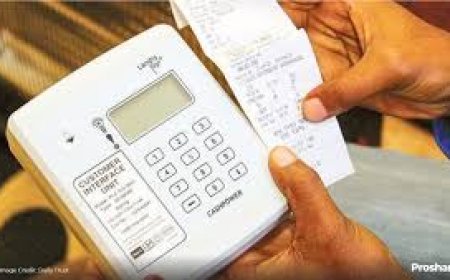
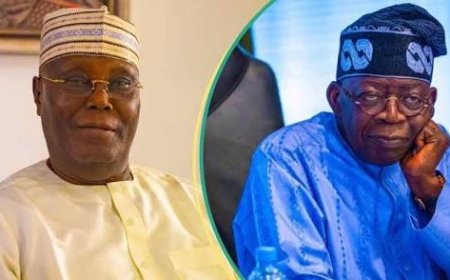
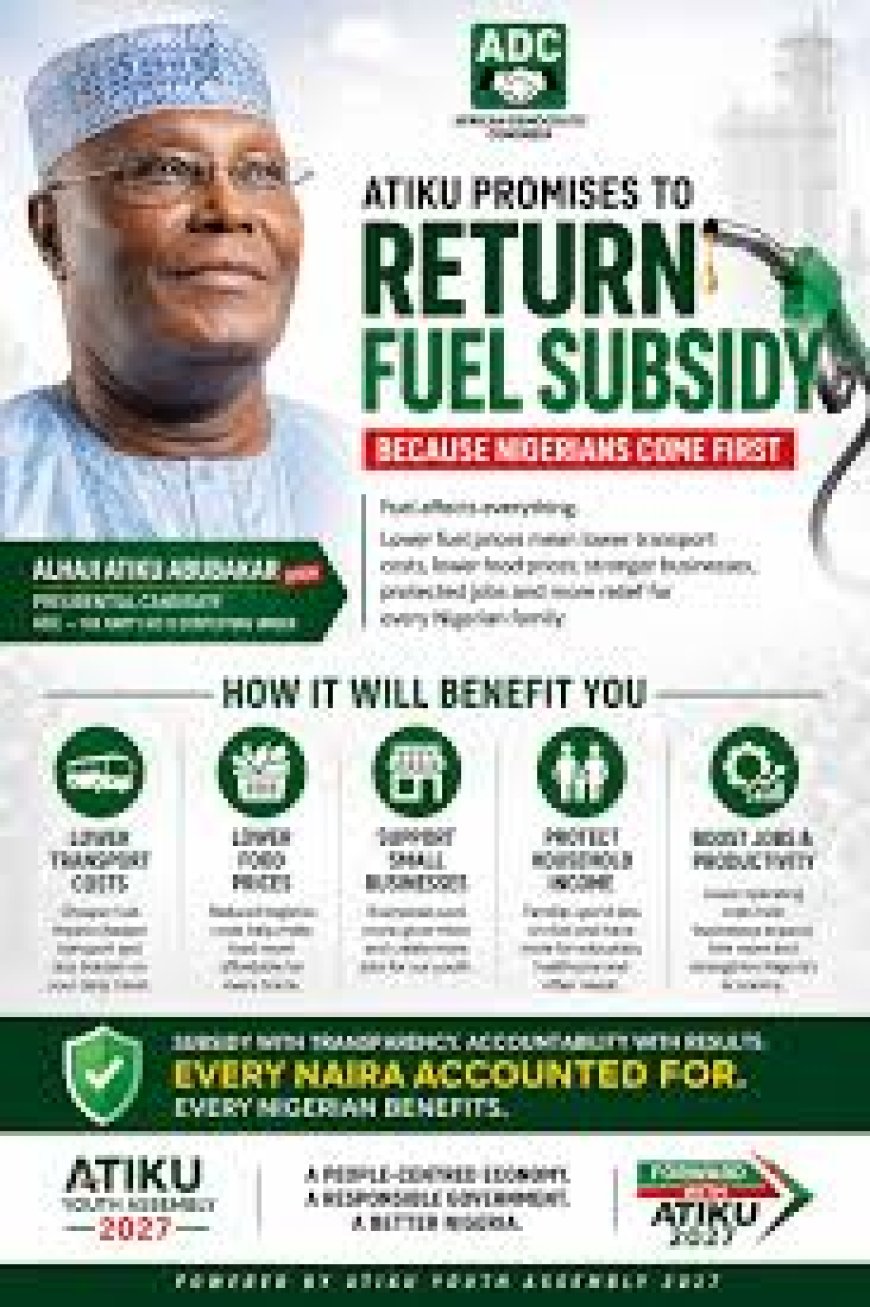
I have recalled the foregoing against the background of Atiku’s latest pledge to restore fuel subsidy if elected president next year. A politician with his worldview does not suddenly become an apostle of fuel subsidy in the name of helping the poor. But for the first time since raising campaign issues, Atiku now finds one that resonates with many Nigerians. That his new position contradicts what he has earlier stood for is reflected in the fact that even his spokesman tried an extrapolation of ‘removing subsidy and reinstating it again’. Atiku, of course, has doubled down on an idea that is becoming increasingly popular with many Nigerians.
Before I continue, let me reiterate my position on fuel subsidy on which I have written dozens of columns, including once illustrating my point with a story from The Other Room, “Lend Me One from Tomorrow’s”.
When on assuming office on 29 May 2023, Tinubu removed fuel subsidy, I endorsed the idea. That position has not changed. But those attacking Atiku also miss the point. As the late Mario Cuomo reminded us, “you campaign in poetry and govern in prose.” From the late President Muhammadu Buhari to Tinubu himself, weaponizing the emotional issues around fuel subsidy removal have become a secure route to Aso Rock. That, I guess, is what Atiku is also doing, and I consider it as no more than sheer hypocrisy for anybody in the ruling All Progressives Congress, APC or the current administration to blame him. Atiku is only playing them at their game, no matter the pretenses to the contrary, and Nigerians are paying attention to him.
What's Your Reaction?