

































Suicide Bomber Kills 5 Soldiers In Borno Attack
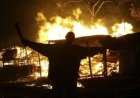
A suicide car bomber has rammed into a military convoy in the Timbuktu triangle in Borno State, killing five soldiers and injuring unspecified number of troops.
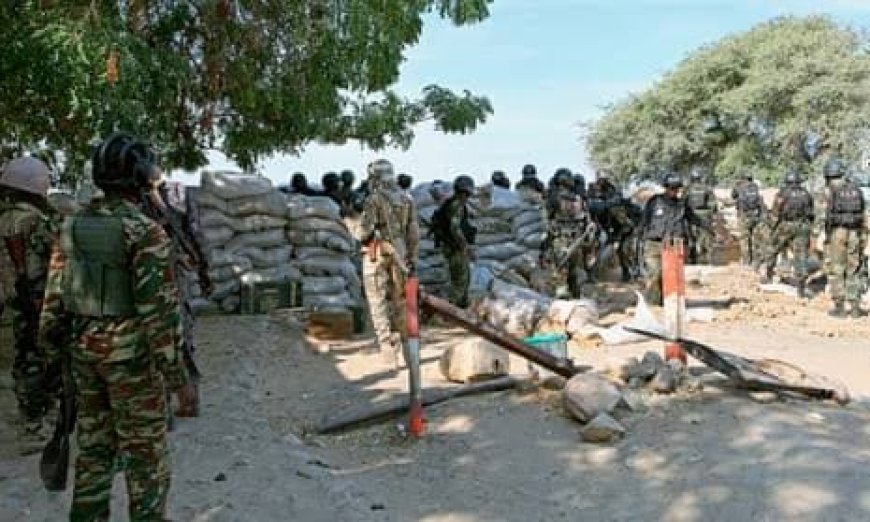
A suicide car bomber has rammed into a military convoy in the Timbuktu triangle in Borno State, killing five soldiers and injuring unspecified number of troops.
Security sources confirmed to Daily Trust that two senior military officers – a major and a lieutenant – were affected
“The attack also caused significant damage to military equipment used for offensive and defensive operations in the weeks-long clearance operations,” one of the soldiers said.
He said the terrorists drove cars that were loaded with explosives and rammed into their military convoy.
The troops were returning from a clearance operation that successfully dislodged several insurgents’ camps and killed many of them when the attack occurred on Wednesday.
“You know, every operation did come with setbacks, but we overcame it. Unfortunately, we lost five soldiers in the incident. Manga (the Commander) is hale and hearty, and the operation continues, thank you,” an officer who preferred to be anonymous said.
He said that armoured and logistics vehicles were destroyed when the explosives-laden van breached the convoy.
Our correspondent also gathered that the corpses and some injured soldiers have been flown to Maiduguri for medical attention.
The Timbuktu triangle is the area where the terrorists ambushed the convoy of Brigadier General Musa Uba, captured and executed him.
Army says terrorists suffered heavy casualty
Confirming the incident, Troops of Operation HADIN KAI, OPHK, said the bomber breached the defensive position, affecting some logistics platforms.
According to the spokesman of the operation, Lt-Col Uba Sani, some soldiers and members of the Civilian Joint Task Force paid the supreme price, while others sustained injuries.
He, however, said that troops discovered mass graves containing an estimated 20 terrorist bodies killed during encounters with troops, and buried by their cohorts.
“This discovery exposes the scale of terrorist casualties and further discredits terrorist propaganda narratives,” he said.
Narrating the incident, Uba said, while consolidating at a harbour area approximately 6km North of Chilaria, the troops encountered 2 Vehicle-Borne Improvised Explosive Devices (VBIEDs). Through vigilance and swift action, one VBIED was successfully neutralised.
“The second VBIED, however, breached the defensive position, affecting some logistics platforms. In the course of this attack, some gallant soldiers and members of the Civilian Joint Task Force paid the supreme price, while others sustained injuries.
“The wounded were promptly evacuated by Nigerian Army Aviation helicopters to 7 Division Medical Services and Hospital. Throughout the evacuation, Nigerian Air Force platforms from the Air Component in synergy with other Nigerian Army air platforms provided continuous overwatch to ensure the safe extraction of casualties and the security of ground forces neutralising more terrorists in the process,” he said.
He also revealed that the troops have sustained their advance into the Timbuktu Triangle, recording significant operational gains and further degrading terrorist networks operating within the area.
“In the latest phase of operations, troops successfully cleared and dominated key terrorist locations across the triangle, including Tergejeri, Chiralia, and the Ajigin/Abirma general areas.
“During the conduct of these operations, troops made intermittent contact with fleeing terrorist elements and engaged them with high volumes of fire, resulting in the neutralisation of several terrorists,” he added.
Resurgence of suicide bombing raises fear in Borno
Boko Haram insurgents have continuously carried out suicide bomb attacks across Borno State, leaving both security operatives and the civilian population dead in recent days.
The most recent attack was on December 16, 2025, when a suicide bomber reportedly detonated and killed five soldiers in the Pulka area of Gwoza Local Government Area of Borno State.
Sources said the suicide bomber, suspected to be a member of the Boko Haram terrorist group, disguised as a passerby, detonated the bomb close to the soldiers at a checkpoint.
On 24 December, a suicide bomber attacked a mosque in Gambarou market, Maiduguri, killing four civilians and injuring 35.
The attack marks the first bomb attack in the city in five years, which signalled a dangerous tactical resurgence by terrorist groups.
On June 21, 2025, 12 persons were killed in a suicide bomb explosion in front of a local cinema near Konduga fish market, Konduga local government area of Borno State.
Police spokesman Kenneth Daso Nahum confirmed the incident, saying that some residents also sustained various degrees of injuries.
On 26 January, 2025, at least 27 Nigerian soldiers were killed in a suicide bombing attack by terrorists during the military ground offensive by the Nigerian troops in Gujba and Damboa LGAs of Yobe and Borno states.
On December 24, 2024, a suicide bomber sneaked into a group of mourners at Dalori, near Maiduguri and detonated an Improvised Explosive Device, IED, killing two mourners.
On July 31, 2024, a suspected Boko Haram suicide bomber detonated a bomb at a marketplace, killing 19 people in Kauri, a rural community in the Konduga area of Borno state.
On 30th January, 2024, multiple suicide bombers attacked wedding guests, a hospital and a funeral location in Gwoza, killing 18 people and injuring scores of people.
‘Why terrorists resort to suicide bombing’
Theatre Commander, Operation Hadin Kai, Abdulsalam Abubakar, a Major-General said the terrorists resort to the use of IEDs and bombs when they see that they can’t match the superior power of the troops.
He stated this while briefing Defence Correspondents during an operational tour to the Joint Task Force North-East operation headquarters.
Abubakar listed bad roads in some areas where operations are being carried out as some of the challenges troops face during the course of their duties, saying some of the roads are currently being rehabilitated by the Theatre.
“It was highlighted that between Gubio and Damasak, for instance, we’ve had several IEDs where commuters, civilians, and even our troops have been involved.
“Right now, the main supply route from Gubio to Damasak, if you take a walk on that road, is being rehabilitated by the theatre, because it is when the conditions of these roads are very bad that the terrorists can now come to the road and plant IEDs.
“If all the roads are tarred, we won’t have one incident of IEDs. But because the roads are bad, that gives them the leeway to plant this IED.”
He also noted that they have started what was described as the “terrorists’ leaders’ decapitation operations” by attacking and taking out the control system of the adversaries, killing the leaders of the terrorists in order to easily take out the followers.
Also, a security expert attributed the recent escalation in suicide bombings to sustained military and security onslaughts against terrorist groups.
Speaking to Daily Trust, Barrister Mike Ejiofor, a former Director of the Department of State Services (DSS), said the renewed use of suicide bombing signals a dangerous tactical resurgence borne out of frustration.
He said intensified security operations have made it increasingly difficult for terrorists to operate freely, forcing them to adopt extreme measures to prove they are still active.
“With the recent onslaught on the terrorists, it has become almost impossible for them to operate freely. Suicide bombing is just another way of telling the government that they are still potent and existing,” Ejiofor said.
He described the tactic as a very dangerous development, noting that suicide bombing often represents the last resort of terrorist groups under pressure.
“They are frustrated, so they are resorting to this method to see how they can regain freedom of operation. Citizens must therefore be extra vigilant to avoid falling victim,” he said.
Ejiofor warned that security around mosques, churches and other public places must be strengthened to deny terrorists opportunities to strike.
He stressed the need for stronger synergy among security agencies, tighter checks on movement and restrictions in vulnerable areas
“They also need to deploy more personnel to sensitive locations, especially during mass gatherings. Most importantly, there must be cooperation and synergy between security operatives and the general public,” he added.
‘Partnership with US helping our operations in Northeast’
Meanwhile, troops of the Nigerian military attached with Operation Hadin Kai, on Wednesday, revealed that they are getting a lot of credible intelligence from the United States, saying such development has added impetus to their operations in the region.
The troops also disclosed that they have raised the kinetic approach to the fight against terrorism in the Northeast.
According to them, they have been going after the adversaries on all fronts shortly after receiving a marching order from the President and Commander-in-Chief of the Armed Forces to increase the kinetic approach since the non-kinetic approach hasn’t achieved much.
Abubakar maintained that the troops would soon clear the hideouts of all the criminals.
The senior military officer said socio-economic activities have come back to many communities in Borno State, including Kekenu, a community near Kukawa where terrorists had held sway in the past.
What's Your Reaction?