
























Open Letter To Lateef Fagbemi, SAN: Are You there, Mr AGF?
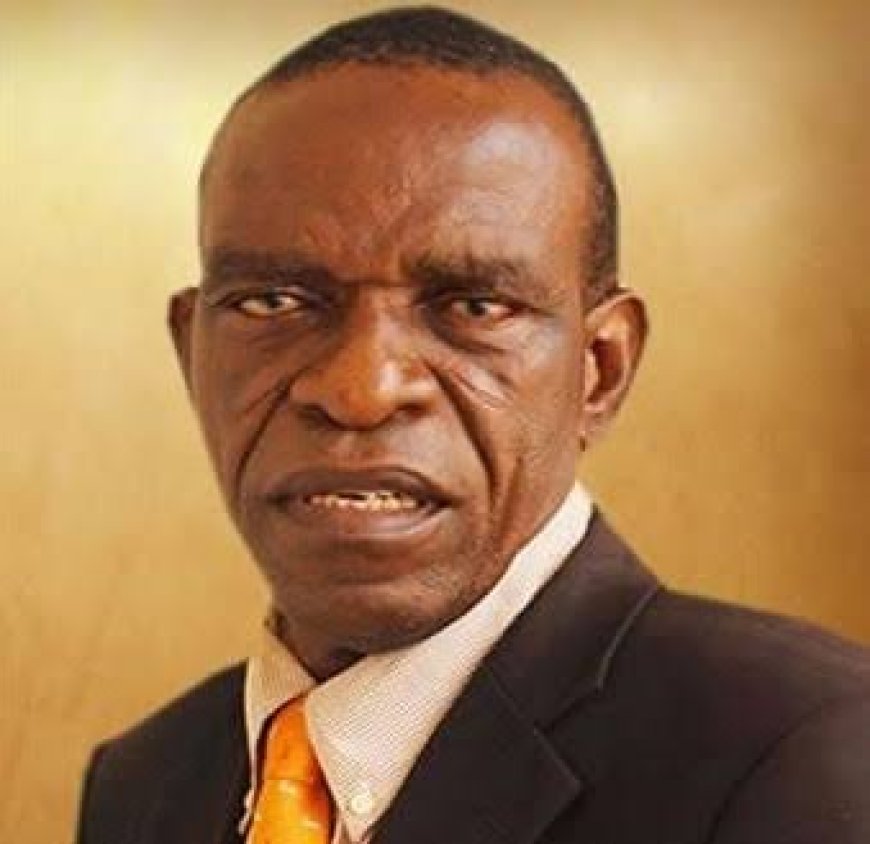
Dear Chief Lateef Olasunkanmi Fagbemi, SAN, Attorney-General of the Federation and Minister of Justice, I address this letter to you as a Senior Advocate of Nigeria who has devoted decades to the legal profession and who now holds one of the most significant offices in our constitutional democracy.
... "Law without justice is a wound without a cure." — William Scott Downey
Political Musing of Thursday November 12, 2026
By ike Abonyi.
Dear Chief Lateef Olasunkanmi Fagbemi, SAN, Attorney-General of the Federation and Minister of Justice,
I address this letter to you as a Senior Advocate of Nigeria who has devoted decades to the legal profession and who now holds one of the most significant offices in our constitutional democracy.
Your professional record merits serious consideration. Your management of major commercial and constitutional disputes, Nigeria's defence in the P&ID arbitration matter, and the Federal Government's successful Supreme Court case affirming local governments' financial autonomy all underscore the vital role a competent Attorney-General plays in safeguarding the public interest.
Yet that record also prompts a question Nigerians increasingly have a right to ask: Is Fagbemi still present and actively supervising the disorder within the nation's justice system?
Are you fulfilling your responsibility as the federation's chief law officer? Are you standing as the guardian of the rule of law? Are you ensuring that the law is applied impartially to the powerful and the vulnerable alike, as well as to political allies and opponents? Or has the office of the Attorney-General become so closely bound to the government's political interests that the public can no longer tell where the requirements of justice end and the calculations of power begin?
These are not inquiries into your legal competence. They concern your responsibility to the public.
The Wike Question: Where Is the Law?
The developing controversy involving FCT Minister Nyesom Wike, allegations concerning his son, and purported land allocations in Abuja warrants serious public scrutiny.
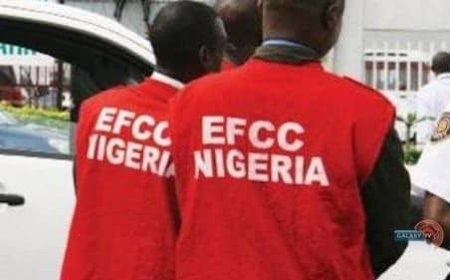
On October 20, 2026, reports stated that businessmen had petitioned the EFCC regarding an alleged $2.1 million transaction involving Jordan Nyesom-Wike and proposed land allocations in Katampe and Guzape. The petitioners claimed that the commission had acknowledged receiving their complaint but had not yet taken action. Jordan has denied the allegations and challenged the account of his purported involvement.
To be clear, a petition does not establish guilt, and neither Wike nor his son should be condemned without due process. At the same time, political connections must not place anyone beyond the reach of an impartial investigation.
The central question is simple: What steps has the EFCC taken in response to the petition, and will the public be told the outcome?
When allegations involve land administration in the Federal Capital Territory, the public has a legitimate right to expect transparency, compliance with lawful procedures, and credible investigations. Any additional allegations involving the allocation of land to public officials, their relatives, associates, or other influential persons should also be subjected to independent investigation and substantiated by evidence.
I am especially troubled by assertions that politically connected individuals received preferential access to public land, as well as allegations of improper dealings involving judicial officers. These matters require scrutiny and must not be presented as proven facts without adequate support. Where credible evidence is found, the relevant institutions should conduct investigations and pursue lawful remedies.
Abuja is not the private property of any minister, political family, or privileged group. Its land is governed by public law, and the public interest must remain paramount.
Fagbemi, Why the Different Standards?
Your office has shown that prosecutorial authority can be brought to bear against a former holder of your office.
In March 2026, your office took over the terrorism-related prosecution of your predecessor, Abubakar Malami, and his son. In a separate case, Malami and members of his family were charged with money laundering. In July 2026, after reviewing the EFCC's case and the respondents' objections, the Federal High Court ordered the final forfeiture of numerous properties associated with the former AGF.
Malami denied the money-laundering charges. The distinction between civil forfeiture proceedings and criminal prosecution must be maintained, as must the defendants' right to a fair trial. Malami held your position for eight years and was later tainted; where is he today? Does his case not illustrate the temporary nature of power?
Nevertheless, these proceedings show that former senior officials and their relatives are not automatically beyond the law's reach.
That is precisely why Nigerians are entitled to ask whether the same level of seriousness, urgency, and transparency will be applied when allegations involve individuals regarded as close to the current administration.
Justice cannot be forceful toward powerful officials of the past while becoming cautious in the presence of powerful officials today.
Where the evidence justifies an investigation, conduct one. Where it establishes an offence, prosecute in accordance with the law. Where it does not substantiate the allegation, state that clearly. The public should not be left with the suspicion that political proximity determines the pace, direction, or intensity of law enforcement.
The EFCC and ICPC must be permitted to carry out their statutory responsibilities free from political interference. When their conduct raises concerns about delay, inconsistency, or inaction, the public is entitled to a clear explanation from the institutions involved.
*The Attorney-General Is More Than the Government’s Legal Representative*
Chief Fagbemi, the constitutional office you hold entails duties that go beyond advancing the political interests of the administration in power.
Section 150 of the 1999 Constitution creates the office of the Attorney-General of the Federation. Under Section 174, the AGF may commence, assume control of, and continue criminal proceedings, or terminate them, subject to the Constitution and the public interest. These are substantial powers. Their exercise requires independent judgment, adherence to the Constitution, and a dedication to justice that rises above partisan allegiance.
You are not obliged to prosecute every individual identified in a petition. You are obliged to ensure that credible allegations are addressed lawfully and impartially, and that prosecutorial decisions rest on the facts and merits rather than the identities or political affiliations of those concerned.
Nor does the AGF personally direct every operational determination made by the EFCC and ICPC. Those agencies operate under their own statutory frameworks. Nevertheless, your office carries a vital responsibility for the administration of justice more broadly and for ensuring that the federal government’s commitment to the rule of law is principled and consistent.
That duty cannot be fulfilled by remaining silent when serious concerns arise about equal treatment under the law.
It is difficult not to observe that, under your watch, every APC crook and rogue now appears to be treated as a saint, while all thieves and crooks are portrayed as belonging to the opposing camp.
The appropriate response cannot be for the Attorney-General merely to observe events from the sidelines.
If the public concludes that political allies receive protection while opponents bear the full force of the law, confidence in the justice system will decline. Even the perception of selective enforcement can damage the credibility of legitimate anti-corruption efforts.
*Fagbemi, Are You There for Nigeria?*
Your career at the Bar brought you professional distinction. Your current office carries a greater responsibility: the opportunity to reinforce public confidence in the administration of justice.
The P&ID case demonstrated the importance of defending Nigeria's interests with resolve. The litigation concerning local government autonomy showed that the Federal Government could rely on constitutional principles even when confronting influential state governors. Those precedents reasonably invite scrutiny of the principles informing your present stewardship. Will the rule of law be enforced consistently when allegations concern individuals operating within the corridors of power? These matters call for responses from the Attorney-General himself, rather than general assurances from government spokespersons. AGF, sir, history will judge your tenure not only by the cases you successfully argued, the international liabilities you helped Nigeria avert, or the reforms implemented during your administration. It will also consider whether ordinary Nigerians were able to trust the justice system to apply the same standards to the powerful and the vulnerable. The office you hold is far too important to remain a silent observer amid public suspicion, and far too consequential to be treated as a tool of political expediency. Nigeria requires an Attorney-General who is engaged when the law is challenged, visible when accountability is sought, independent when political interests become involved, and sufficiently courageous to affirm that no person or family stands above the law. The nation does not need justice applied selectively; it needs justice applied equally. The Attorney-General must help make that distinction unmistakably clear. Yours in service to constitutional democracy, Ike Abonyi
What's Your Reaction?