







El Rufai, Ribadu: The 'Frenemies' Shaping Nigeria's Democracy
Their political manoeuvres are not just circuitous; they are strategic and often ruthless.
Political Musing of Thursday February 26, 2026
By Ike Abonyi.
“It is difficult to say who does you the most mischief, enemies with the worst intentions, or friends with the best.” — Edward Bulwer-Lytton.
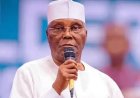
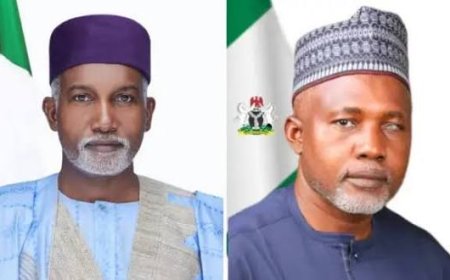
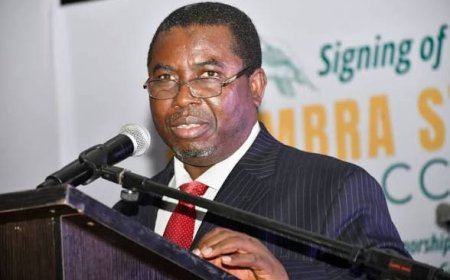
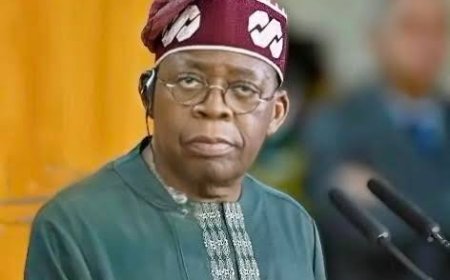
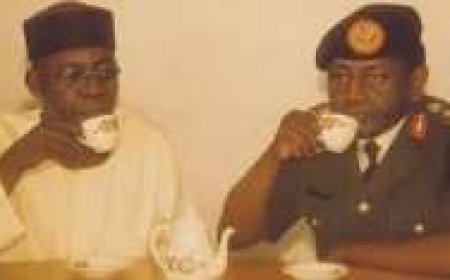
In the landscape of Nigerian democracy today, Mallam Nasir El-Rufai and Nuhu Ribadu stand out as pivotal figures. The very ambition that once united them has now become the source of their division. Both are Fulani, one hailing from Kaduna State and the other from Adamawa State. Their backgrounds as a Quantity Surveyor and a lawyer/policeman, respectively, further fuel their relentless ambition. It's an understatement to call them ambitious; they possess a remarkable talent for navigating Nigeria’s treacherous power corridors.. Their political manoeuvres are not just circuitous; they are strategic and often ruthless.
Their partnership enabled them to dismantle the ambitions of many who fell short of their expectations. Throughout successive administrations—from Olusegun Obasanjo through to Bola Ahmed Tinubu—these two have been instrumental in shaping political fortunes. Notably, their influence played a crucial role in persuading then-President Obasanjo against selecting former Rivers Governor Dr Peter Odili as running mate to the late Umaru Yar'Adua in 2007. Since 1999, every election year has witnessed their critical involvement in the power struggle, whether through covert manipulation or overt action.
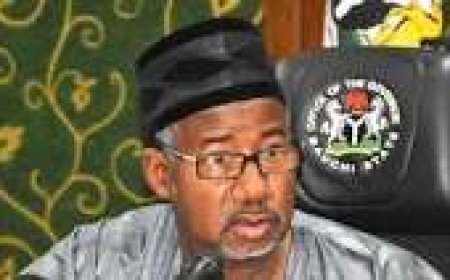
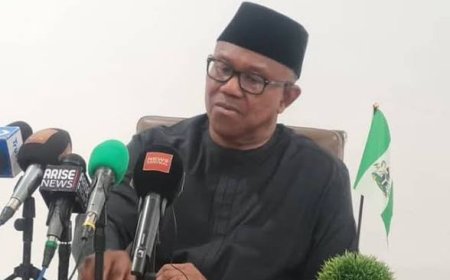
Today, they embody two distinct factions within Northern politics. Ribadu sits at the President's side as National Security Adviser, NSA, leveraging the immense power of the security apparatus. In contrast, El-Rufai, currently sidelined from the inner circle, remains a formidable "wildcard," with his next move—whether re-entering government or forging a new political alliance—keeping the entire political class on high alert.
The dynamic between these two men represents one of the most fascinating "frenemy" narratives in contemporary Nigerian politics. Both are brilliant and fiercely ambitious, with a shared history as protégés of the Obasanjo era. Yet, their trajectories have often clashed as they contend for dominance within the Northern elite and on the national stage. El Rufai appears to have done better politically, having served as a Minister and Governor after the Bureau for Public Enterprises, BPE, introduced him to Nigerians. Ribadu, after leaving the EFC, has been struggling politically until Tinubu picked him for the security czar job. However,t he still dreams of being both Governor and President, and he uses his current position to scheme for his own interests.
In the early 2000s, El-Rufai and Ribadu were extolled as the "Golden Boys" of reform—unstoppable allies known for their uncompromising nature, fierce loyalty to President Obasanjo's regime, and a willingness to challenge the status quo. El-Rufai, dubbed the "Bull" at the Bureau of Public Enterprises, BPE, and later the Federal Capital Territory, FCT, Minister, aggressively demolished illegal structures, trampling on any opposition no matter how highly placed. Ribadu, the "Scourge" at the Economic and Financial Crimes Commission, EFCC, targeted corrupt governors and rattled the political establishment, a campaign that included the eventual target of his present allegiance, Bola Tinubu. During their collaborative years, El Rufai and Ribadu were viewed as two sides of the same coin—technocrats wielding state power to instigate significant changes in Nigeria’s governance.
However, in politics, ambition is ever-evolving. Their friction became evident as the political landscape transformed after 2007. Diverging ambitions forced them into separate lanes, often resulting in tactical headbutts: Ribadu leapt to the national stage early by running for President in 2011 under the ACN, a platform he had previously branded corrupt. El-Rufai, while supportive of reforms, criticised the opposition's strategies, favouring a more calculated approach to building power. In their search for a platform to realise their ambition, El Rufai aligned with Muhammadu Buhari while Ribadu went to Tinubu and eventually they came together again in the APC.
As El-Rufai concentrated on creating a "model state" in Kaduna, utilising his governorship as a springboard for national influence, Ribadu maintained closer ties to the federal machinery, ultimately reestablishing himself at the heart of power.
They have ultimately aligned under the same political banner, APC, yet their rivalry starkly contrasts two distinct styles. The most recent and intense division erupted during the formation of President Tinubu’s cabinet. Reports revealed a cold war brewing over who would claim the title of the most influential "Northern voice" in the administration, especially after the northern Vice President, Kashim Shettima, a Kanuri, fell out of favour. For Tinubu and in politics loyalty is everything, El Rufai may have played a significant role in his coming to power but he understands clearly where his loyalty lies, certainly not on him. The situation escalated dramatically when Ribadu was appointed National Security Adviser, NSA, while El-Rufai faced a contentious "security clearance" hurdle in the Senate regarding his ministerial nomination—a move widely viewed as a triumph for El-Rufai's rivals within the security sector.
Therefore, by February 2026, the term "frenemies" accurately encapsulates the fractious relationship between El-Rufai and Ribadu. What began as an alliance of "star reformers" under President Obasanjo has devolved into a high-stakes legal and political battle, which analysts are viewing as a critical stress test for Nigerian democracy. Their conflict has deeply polarised the political landscape, weighed down by past grievances. Yours sincerely as a reporter distinctly recall covering the Justice Chukwudifu Oputa Panel during the Obasanjo administration, where Ribadu, serving as a police lawyer, showcased his Fulani fanaticism by aggressively confronting presenters opposing the Fulani agenda, disregarding his responsibility to the nation. His frequent clashes with Justice Oputa, the panel's chairman, underscored his misguided loyalty to ethnic over national duties. Ribadu’s controversial tenure as the founding chairman of the Economic and Financial Crimes Commission (EFCC) only amplified this perception, transforming from a crusader against corruption to one who defended the very figures he initially condemned as dirty and utterly corrupt.
Similarly, El-Rufai's political journey is riddled with controversy, from his role at the Bureau for Public Enterprises (BPE) to his tenure as FCT Minister and his eight years as Governor of Kaduna State. His political actions, which led to the near political annihilation of the Christian community in Kaduna—an issue his successor, Ubah Sani, is now trying to mend. Coupled with his unapologetic promotion of a Muslim/Muslim ticket in Kaduna state and at the national level, in highly polarised regions. These issues have combined to severely damage his reputation as a religious and ethnic bigot. If El Rufai is one of the most loved Fulani political players nationally today, it's for this dubious ingenuity.
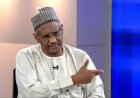
Now, these once-collaborative political allies are ensnared in a web of ridiculous disputes, fuelled by their insatiable ambition. The most striking development is the criminal prosecution of El-Rufai by the very state apparatus that Ribadu leads. On February 16, 2026, the Department of State Services (DSS) filed a three-count criminal charge (FHC/ABJ/CR/99/2026) against El-Rufai, stemming from a February 13 interview on Arise TV, in which he claimed to have intercepted phone calls involving Ribadu and accused the NSA of ordering security personnel to arrest him.
El-Rufai faces charges under the Cybercrimes Act and the Nigerian Communications Act, for allegedly conducting illegal surveillance on the nation's top security official. Alongside this, El-Rufai publicly accused the Office of the National Security Adviser, ONSA, of importing "dangerous chemical weapons" into Nigeria for unspecified, potentially nefarious purposes. Ribadu's office vehemently denied these claims through Brigadier General OM Adesuyi and referred the allegation to the DSS for thorough investigation.
Politically, the two are no longer united; El-Rufai has defected from the APC to the ADC, aiming to dismantle the party he helped establish in three elections in 2015, 2019, and 2023. With the 2027 elections approaching, his sights are set on destruction, and Ribadu stands firmly in his path. Political observers argue that their ongoing feud risks jeopardising the very institutions they helped build, with claims and counterclaims escalating on both sides. El-Rufai's supporters assert that Ribadu is leveraging the EFCC and DSS to "extinguish" his political enemies, while Ribadu's camp counters that El-Rufai’s admission of "intercepting calls" marks him as a national security threat who believes himself to be above the law.
But in all, what is unequivocally true is that the escalating ego struggle between these two profoundly ambitious individuals is intensifying political tensions and poses a serious threat to democracy itself. God help us.
What's Your Reaction?