






Who Is Killing the PDP?
The reality is clear: the PDP's road to self-destruction is well-documented, and it’s time for serious reflection on the reasons behind its unravelling.
Political Musing of Thursday, March 12, 2026
By Ike Abonyi
“ _No two parties go to court and come out smiling, especially for a political party like the PDP that’s in the opposition.”_ -Goodluck Jonathan.
If this question (Who is Killing the PDP?) were posed as a JAMB objective with names like Olusegun Obasanjo, Goodluck Jonathan, Atiku Abubakar, and Nyesom Wike listed as options, over 70% of those following the ongoing crisis within the Peoples Democratic Party (PDP) would likely point fingers at Nyesom Wike as the answer. However, can he truly be solely blamed for the demise of a once-mighty political force that had vowed to dominate the space for 60 years but is now disintegrating before our eyes?
Wike may be nothing more than a noisy gong trying to exert influence over a fragmented political landscape. In my book, *Wadata Wonders*, which has been on shelves since August 2025, I firmly outline the myriad challenges that have plagued this great party and chronicle its descent into chaos—a journey that began long ago. The reality is clear: the PDP's road to self-destruction is well-documented, and it’s time for serious reflection on the reasons behind its unravelling.
From its inception, the foundation of the PDP was not laid on sound democratic principles, and this flaw persisted until the party fell into the hands of a Political marauder like Nyesom Wike, who now seems to be leading it to its grave. The PDP was founded out of a political defiance against the military rule by a group of 18 Northern politicians that enlarged nationally to a group of 34, known as the G34, who later gathered in Jos, Plateau State, in 1998 to select their first presidential flag bearer. They nearly unanimously chose the second Republic Vice President, Dr Alex Ekwueme, the then leader of the G34. However, the military juntas overseeing the transition probably remembered how they had thwarted Ekwueme's earlier presidential ambitions following the 1983 coup against Shehu Shagari and Ekwueme, who were already on track in their second term and were likely to succeed Shagari in 1987.
And in an effort to rectify their past mistakes over the annulment of the June 12 poll against MKO Abiola, a Yoruba, the junta ultimately replaced Ekwueme with Olusegun Obasanjo, one of their own, just as he was emerging from prison. Although Obasanjo was reluctant to enter the political arena as an outsider in Yoruba geopolitics, the military leaders were indifferent. This marked the beginning of a series of challenges for the PDP, as a man who was never part of the party's vision was imposed as its leader.
This change significantly altered the political landscape. When selecting a running mate, Obasanjo had to abandon the individuals on the original list in favour of Atiku Abubakar, who was already serving as the Governor-elect of Adamawa State. Attempts by Obasanjo and the military to persuade Ekwueme to run for the Senate for Senate Presidency already zoned to the South East—failed, as he viewed it as a demotion after having been the nation's second-in-command for four years.
Since that initial misstep in deviating from the founders' vision, selecting flag bearers each election cycle has proven tumultuous for the PDP. Just four years later, in 2003, there was a sentiment among politicians that Obasanjo was still acting like an outsider and should be replaced by his vice president, Atiku Abubakar—one of their own. Unfortunately for Atiku, he miscalculated the risks involved and underestimated the apolitical Army General, resulting in a prolonged fallout for him, a punishment he is still serving.
In 2007, following the trend of 1999, Obasanjo ignored the preferences of most PDP leaders regarding his successor and instead chose the late Umaru Yar'Adua, then the outgoing Governor of Katsina State, despite his known health issues. The same scenario played out when it came to selecting Yar'Adua’s running mate; prominent figures like Peter Odili and Sam Egwu, both of them then outgoing governors, were passed over for a visibly uninterested Goodluck Jonathan, who was also a governor, this time from Bayelsa State.
The turmoil following Yar'Adua’s death and Jonathan’s subsequent rise is a tale for another day, but it ultimately contributed to the PDP's downfall as a ruling party, shattering its 60-year ambition. Key party figures absconded; Obasanjo tore up his membership card, while Atiku led others—such as Bukola Saraki and Rotimi Amaechi—out of the party and into the APC.
Losing power did not end the PDP's electoral crises; it only exacerbated them as the party found itself in an underdog position. In 2019, the party experienced its best electoral outing in terms of organisation and harmony, with Atiku Abubakar returning as the flag bearer, joined by Peter Obi as his running mate. Eleven bigwigs ran for tickets and all of them resolved to support the winner, thanks to the wizardry of the then national Chairman Prince Uche Secondus. Many political observers believe the PDP won the election, but the ruling APC, under the incumbency of Muhammadu Buhari, ensured that victory was not realised.
The party's internal struggles continued into 2023, with Atiku still at the centre of the feud, insisting on being the flagbearer despite the challenges posed by zoning. His insistence gave rise to Wike, who took advantage of the situation, positioning himself as a Southern irredentist after losing the vice presidential spot to the then Delta State Governor Ifeanyi Okowa. Wike's Southern irredentism could have waited had he secured the VP position, revealing a double standard in his actions that he continues to display.
The latest Appeal court ruling on Monday, which de-recognised the PDP's 2025 Ibadan National Convention that led to Tanimu Turaki's leadership, has unearthed long-buried issues and now acts as the undertaker of a party that struggles for reinvention.
The question on everyone’s lips is, "Who is killing the PDP?" This discussion aims to provide a clearer perspective on the situation to avoid jumping to conclusions. To that end, I will attempt to present a charge sheet for each of the key figures—whether by omission or commission—who played a role in the predicament of this once-prosperous organisation.
Starting with Olusegun Obasanjo, the architect of godfatherism in our politics with his garrison approach. He introduced a military-style command structure to the party, often imposing chairmen and candidates, which stifled internal democracy from the outset. The public tearing of his PDP membership card in 2015 was a significant symbolic blow coming from its first standard-bearer. Furthermore, his "letter-writing" campaigns against his successors, Yar'Adua and Jonathan, systematically undermined the party he helped to build.
Next is Goodluck Jonathan, who led the party to an incumbent loss. While this promoted Nigeria’s democratic image as a democracy disposed to respecting the will of the people, it also significantly contributed to the party’s decline. The PDP introduced zoning into Nigerian politics for peace and stability, but by breaching this agreement, Jonathan ignited a fire that ultimately consumed the party. His decision to contest in 2011 and 2015 angered many Northern power brokers who felt he violated the party’s internal zoning agreement following Yar'Adua’s death. This dissatisfaction led to the "G-7" governors' rebellion and the formation of the nPDP, which eventually defected to create the APC, a party that came into being with no clear agenda other than to grab power and they achieved it. Critics argue that Jonathan allowed the party’s internal discipline to erode, leading to a loss of the "big tent" that aligned regional interests. As President, he also failed to support Dr Okwesilieze Nwodo, whom he had brought in as National Chairman to reform the party. Instead, he succumbed to the pressure of the anti- reformists led by Rotimi Amaechi, the then PDP Governors' Forum leader. Many observers believe that yielding to non-reformist factions contributed to Jonathan losing the election.
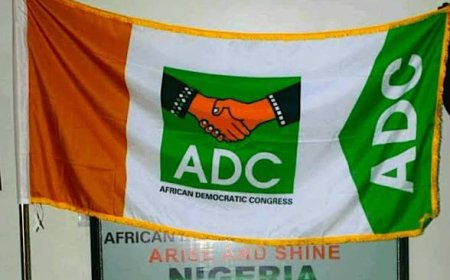
Perhaps the most prominent figure in the PDP crisis is Atiku Abubakar, whose perennial aspiration for the presidency since 2003 has significantly fueled party turmoil. Atiku is often accused of prioritising personal ambition over party stability. His history of leaving the party (for AC in 2007 and APC in 2014) and returning only to seek the presidency has created a perception of "mercenary" politics. Atiku's insistence on running in 2023—despite the demand for a "Southern Turn"—directly triggered the exit of Peter Obi its best material for the Presidency then and now and the rebellion of the G-5 governors, effectively splitting the opposition vote. Even now the same ambition drove Atiku out of the PDP into an opposition coalition called the African Democratic Congress, ADC. And his insistence on breaching zoning is already threatening the opposition unity again.
Nyesom Wike, the fourth key player in the PDP crisis, is often seen as a creation of Atiku, who provided him with the platform for his disruptive role. Wike is viewed as the one who effectively pulled the trigger on the party’s 2023 chances. After losing the 2022 primary and the vice-presidential slot, Wike led a scorched-earth campaign against the party’s national leadership Iyorchia Ayu whom he brought in but got his fingers brutally burnt in him. Wike’s orchestrated removal of Prince Uche Secondus as the National Chairman of the party to make way for his ambition was the last straw that broke the camel's back, leading to the final collapse of the PDP.
By serving as a minister in an APC cabinet while remaining a member of the PDP and enjoying the protection of a corrupt federal executive and judiciary, Wike has become a significant problem for the party.
While everyone observing the PDP drama may have their own opinions based on individual or collective sentiments, I, as a close watcher of this party from its inception as a political party, ical party,ical party,ical party,ical party,ical reporter and someone who has had the opportunity to serve as media adviser for over four years to the two most successful national chairmen of the party, Dr. Nwodo and Prince Secondus, i feel it is my duty to present the facts for proper and accurate perspectives to the crisis. My findings indicate that while Obasanjo weakened the party's foundation and Jonathan lost the roof, Atiku and Wike combined effectively to dismantle the walls during the 2023 cycle. The question now is, can the PDP ever be resurrected? That is a story for another day, but it is dependent largely on the survival of our democracy which is itself beckoning for an undertaker already. God help us.
What's Your Reaction?