




















Between Mkpokote and Mkpoye Nsukka: Politics and the Burden of Self
Politics is one of the most public expressions of a private truth: that man, however adorned with the language of altruism, is ultimately tethered to the gravity of self.
Prof Chris Agbedo
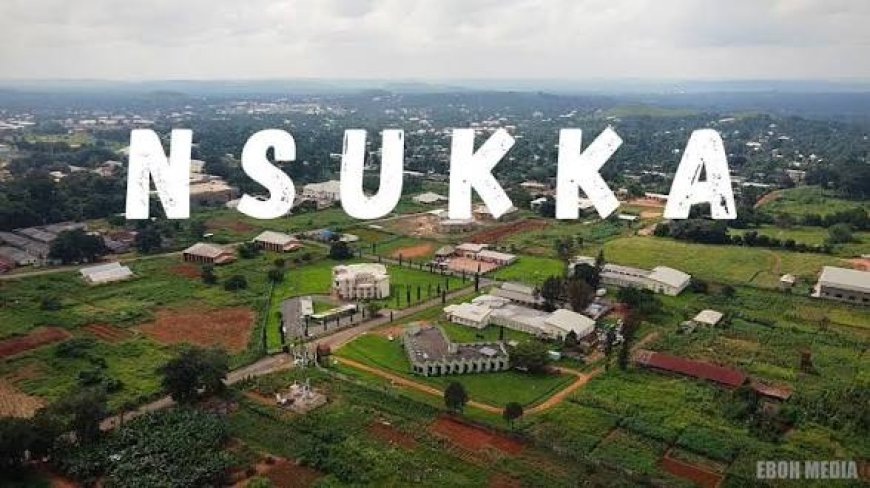
Politics is one of the most public expressions of a private truth: that man, however adorned with the language of altruism, is ultimately tethered to the gravity of self. The polis may demand sacrifice; the self negotiates terms. Between duty and desire, between "res publica and res privata," lies the uneasy grammar of political conduct. It is here that virtue is often rehearsed and interest quietly executed. The tragedy is not that the self exists in politics; it is that it frequently arrives draped in the rhetoric of the common good, only to shed the sham costume when ambition ripens. In the Nsukka dialect cluster of the Igbo language, Mkpokote signifies “bringing together,” a word dense with images of convergence, solidarity, and purposeful assembly. Its antonym, Mkpoye denotes “scattering” i.e., dispersion, fracture, the undoing of cohesion. Between these two lies not merely a semantic contrast but a civic journey: from unity imagined to unity imperilled. It is along this slender and treacherous arc that the story of the Mkpokote Nsukka Development Forum must be told.
The Forum was conceived as a corrective to disarticulation, a deliberate effort to gather the dispersed energies of the Nsukka cultural zone into a single deliberative commons. Across its constituent local government areas - Isi-Uzo, Igbo-Eze (North & South), Igbo-Etiti, Nsukka, Udenu, Uzo-Uwani – Igbo Nsukka boasts no deficit of intellect, enterprise, or cultural capital; what it has historically lacked is coordination. Mkpokote sought to supply that missing grammar: a platform to harmonize ideas, debate priorities, and design a functional development framework unencumbered by the usual toxins of Nigerian associational life, i.e., partisanship, sectarianism, and patronage. Its founding ethos was as bold as it was attractive: to remain apolitical, to transcend personal and factional loyalties, and to anchor itself in the compelling mantra of “Nsukka First” (Nska Ka). In a political culture where nearly every platform is quickly annexed by vested interests, this insistence on neutrality was both radical and redemptive. It drew into its fold a constellation of well-meaning and distinguished individuals - academics, professionals, technocrats, business icons, political leaders - each persuaded by the promise of a space where ideas, not interests, would reign.
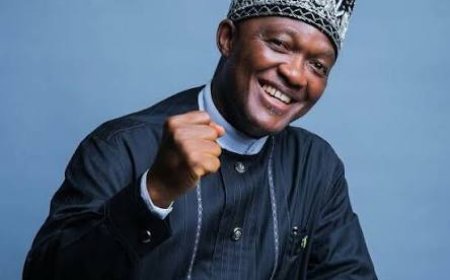
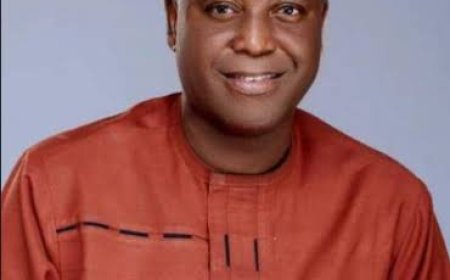
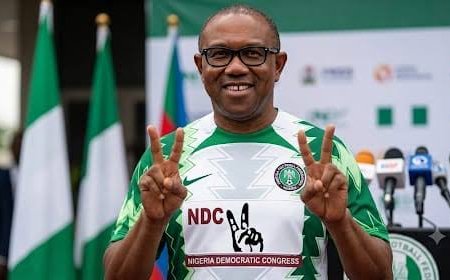
For a season, the promise held. Mkpokote became a crucible of discourse, a hotbed for debating and dissecting issues of common concern. It generated momentum; it gained traction, not merely as an association but as a movement of thought. There was, in its cadence, a quiet optimism: that Nsukka could think itself into coherence, that unity, once named, could be sustained. But unity proclaimed is not unity secured. Beneath the architecture of convergence lurked a latent contradiction - the irreducible presence of the self. The rupture came when the founding president emerged from the cocoon of civic neutrality to declare his intention to represent his federal constituency in the National Assembly come 2027. The ambition, in abstract, is unassailable; democracy thrives on participation. However, within the moral ecology of an avowedly apolitical forum, the declaration landed like a fissure across a carefully laid foundation.
The immediate question was not about right, but about implication. Can the custodian of an apolitical space seamlessly assume a partisan identity without altering the character of that space? Can a structure built on neutrality withstand the political activation of its central figure? Or was the Forum, in some subterranean way, always a prelude to this moment? Thus began the uneasy slide from Mkpokote to Mkpoye, from gathering to the spectre of scattering. At this critical juncture, the Igbo proverb “Ngwere ayama ọnwụ ne ya” - the lizard that desecrates its own mother’s funeral - intrudes upon the discourse with unsettling clarity. By electing to play the vulture’s tainted leg that befouls the communal pot, the lizard has, ever since, endured the full weight of an unforgiving and unrelenting verdict. To critics, the founding president’s headlong plunge into partisan waters is not a mere evolution of civic engagement but a symbolic profanation of the very altar he erected. Mkpokote, once nurtured as a sanctuary of collective purpose, now appears violated by the urgency of personal ambition. What should have been a measured transition reads instead as a reckless rupture, an act that unsettles memory, fractures trust, and lends a tragic vocabulary to the charge of betrayal.
Trust, that invisible currency of collective enterprise, began to erode. Members revisited assumptions once taken for granted. What had been read as selfless leadership now invited retrospective suspicion. In politics, timing is a moral variable; revelations, especially delayed ones, carry the sting of perceived concealment. Whether or not the ambition was premeditated, its unveiling produced the optics of strategy - and optics, in the tribunal of public opinion, often outweigh intent. Then came the campaign poster - blazoned with the mantra: “Trusted Leadership for a Better Future.” It did not merely announce ambition; it unwittingly amplified irony. The streets, never short of sardonic wisdom, supplied the interpretive key: “What politics cannot do in Nigeria does not exist.” In that elastic aphorism lies the nation’s lived cynicism, i.e., the knowledge that politics can invert meanings, recast intentions, and make contradiction appear coherent.
Thus, the slogan provokes that knowing Igbo aside: “Ụwa paa ẹka, ọ la n’ọchị” - the absurd, when stretched beyond reason, elicits laughter. For those who once intoned Mkpokote with near-sacral conviction, the echo now returns altered: ndi mkpokote, bụ hee ndi Mkpoye - the gatherers revealed, or at least perceived, as scatterers. Memory, too, re-enters the stage with prophetic insistence. In the days of student idealism at ESUT, as a member of the Mkpokote Nsukka WhatsApp platform recalled, when Nsukka sons gathered under banners of unity, the late Bishop Francis Okobo brutally punctured the innocence with a line that now reads like foresight cast in hindsight. ‘Ndi politician, alan oo!’- a cryptically-delivered welcome message, which suggested that we are all politicians, merely pretending otherwise. What was then a caution now sounds like a verdict.
In that convergence of slogan, proverb, and memory, the deeper drama of politics reveals itself: its capacity to transmute aspiration into suspicion, to turn unity into a theatre of competing selves. The poster speaks of trust; the moment speaks of tension. Between word and world yawns a widening gap and in that gap, rhetoric trembles, memory mocks, and the burden of self stands exposed. Yet, as with all crises of meaning, responses bifurcate. The purists, anchored in a covenantal view of Mkpokote, see in the development a breach of faith. For them, the Forum was a rare sanctuary insulated from the corrosions of partisan politics. Its leader, by extension, was a custodian of its moral architecture. His political turn is thus read as contamination, a moment when the self eclipses the collective, when the grammar of unity is subordinated to the syntax of ambition.
The pragmatists, by contrast, reject this austere dichotomy. Development, they argue, is inherently political, entangled with power, policy, and resource allocation. To remain perpetually at the level of discourse is to risk irrelevance. From this vantage, the president’s candidacy is not a betrayal but a transition, from deliberation to execution, from the margins of influence to its centre. The self, in this reading, is not an adversary of the collective but its possible instrument. Between these poles lies a more demanding truth. At its core is the question of institutional integrity. An organization that proclaims neutrality must embody it, especially in its leadership. A leader’s actions are rarely interpreted as purely personal; they are read as extensions of the institution. Once that leader enters the partisan arena, the boundary, like typical Nigerian boundaries between personal ambition and institutional identity, becomes porous. Even absent formal endorsement, suspicion of alignment suffices to erode credibility.
Closely allied is the problem of conflict of interest. The dual role of political aspirant and presiding officer of a presumably apolitical forum generates a structural tension difficult to reconcile. Every initiative becomes politically legible; every silence, strategic. Discourse, once free, grows guarded. The Forum risks mutating from a commons of ideas into a theatre of calculated utterance. Then comes the burden of self - ineluctable, insistent, sovereign. An Ezikeọba lyrical rhetoric sharpens the point with pungent clarity: ‘Onwo m, onwo m; ayar m onwo m ekryi onye?’ - myself, myself; for whose sake shall I eclipse my own being to behold another? A rhetorical question is not asked to be answered; it answers itself, with a finality that brooks no dissent. In that compact cadence resides the primal logic of human conduct: the self as first principle, last refuge, and ultimate tribunal. Thus, beneath every public vow, the private calculus endures - quiet, constant, and, when tested, decisive.
Leadership is not merely the assertion of self-contrived aspiration and vision; it is the discipline of restraint. It demands an awareness of how personal decisions reverberate through collective structures. The president’s ambition, legitimate as it is, carries a weight - the obligation to ensure that it does not dismantle the platform that amplified it. The higher the moral capital invested in a leader, the greater the expectation of self-regulation. Here, Mkpoye ceases to be metaphor and becomes prognosis. Scattering is rarely sudden; it is the cumulative consequence of unresolved tensions. A forum that fails to distinguish clearly between the personal and the institutional carries within it the seeds of fragmentation. Mkpokote, for all its conceptual elegance, appears not entirely insulated from this vulnerability. Its strength - charismatic leadership - has become its paradoxical fragility.
What, then, is to be done? First, institutions must be made to outgrow their founders and cease from being a Special Purpose Kekenapep (SPK). This requires deliberate structuring, i.e., clear rules, transparent processes, and credible mechanisms for leadership transition. Prudence suggests that the legislative aspirant steps aside, at least temporarily (if he hasn’t done so already), from the presidency of the Forum. Such a move is not punitive; it is preservative, a gesture that secures the integrity of the collective even as the individual pursues legitimate ambition.
Second, the Forum must undertake a self-audit. It must clarify its relationship with politics, codify safeguards against conflicts of interest, and translate its proclaimed neutrality into operational practice. Ambiguity, however convenient, is rarely sustainable. Third, expectations must be recalibrated. The dream of a wholly apolitical space, while noble, may be impracticable in a context where development is inseparable from politics. The task, therefore, is not to banish the self, but to discipline it, to ensure that ambition does not cannibalize purpose.
In the final analysis, the journey from Mkpokote to Mkpoye is neither inevitable nor accidental; it is contingent. It depends on how actors navigate the perennial tension between politics and the burden of self. The President of the Nsukka Forum stands at a symbolic crossroads: he may yet carry his ambition in a manner that honours the spirit of convergence, or he may, by omission or commission, hasten the drift toward dispersion. For Mkpokote Nsukka, the challenge is existential: to prove that it is more than a personality and that it can endure beyond the gravitational pull of its founder. Between bringing together and scattering lies a narrow path, edged with ambition, shadowed by self, and sustained only by vigilance. For in the final reckoning, the self is both architect and arsonist. And the distance between Mkpokote and Mkpoye is often no more than a brazen partisan decision. Nska Ka!
What's Your Reaction?