

































Akara Grants And Gaslighting: How Remi Tinubu And Bayo Onanuga Misread Nigerian Hardship
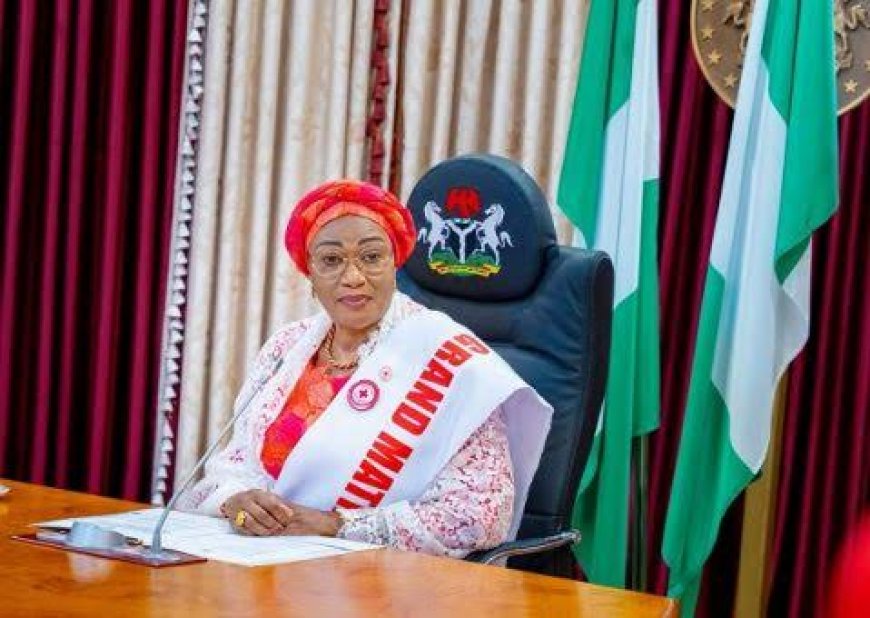
The First Lady, Remi Tinubu, has received flak this week for what would have been a good initiative, but was dragged south by her choice of words when speaking to journalists in the safety of the State House in Abuja.
ByAbubakar Adam Ibrahim
The First Lady, Remi Tinubu, has received flak this week for what would have been a good initiative, but was dragged south by her choice of words when speaking to journalists in the safety of the State House in Abuja. She would not be the premier First Lady of the country, or any state, to initiate an empowerment programme. I don’t imagine she would be the last.
But, of course, Nigerians found her comments that starting an akara business does not require a lot of capital to be belittling and to demonstrate the government’s thinking about Nigerians. Where others aspire to uplift their citizens to their fullest potential—quality education, quality life and quality care—Nigerians read her comments as a demonstration of the government’s lack of ambition for its people.
Naturally, public outrage followed. And, typical of the age of content creation, parody videos surfaced too. As is typical with political discourse in the country, the whole misspeak is at great risk of being lost in a storm of emotion, outrage or emotional gas flares. I believe there is more sinister psychology behind these comments and how it influences systemic and institutional thinking in the country.
For starters, the First Lady acknowledged the reactions the comments had triggered and responded to them by doubling down on the comment. She is not only empowering akara sellers, but also bole sellers, tomato sellers and pepper sellers. She is giving them a grant of N50,000 each to support their business.
It is true that for menial traders such as the targeted category, this could be some investment in their business—it would have been more significant if the value of the naira hadn’t crashed and the prices of commodities hadn’t soared since 2023—but that is beside the point. The problem is not supporting small businesses with small grants. I would never criticise that. The problem for me is the psychology behind the thinking that it is fine that in 2026, it is OK to boast about giving out grants like these as an empowerment scheme.
The First Lady had said, “So I like the idea that Mr President says this is the Renewed Hope Agenda. We have to renew our hope.” While this sounds like a brilliant political mantra, upon closer scrutiny, it is easy to see that hope is not being renewed but despair is being sustained.
To renew hope is to give people reasons and means to aspire beyond their current station or situation, not sustain themselves in squalor. So, while these grants are branded in the guise of empowerment, what they achieve is the subsidisation of poverty.
It is not unusual that in the run-up to elections, politicians engage in vote-buying misadventures disguised as “empowerment schemes.” Governor Bello Masari in 2018 launched a highly publicised programme that gave out goats to female secondary school students, just in the same way Representative Adedeji Olajide and Senator Mustapba Khabeeb did. Even the Kano State Governor, Abba Yusuf, just last year dished out 7,000 goats to some women in the state. Benue politician, Daniel Msughter Ukpera, did one better when he handed out bundles of ropes to electorate in his constituency as “empowerment.” His defence was that the ropes were critical tools to help farmers tie up their goats.
In 2017, Benue Governor, Samuel Ortom, went viral when photos of wheelbarrows branded with his face and the slogan “Gov Ortom for You” were handed out in the state. A year later, his Bauchi counterpart, Mohammed Abdullahi Abubakar, included wheelbarrows in his own empowerment programme. Governor Hyachinth Alia did not learn from the criticism of his predecessor in Benue and last year handed out “Hyacinth Cares” branded wheelbarrows to rural women.
Not to be outdone, Bauchi State First Lady, Aisha Bello Mohammed, said hold my water, and handed out packs of ‘pure water’ as economic starter packs for rural women.
That is the inflection point for me. The empowerment schemes do not treat Nigerians as people deserving of a decent living, or any kind of living if some of these examples are taken into consideration. They do not seem like sustained efforts to end poverty in one of the richest countries in the world, resources-wise, but rather the commodification of poverty for the purpose of securing political power or relevance. Let me subsidise your poverty so you can vote for me.
This is not a Remi Tinubu problem but a systemic one. Her utterances came in the same week that presidential spokesman, Bayo Onanuga, added to his catalogue of gaffes when he proclaimed in a TV interview that he does not see the level of hunger Nigerians are complaining about. To justify this claim, he shared that he gauged by asking his domestic and private staff how they are coping and based on their feedback, they are “surviving and adjusting” well to the economic changes in the country. He even chastised the media for overhyping the suffering in the country.
There are several problems with Onanuga’s comments. The parameters he used to gauge poverty levels in the country are not representative. As a journalist, he should know better. As a person, he should know that “surviving” is not a way to live. People should be free to live, thrive and pursue happiness, not struggle to survive in a country with Nigeria’s resources.
All of these utterances demonstrate the disconnect that exists between the government and the people and how out of sync these politicians are with the reality of the people they govern.
A welfarist approach to governance should not commodify or subsidise poverty but build a system where people can reach their best potential, establish businesses that are safe, provide not only enabling policies and an atmosphere for small-scale businesses to thrive but build a safe country where people do not worry about selling their houses or trades or taking loans to pay ransom. Sustaining despair should never be mistaken for renewing hope.
What's Your Reaction?