











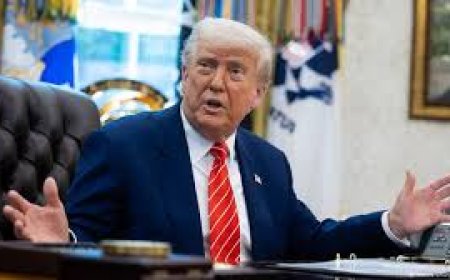

Trump in Our Eyes: A Nigerian Perspective.
In the dynamic political arena of Nigeria, spanning all six geopolitical zones and the influential corridors of power in Abuja, the name "Trump" has transcended its status as a mere American brand—it has become a strategic pivot in Nigeria's political calculations.
Political Musing of Thursday January 22, 2026
By ike Abonyi
“Once they(Nigerians) have seen the United States, they will never go back to their huts”- Donald Trump.
In the dynamic political arena of Nigeria, spanning all six geopolitical zones and the influential corridors of power in Abuja, the name "Trump" has transcended its status as a mere American brand—it has become a strategic pivot in Nigeria's political calculations. No political strategy is complete without considering the impact of Trump. The ruling class desperately prays for Trump to divert his attention from Nigeria as the 2027 elections approach, while the opposition fervently hopes for his powerful involvement, demanding his presence to ensure a free, fair, and credible electoral process.
For some Nigerians, Trump is the "strongman" who finally took decisive action against insurgency with the 2025 airstrikes in Sokoto. For others, he represents a closed door, symbolised by the 2026 travel restrictions that have left families separated and the "Japa" dream in limbo.
Generally, Nigerians view President Donald Trump much like the grand Ijele masquerade in Igboland—this is the largest and most striking masquerade, commanding attention the moment it steps onto the stage. Its size and splendour are so remarkable that no two observers can agree on its beauty from the same angle. The intricate details of the Ijele are appreciated from various perspectives, much like how Nigerians view Trump—each person has their own opinions. Yet, there is a shared recognition of his influence.
Perceptions of Donald Trump in Nigeria are multifaceted, often reflecting the country’s diverse religious, regional, and aspirational identities. His approval ratings have historically been relatively high in Nigeria, although his second term has introduced complexities. His immigration policies, particularly during this term, have sparked negative sentiments among many Nigerians
Recent actions have further polarised opinions along religious and political lines. Today, discussions about Donald Trump are likened to elephant meat—substantial and multifaceted, allowing people to take perspectives that resonate with their views.
In analysing Trump’s relationship with Nigeria, there is a common desire among Nigerians for him to support the enhancement of their democratic process through the orchestration of free, fair, and credible elections. Observers of Nigerian democracy often highlight that the lack of effective leadership recruitment, based on transparent electoral processes, poses a significant challenge to the nation. A democratic society, including Nigeria, cannot cultivate strong leaders when the election processes are flawed.
The last credible election Nigeria experienced was in 2015, when the All Progressive Congress (APC) ousted the then-ruling Peoples Democratic Party (PDP). That election was notable for its transparency, reflecting the true will of the voters, even though the outcome did not align with the broader expectations.
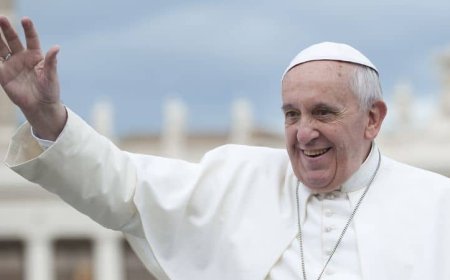
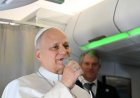
That election marked the freest in Nigeria since 1999, despite significant intimidation faced by then-incumbent President Jonathan, primarily from Western powers led by the US under Barack Obama, for refusing to conform to the Western push for gay, LGBTQ+, rights. There is huge gratitude for the halt to that disruptive agenda brought forth by Donald Trump’s second term, which reintroduced a sense of religiosity to American life. Perhaps, the divine acknowledgement of Trump's commitment to religion is manifested in the election of the first American as Pope of the world’s largest Catholic church.
Since 2015, some have expressed regret over their support for the APC, and a sense of disillusionment has spread regarding both governance and democratic practices. Comparisons between past leadership under Jonathan and the current leadership have led to discussions about the impact of political decisions on the nation's trajectory.
Many Nigerians now look back and question the role of the United States in supporting a government that many believe has hindered Nigeria's democratic development. There’s a strong desire for America to reassess its influence and rectify any past support for governance that did not align with the Nigerian people's wishes, especially as seen in the elections of 2019 and 2023.
This context shapes Nigerians' perception of Trump’s view of Nigeria. They wonder if he intends to correct past errors made by the U.S. or if he is advocating for American interests. Trump's "America First" stance creates some scepticism among Nigerians, yet there remains a hope that he can contribute positively to Nigeria's democratic progress.
Many Nigerians hold a favourable view of Trump’s straightforward and candid approach to issues, appreciating his image as a decisive leader in a political culture that often prioritises strength. His background as a billionaire, an international entrepreneur, and the success of his family, have garnered him a dedicated following among Nigerian entrepreneurs long before his political career began.
Trump’s anti-establishment stance resonates with many Nigerians who feel disillusioned with the current political class, finding his "drain the swamp" rhetoric relatable to their aspirations for systemic change. His strong position on religion, particularly among the Christian community, significantly contributes to his popularity in Nigeria. His assertive stance on issues such as religious freedom has endeared him to those who seek a defender of their faith.
Last year's controversial re-designation of Nigeria as a Country of Particular Concern (CPC) under Trump highlighted his support for persecuted Christians. His Christmas Day 2025 airstrikes against ISIS strongholds in Sokoto, a region important to many Nigerians, were seen by some Christian groups as a long-awaited response to terrorism affecting both Christians and Muslims alike. While the choice of Sokoto raised questions among some Muslims, many still see potential benefits from Trump’s leadership that could enhance democracy in Nigeria.
There is hope among Nigerians that the Trump administration will adopt strategies similar to those used by Obama in efforts to promote political change, which could lead to a more stable Nigeria and ultimately reduce migration pressures to the U.S. With Nigeria’s rich natural, material, and human resources, the key to unlocking its potential lies in strong leadership, and many Nigerians are looking to Trump for impactful intervention.
Yet, there is also a sense of caution regarding Trump’s true motives. Officially framing his actions as protective of Christians in Nigeria, some perceive this stance as a veneer for a deeper agenda. This has created a division among Nigerians, particularly along religious and political lines, with Christians hopeful for positive change, while some Muslims express concerns over the implications of his policies.
Politically, the situation is complex. The obviously emasculated opposition views Trump's involvement as a revitalising force, hoping that he will contribute to a more vibrant democratic process ahead of the 2027 general election. Meanwhile, the ruling party and President Tinubu have found themselves in a challenging position, responding to Trump's emergence with a desire to align their interests with his policies, even if not genuinely in the hope that it might favourably influence the 2027 elections.
As various political actors navigate their strategies for 2027, there is a collective awareness among Nigerians that fostering a strong Nigeria is essential for regional stability and will align with Trump’s America First agenda. A prosperous, democratic Nigeria serves not only as a vital ally for the U.S. but also as a formidable force in Africa.
In conclusion, Nigerians hope for a constructive relationship with Trump characterised by clear policies, mutual respect, and a commitment to shared prosperity. This approach could pave the way for a stronger partnership that benefits both Nigeria and the United States. This is how Donald Trump is perceived by Nigerians. God help us.
What's Your Reaction?