















President Tinubu Won't Get 10 Per Cent Of Northern Votes, We've Been Shortchanged Under Tinubu ----- Umar Ardo
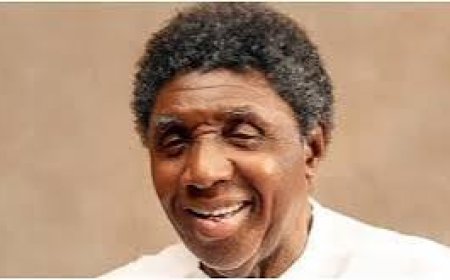
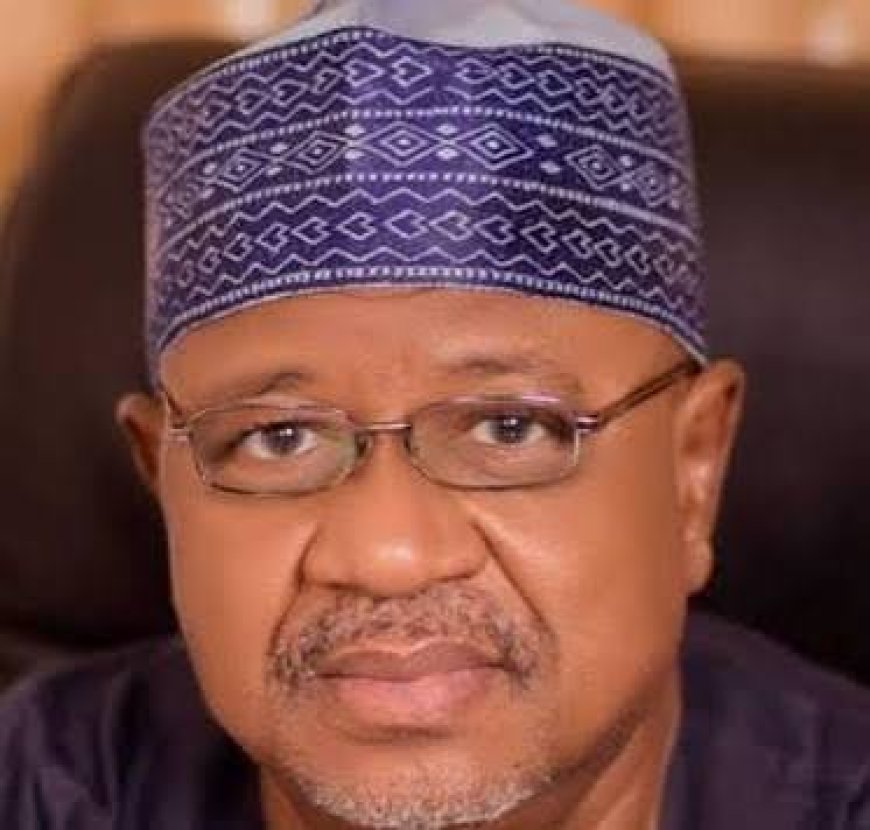
The Convener of the League of Northern Democrats, LND, and chieftain of the All Democratic Alliance, ADA, Dr Umar Ardo, says that President Bola Ahmed Tinubu cannot win 10 percent of the Northern votes in a free and fair election in the country.
The Convener of the League of Northern Democrats, LND, and chieftain of the All Democratic Alliance, ADA, Dr Umar Ardo, says that President Bola Ahmed Tinubu cannot win 10 percent of the Northern votes in a free and fair election in the country.
Ardo spoke in an interview on Frontline, a current affairs programme on Eagle 102.5 FM, Ilese-Ijebu, Ogun State, while assessing the performance of the Tinubu administration in Northern Nigeria.
“If a free, fair and credible election is conducted in Nigeria, Tinubu can’t get 10 percent of the Northern part...
“If they conduct the election in a free and fair manner, Tinubu will not win 10 percent of the North,” Ardo said.
“If they conduct the election in a free and fair manner, Tinubu will not win 10 percent of the North,” Ardo said.
According to Ardo, voters are likely to judge the Tinubu administration based on their experiences with insecurity, poverty alleviation, economic reforms and governance, pointing out that the president's chances of surviving in a free and fair election was slim.
He accused the administration of particularly favouring the South West, in the distribution of federal resources, political appointments and other government opportunities, adding that
He accused the administration of particularly favouring the South West, in the distribution of federal resources, political appointments and other government opportunities, adding that
the disparity between the North and South was particularly evident in the actual release of funds to federal ministries, despite the budgets allocated to them.
His words, “The budget to the ministries and the actual releases of funds, the North could have not been equated with the South at all. By far the south has received more releases about five times than the northern ministries.”
Continuing Ardo noted that the issue was not simply about budgetary allocations on paper but the actual resources eventually released to ministries and government institutions, pointing out that most of the parastatals are given to the South, which he said further reinforces the perception among Northerners that the region has not received a fair share under the present administration, even as the assessment of the administration should not be only on the number of political appointments given to people from different regions but also the distribution of government resources and opportunities.
His words, “The budget to the ministries and the actual releases of funds, the North could have not been equated with the South at all. By far the south has received more releases about five times than the northern ministries.”
Continuing Ardo noted that the issue was not simply about budgetary allocations on paper but the actual resources eventually released to ministries and government institutions, pointing out that most of the parastatals are given to the South, which he said further reinforces the perception among Northerners that the region has not received a fair share under the present administration, even as the assessment of the administration should not be only on the number of political appointments given to people from different regions but also the distribution of government resources and opportunities.
Political Appointments/ Representation
“The perception which is also true is that Tinubu has Yorubanised his administration. He has given all the critical appointments to his own kins and Yorubas The Hausa/ Fulanis and other extended groups in the North feel short changed and this perception has created a damage to this administration in Northern Nigeria," he noted, questioning the manner in which critical political appointments have been distributed under the Tinubu administration, arguing further that the issue has generated a sense of exclusion in Northern Nigeria.
Ardo pointed out that, the ethnic and geographical complexities of Nigeria make the question of representation particularly sensitive, especially when appointments are interpreted through the lens of regional identity.
He further stressed that the debate over appointments becomes more complicated when states such as Kwara and Kogi are classified within discussions about Northern Nigeria, despite their strong Yoruba cultural and linguistic connections.
“I want to make a distinction between the North that we call Hausa/ fulani North even though, we can say that the ruling aristocracy of Kwara is Fulani,” he submitted.
He further stressed that the debate over appointments becomes more complicated when states such as Kwara and Kogi are classified within discussions about Northern Nigeria, despite their strong Yoruba cultural and linguistic connections.
“I want to make a distinction between the North that we call Hausa/ fulani North even though, we can say that the ruling aristocracy of Kwara is Fulani,” he submitted.
Kwara, Kogi And Issue Of Identity
Ardo said the historical and cultural identity of Kwara and Kogi should be considered when analysing the regional distribution of political appointments.
According to him, “Because Tinubu is Yoruba, so, all appointments that are Yoruba, whether it is in the Kwara North or in the North kogi, they are seen as Yoruba. And given the movement that are being done, that we need to move Kogi and Kwara back to Yoruba as they are Yoruba . It is being agitated by the Yoruba even before Independence,” even as the vastness and diversity of Northern Nigeria make it difficult to treat the region as a completely homogeneous political bloc.
According to him, “Because Tinubu is Yoruba, so, all appointments that are Yoruba, whether it is in the Kwara North or in the North kogi, they are seen as Yoruba. And given the movement that are being done, that we need to move Kogi and Kwara back to Yoruba as they are Yoruba . It is being agitated by the Yoruba even before Independence,” even as the vastness and diversity of Northern Nigeria make it difficult to treat the region as a completely homogeneous political bloc.
“Because of the vastness of Northern Nigeria that carries Yoruba and other groups that are not homogeneous, you can say that the North has some other critical appointment that is distributed by the Tinubu Administration”
EconomicReforms and Northern Nigeria
EconomicReforms and Northern Nigeria
On the economic reforms introduced by the Tinubu administration, including the removal of fuel subsidy and other measures aimed at restructuring the Nigerian economy, Ardo further described the situation in the North as a movement from poverty into a deeper level of deprivation.
He further said he could not identify how such reforms had translated into meaningful benefits for Northern Nigerians, stressing that the region had been particularly hit by hard due to its large population of poor people.
“I do not see in any way how the North has benefited from the economic reforms,” he said arguing that the reforms had contributed to higher inflation and weakened the purchasing power of citizens, making it increasingly difficult for households to meet their basic needs.
“The economic from of the administration is actually biting on everybody and it has bitten on the North more than the south. The North has a large number of poor people, because the economic reforms have sent inflation high and the protesting power of people has gone by far low. It has pushed the North from a state of poverty to a state of destitution.
“In the North now, our people have gone more destitute than they are even poor. It has completely wiped out the middle class and the upper class is just only those that are in Government,” he further said.
According to him, the consequences of the reforms extend beyond the poor, with businesses and other sections of society also facing significant economic pressure, stressing that increases in workers’ salaries was not sufficient to compensate for the decline in the purchasing power of Nigerians following the depreciation of the naira.
“I do not see in any way how the North has benefited from the economic reforms,” he said arguing that the reforms had contributed to higher inflation and weakened the purchasing power of citizens, making it increasingly difficult for households to meet their basic needs.
“The economic from of the administration is actually biting on everybody and it has bitten on the North more than the south. The North has a large number of poor people, because the economic reforms have sent inflation high and the protesting power of people has gone by far low. It has pushed the North from a state of poverty to a state of destitution.
“In the North now, our people have gone more destitute than they are even poor. It has completely wiped out the middle class and the upper class is just only those that are in Government,” he further said.
According to him, the consequences of the reforms extend beyond the poor, with businesses and other sections of society also facing significant economic pressure, stressing that increases in workers’ salaries was not sufficient to compensate for the decline in the purchasing power of Nigerians following the depreciation of the naira.
What's Your Reaction?