




















The Fear Of Rufai Oseni, Enfant Terrible Of Nigerian Journalism, Is The Begining Of Wisdom
In the dusk of a long career in journalism, one learns to observe the shifting tides of our profession with a mixture of nostalgia and deep reflection.
By Chudi Uwandu
In the dusk of a long career in journalism, one learns to observe the shifting tides of our profession with a mixture of nostalgia and deep reflection.
We came of age in an era where the microphone was treated with sacramental gravity. The relationship between the press and the political class was governed by a strict, unwritten code of mutual respect.
High-ranking public figures stepped into broadcasting studios expecting a comfortable theater. They assumed their titles, age, and status would shield them from raw, unfiltered friction.
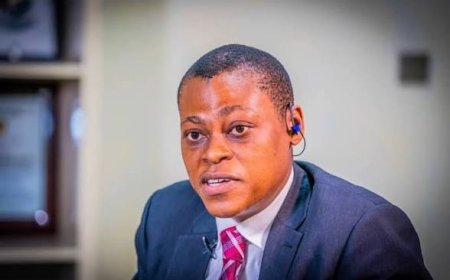
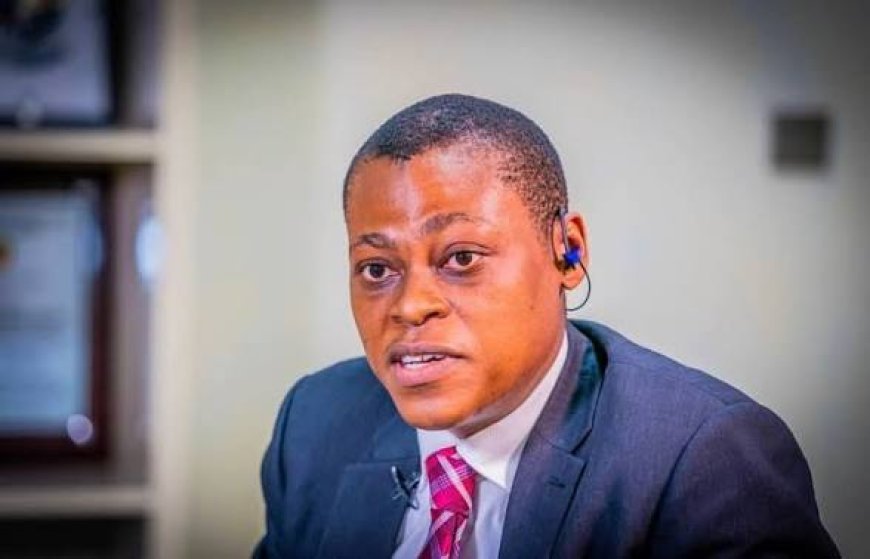
Then came Rufai Oseni.
As a co-anchor on Arise News’ The Morning Show, Oseni has completely upended that traditional choreography. To a younger generation weary of political evasiveness, he is a fearless champion of the public conscience. To traditionalists and political handlers, he is a disruptive enfant terrible.
This term originates from the French language and literally translates to "terrifying child." Historically, it describes an unconventional, innovative newcomer who shocks the establishment by completely disregarding tradition and breaking established rules. Oseni fits this moniker perfectly. He is Nigeria's premier unyielding, prosecutorial anchor.
The fear of meeting Rufai on set—and the rigorous preparation required to face him—is now the beginning of wisdom for Nigerian politicians.
The friction Oseni generates is not merely about the questions he asks. It is about a profound clash of cultural expectations. In our society, deep-seated deference is traditionally demanded by the elder and the ruler. Oseni approaches the desk with a completely different philosophy.
He believes a public title is not a shield against accountability. He refuses to treat a live studio as a public relations firm.
This ideological warfare has produced some of the most explosive, unscripted moments in modern Nigerian television history. Our political elite are unaccustomed to being pinned down. They frequently react with raw astonishment and defensive fury.
We saw this clearly during his infamous live-television clash with the former Governor of Ekiti State, Ayo Fayose [Ayo Fayose]. Oseni aggressively probed past allegations of election irregularities. An exasperated Fayose flared up on air. He openly accused Oseni of waging personal attacks rather than maintaining journalistic objectivity.
Fayose famously revealed that he had strongly objected to appearing on Arise TV because of Oseni. He stated that he would not have come on set had he not been promised a moderated show. Fayose's reaction was the defense mechanism of an establishment figure. He suddenly realized the old script of polite deference had been completely thrown out.
Similarly, veteran politician and former Edo State Governor, Senator Adams Oshiomhole, entered the Arise studio fully aware of the hostile terrain. . He refused to allow himself to be caught off guard during a heated back-and-forth regarding governance and the cost-benefit analysis of the ruling party.
He chose to show he was armed for battle. He accused Oseni of consistently delivering one-sided punches. Looking the anchor squarely in the eye he declared that what Oseni was doing was not journalism. He firmly noted that he was very ready for him and would not allow a tradition where the anchor speaks to himself and answers himself.
While Oseni’s style feels radically disruptive within Nigeria, this combative, adversarial style is a globally accepted and highly celebrated tradition of political journalism. Oseni did not invent this fire. He is simply channeling a fierce global heritage of inquisitor journalists who treat interviews as hostile cross-examinations.
Consider Oriana Fallaci of Italy. She was the historical pioneer of aggressive, uncompromising political interviewing. Fallaci viewed an interview as a psychological war between the journalist and power. In a legendary 1979 encounter with Iranian Supreme Leader Ayatollah Khomeini, she fiercely interrogated him on women's rights. She dramatically ripped off her required Islamic veil right in front of him when he told her the dress code was none of her business.
There's also Jeremy Paxman of the BBC in the United Kingdom. He remains the gold standard of the broadcast enfant terrible. Paxman operated under a famous professional philosophy that assumed public figures were lying and needed to be thoroughly challenged. He became world-famous for once asking a British Minister the exact same question 14 times in a row because the politician refused to give a straight answer.
Mehdi Hasan,is also renowned across international and United States networks for his forensic, prosecutorial approach. Hasan enters interviews with an overwhelming mountain of past quotes, data points, and video clips. He completely cuts off world leaders and diplomats the moment they attempt to deflect or pivot.
As an Elder in this society and a veteran of the craft, I must acknowledge that the anxieties of Oseni's critics are not entirely without merit. Journalism possesses foundational ethics. It demands fairness, balance, a controlled temperament, and the discipline of listening.
When an interviewer throws a barrage of questions without allowing the guest adequate time to respond, the line between robust journalism and personal activism becomes dangerously thin. When the tone borders on visible disdain, the broadcast suffers.
Even his brilliant co-anchor, Dr. Reuben Abati, has occasionally had to publicly caution him on air about the professional boundaries of his rhetoric. Furthermore, Nigeria’s National Broadcasting Commission code explicitly demands strict adherence to the fairness principle, professional objectivity, and emotional balance on the airwaves.
When a journalist becomes the central spectacle, the core message can easily get lost in the noise.
Yet, his supporters are also justified in their defense. For too long, the Nigerian media has been toothless. It has been occasionally compromised by financial inducements or silenced by political intimidation.
In an ecosystem where public officials routinely use taxpayers' airtime to deliver unchallenged falsehoods, a polite conversation is simply insufficient. It takes a certain radical audacity to pierce through decades of institutionalized political arrogance.
Ultimately, we do not have to fully endorse Rufai Oseni’s specific broadcast style to appreciate the monumental service he is rendering to the republic.
One may find his interruptions jarring or his tone overly combative. Those remain valid debates on professional aesthetics
But as an elder journalist, I commend him for something far more vital than style. Rufai Oseni has single-handedly restored consequence to the political interview.
He has sent an unambiguous message across the length and breadth of Nigeria's political landscape. The broadcast set is no longer a commodity for sale. It is no longer a sanctuary where politicians can safely peddle lies without a trial by fire.
Because of him, public
officials now think twice before booking media appearance.
They know they must arrive hyper-prepared, anchored in empirical facts, and ready to defend their records.
In a country desperately searching for accountability, this enfant terrible has done our democracy a profound service. He has forced power to look truth in the eye. For that, our profession is richer.
What's Your Reaction?