












Off-Cycle Election: State Capture, APC’s Rehearsal and INEC’s Playbook
The only major changes that have taken place in INEC from 2023 to date; every other thing remains as it is and has even become more sophisticated.
Political Musing of Thursday, June 25, 2026
By Ike Abonyi
“ _A disorganised opposition is the incumbent's greatest asset. It allows the government to govern poorly and still win easily,” — Realpolitik Maxim.
What is state capture, you may ask? It is a systemic, highly sophisticated form of political corruption where private interests significantly influence a state's decision-making processes to their own advantage. Unlike everyday "petty" corruption, like paying a bribe to a police or INEC official, or even "grand" corruption, like stealing billions from a specific public contract, state capture is about rewriting the rules of the game. Last Saturday’s off-cycle elections produced dozens of what state capture really means in our political landscape as a country. But before we delve into it, let us ask some pertinent questions to ascertain whether we expected anything different from what we saw across the country last weekend.
Has anything changed in the Independent National Electoral Commission, INEC, since 2023? The answer is yes, there has been a change of batter in its topmost leaders; Prof Joash Amupitan is now in charge, no longer Prof Yakubu Mahmud. The commission’s budget has also changed from N313 billion in the 2023 election to N873 billion for 2027. Also slightly changed is the law guiding its operations; the Electoral Act, the use of technology to facilitate swift operation and frustrate manipulation, is now optional, as analogue methods are allowed. This is a deterioration at a time when the global community is going digital. It is in analogue operation that votes are distorted, and election results are often different from what happened at the polling centres.
These are the only major changes that have taken place in INEC from 2023 to date; every other thing remains as it is and has even become more sophisticated.
The ruling party, the All Progressives Congress, APC, and President Bola Tinubu, in exercising the vantage position of an incumbent, ensured that these changes would help them. In an ideal democracy worldwide, what you need to win an election are the people—the voters. When voters embrace you and your policies, you are essentially winning the election in a normal democratic environment. But not so in Nigeria; here, you don’t need the people or their noise. What you need pre-election is to create enough threatening situations to scare voters away so that voter turnout remains low and manageable, allowing a President to be elected with eight million votes in a country with 93 million registered voters and not at war. On election day, all you need are compromised electoral operatives, security accomplices, some thugs to harass and chase away ‘non-conforming noisy voters,’ and others to lure voters. After votes are cast, at the collation centre, you need pretenders to sit as if waiting for results from polling centres when, in fact, they already have written results to announce, hidden in their pockets. At the collation centre, you need enough security operatives to contain noisy opposition candidates’ agents like Godsday Orubebe of 2015 or Dino Melaye of 2023.
Meanwhile, while the doctored results are announced, troubled spots are already identified, and a security squad is dispatched to contain them, with some compromised religious and traditional rulers mobilised to preach peace, reminding them that the judiciary is there for grievances to be addressed. Long before this stage, the Chief Justice of the Federation, who collates names of Judges to serve at the election tribunal, would have selected suitable judges for a hatchet job.
While all these are arranged, the man with the people on his side will be everywhere controlling the airwaves, wailing, making noise with pro-democracy activists threatening brimstone on social media, while electoral crooks carry on to be sworn in.
While all this happens, the majority of people will be angry and wonder why God allows evil men to not only exist but also succeed against the righteous. But we forget that God’s way differs from ours as human beings. If God wanted an ideal society, He would have eliminated Satan from the beginning, but He didn't. God even used the parable of the weeds in scripture (Matthew 13:24–43) to illustrate the coexistence of good and evil in the world, allowing both wheat and weeds to grow until final judgment, during which the good prevail in the harvest. Nigeria has not yet reached that harvest time, which is why we are allowing the wheat to choke us—perhaps politically trying to reap it before harvest.
What is really happening today is that political operatives are weeds choking the wheat—the voters—and by allowing this, the people are reaping the consequences until harvest time, when they will rise and say "enough is enough." That time is not now, but 2027 presents an opportunity.
I have given this long preamble to lead into this week’s Political Musing, which is a fallout from last Saturday’s off-cycle elections in some states. The election was significant for INEC, the ruling party, and security agencies, as a dress rehearsal to test their plans, and for the opposition, to see if anything had changed. Last weekend’s bye-elections were not mere precursors; they actively shaped the structure of the 2027 general election. The tactics refined last Saturday will serve as the baseline rules for next year. The weekend’s bye-election functions as live-fire tactical drills.
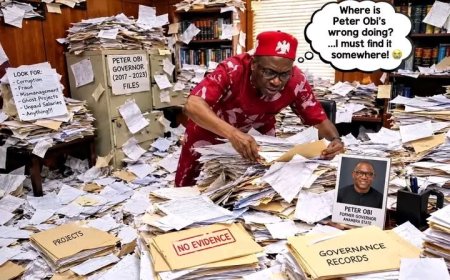
For the APC, these off-cycle elections are systematic rehearsals to test their machinery, expose opposition fractures, and solidify structural advantages. For INEC, they reveal the current operational "playbook": a combination of technological tweaks, logistical adaptations, and regulatory frameworks likely to define the 2027 elections. The APC’s rehearsals aim to perfect the mechanics of consolidation—centralising political capital early, leveraging incumbency advantage rather than relying solely on traditional patronage networks. They focus on neutralising opposition strongholds before the first ballot by weaponising internal crises within parties and strong candidates like Peter Obi to trigger defections or legal gridlocks over party leadership, providing a distraction and preventing opposition focus on defeating the incumbent. They also use the amended Electoral Act to test the legality of analogue methods.
Tinubu and APC also used the bye-election to test their territorial ground game: moving state governors to APC. The off-cycle elections allow the ruling party to test-run the national apparatus—financial resources, federal leverage, and governor support—giving them an edge over struggling opposition parties. Furthermore, these elections help in testing regional political responses to central narratives, experimenting with local consensus or coercion to align regional actors with the federal centre before 2027.
INEC, reacting to the criticism following the 2023 elections and preparing for 2027, employed off-cycle deployments to recalibrate its administrative and technological systems. Despite technological advances, however, the institutional playbook still faces paradoxes—relying on incremental data improvements, such as adding timestamps to accredited voters on the IReV portal and Form EC8A, to reduce manual inflation. While BVAS generally provides higher stability in smaller deployments, logistical challenges such as late deployment, uneven material distribution, and security vulnerabilities persist, as demonstrated in recent off-cycle elections.
A troubling pattern in the recent off-cycle playbook is the shift of electoral manipulation away from the BVAS itself and toward the surrounding ecosystem. Reports of pre-filled result sheets, voter intimidation, and tactical disruption in specific local government areas indicate that even where the technology may hold, the human element of security and administration remains highly susceptible to capture. The question remains, with the 2027 horizon around the corner, what are the strategic implications of all these for the opposition?
As a media political analyst who has been very active in the media environment and in political parties both in ruling and in opposition, I fear not predicting that the opposition's chances remain very remote until they agree among themselves to make some sacrifices and end the fragmented dilemma. Entering a localised or national contest while fighting multi-factional internal battles plays directly into the ruling party's playbook. Without a unified, structurally sound coalition platform that matches the ruling party’s resource concentration, the opposition runs the risk of being picked off before 2027. The palace doors will remain locked for a chaotic opposition.
Glaringly, the opposition in Nigeria has refused to agree on who should lead the charge, so they have all agreed to be defeated separately, and that is sad. And like the realpolitik maxim noted in the opening quote of this conversation, “A disorganised opposition is the incumbent's greatest asset. It allows the government to govern poorly and still win easily.” It's painful to say, but that's the reality; otherwise, it is to wait for God, whose way is not like ours. God help us.
What's Your Reaction?