










General Yakubu Gowon And The Tale Of The Bullet Marks On Trees (4)
General Yakubu Gowon did not know that those who told him to renege on the Aburi Accord and declare war against Eastern Nigeria had some ulterior motives.
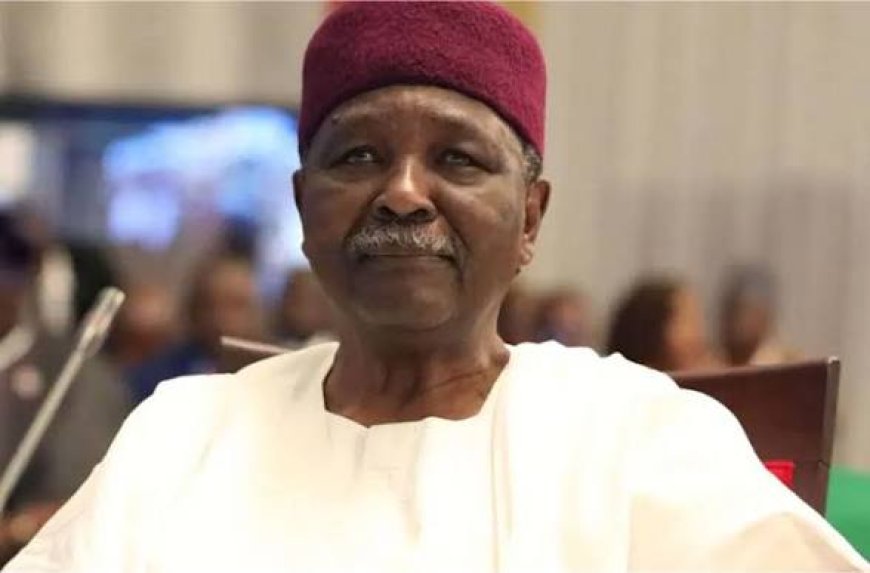
By Rev. Fr. John Odey
General Yakubu Gowon did not know that those who told him to renege on the Aburi Accord and declare war against Eastern Nigeria had some ulterior motives. It did not occur to him that the slaughtering of the Igbo which took place under his command would eventually go round and that Plateau State, his place of birth, would eventually become the focal point of jihadist madness.
Gowon was born in Pankshin, Plateau State. His father, Pa Yohanna Gowon, was an early convert to Christianity among the Angas people in Plateau State. As an evangelist his father migrated to Wusasa, near Zaria in Kaduna State. They lived there and became part of the community to the point that they considered Wusasa their second home.
What happened during the religious crisis which started in the College of Education, Kafanchan, Kaduna State, on March 6, 1987, from where it spread to other parts of the State, including Kaduna, Zaria, Katsina, Funtua, Ikara and Kankia, was bizarre enough to tell Gowon that Christians, East, West, North and South, are regarded as infidels that have no right to live by the jihadists.
According to the Newswatch magazine of March 30, 1987 and the African Concord magazine of March 24, 1987, by the end of that crisis, 25 persons were killed, 61 persons were injured, 152 Churches, 3 mosques, 46 private homes, 30 hotels, 9 shops, 1 petrol station and 19 vehicles were destroyed. In Zaria alone, more than 47 Churches were burnt, including St. Bartholomew’s Anglican Church, Wusasa, which was reputed to be one of the oldest Churches in the North.
Close to that Church, the family home of General Yakubu Gowon, Nigeria’s former Military Head of State, which adjoined the Church, was set ablaze by the jihadists. While the house burnt, the arsonists descended on the grave of Gowon’s father. They were determined to exhume the body but were prevented by the concrete slabs that were used to fortify the grave.
It was a case of the hunter being hunted. While Gowon commanded the hunting of the Igbo for three years and later regretted that some of the bullets meant to kill them fell on trees, the same people with whom he hunted the Igbo returned back to the North to hunt him and the rest of the Christians with whom they hunted and killed the Igbo.
When this happened, Gowon did nothing to the people who burnt his house and desecrated his father’s grave. Rather, his utterances have been making it difficult for the wounds inflicted on the Igbo by the Nigeria-Biafra war to heal. The Fulani jihadists used mostly Christian military officers from Yoruba land and the Christian Middle Belt to kill the Igbo during the Nigeria-Biafra war.
Brigadier Benjamin Adekunle, the dreaded Black Scorpion, was a Yoruba man from Ogbomosho in Oyo State. He was the Commander of the Third Marine Commando Division. His ruthless exploits during the war earned for him the name Black Scorpion.
He died on September 13, 2014, at the age of 78, having lived long enough to witness the atrocities being committed by the Fulani jihadists all over the country. The Black Scorpion lost his sting before he died. Granted that the dead are aware of what happens on earth, he must be twitching in his grave now for realising that Nigerian unity, which is the reason offered for killing about 3 million Igbo, is a ruse.
General Olusegun Obasanjo is Christian and a Yoruba man from Abeokuta. He played a decisive role in the war. He took over the Command of the Third Marine Commando Division from Benjamin Adekunle. He initiated the military tactics and offensives, particularly the *Operation Tail Wind,* that eventually broke the backbone of Biafra’s resistance in January 1970.
At 89 years, Obasanjo has lived long to discover lately that the Fulani jihadists had a different agenda for fighting the Nigeria-Biafra war. But unlike Gowon who cannot raise a voice against the killing of his people, in January 2021, worried by the way that Muhammadu Buhari, as the president, had reduced Nigeria to what many people then referred to as the Fulani Republic of Nigeria, Obasanjo called attention to the dangers ahead in a memo he called: Mark My Words, War Will Soon Break Out In Nigeria. In it, he wrote: “Another civil war in Nigeria has become imminent and inevitable. The reason for its inevitability is simply because Muhammadu Buhari, the Northern Nigeria Fulani oligarchs and the wider network of Fulani in Sub-Saharan Africa have concluded plans to adopt Nigeria as the homeland for all Fulani in Africa.
“Kidnapping and the seizure of the institutions of Government are all for the purpose of implanting Fulani into the mainstream and control of politics and the economy of Nigeria for the objective of funding the Fulani Project in Nigeria. The Fulani have become a blight on Africa and its biggest country Nigeria.
“It is a known truth that the Fulani will not relent in their quest for the conquest of Nigeria until they have seized all sources of income and made everyone else subservient to their rule and hegemony. Let the talk cease and the battle begin.”
During the 2023 presidential campaign Obasanjo gave his full backing to Mr. Peter Obi. My personal interpretation of this is that Obasanjo has also discovered that the Yoruba and the Middle Belt Christians who directed the killing of the Igbo were deceived into believing that they were fighting for Nigerian unity. He has discovered that the Igbo have been so badly treated in Nigeria and that there is the need to heal the wounds inflicted on them before, during and since the war ended.
Lieutenant General Ipoola Alani Akinrinade is a Yoruba man from Osun State. He is a Christian. He fought the Nigeria-Biafra war on the side of Nigeria. He is currently 86 years old. In 1997, after series of events had made it clear to him that the war he fought was as a part of the project to Islamise Nigeria and not really for Nigerian unity he told the *TELL* magazine of July 28, 1997, during an interview that he regretted fighting the Igbo. He said: “There was no reason for me to go to war with the Igbo after what happened to them in Nigeria. Yes, I have very great regrets now.”
Nineteen years later, during an interview with the *Sunday Sun* newspaper of July 24, 2016, after a sober reflection on the state of the nation, the same Akinrinade declared: “We are a different people. It is a fallacy to say that there is one Nigeria. Yes, we are all black people, we are all Africans. But first and foremost, I am a Yoruba man.”
In the North, a good number of Christians that fought the war have also discovered that they were fooled into believing that it was fought to ensure the unity of Nigeria. General Theophilus Danjuma is from the Middle Belt, precisely Takum, in the present-day Taraba State. Danjuma played a major role in the killing of General Aguiyi Ironsi and his host, Lieutenant-Colonel Adekunle Fajuyi, in the counter coup of July 29, 1966.
At the age of 87 years, he has lived long enough and watched thousands of his own people being slaughtered by the Fulani jihadists in the course of the years that he is now convinced that he and other top-ranking Christians in the Nigerian army from the Middle Belt were purely used to advance Fulani supremacy.
While he has not publicly regretted fighting the Igbo like Akinrinade, Danjuma admitted that the Aburi Accord could have stopped the carnage that followed its rejection by Gowon. He has also shown his disapproval of the marginalisation of the Igbo to date. Lastly, and most important of all, unlike Gowon, he has severally cried out against the killing of his people by the Fulani jihadists. Among other occasions, he cried out on March 24, 2018, during the maiden convocation of Taraba State University, Jalingo. He said:
“Our country is under siege by armed bandits. There is an attempt at ethnic cleansing in the state and of course, in some riverine and rural states in Nigeria. We must resist it. We must stop it. Every one of us must rise up. Our armed forces are not neutral. They collude with the armed bandits to kill people, kill Nigerians. The Armed Forces guide their movements. They cover them.
“If you are depending on the Armed Forces to stop the killings, you will all die one by one. This ethnic cleansing must stop in Taraba State and other rural states of Nigeria; otherwise Somalia will be a child’s play. I ask every one of you to be alert and defend your country, defend your territory and defend your state. Defend yourselves because you have no other place to go.”
Brigadier-General John Shagaya was also from the Middle Belt, precisely Langtang Local Government Area of Plateau State. He fought the war on the side of Nigeria. But he later admitted that the war on Biafra was unjust and that Ojukwu did what any brave soldier who is committed to the welfare and the freedom of his people should do when he declared the independence of the State of Biafra at the time he did. To this effect, Emefiena Ezeani cited him in his book, In Biafra Africa Died: The Diplomatic Plot, as saying: “Given Ojukwu’s position and disposition during the troubled days of the First Republic, anyone would have done what he did. Any soldier worth his salt would have acted the same way as the Ikemba did in 1966 when he ceded Biafra from Nigeria. Most of the young officers who fought the war did not actually understand why they were fighting, especially on the federal side. They were made to believe that they were quashing a rebellion. And they fought with that impression.”
Among the high-ranking Christian military officers who were used as their tools by the Fulani in the genocide against the Igbo during the Nigeria-Biafra war, only Gowon remains unrepentant. Not contented with his the glaring lie that the federal troops respected the Geneva Conventions during the war when they did not, he added insult to injury by saying that the bullets fired against the Igbo fell on trees.
Currently, the cat has been let out of the bag. What goes around has come around. Yoruba land and the Middle Belt are currently the prime targets of the Fulani jihadists with whom they took cover under the umbrella of fighting to safeguard the unity of Nigeria to kill about 3 million Igbo.
It is on record that on April 15, 1968, during the 1967-1970 genocidal war, Ojukwu told Gowon, who threw away the Aburi Accord in favour of killing the Igbo: “As you Fulanis and Britain are killing my people unprovoked, you will be alive to witness your people die like dogs unprovoked. UK will fall. Somebody greater than me will liberate Biafra. I promise you.”
If this is a prophecy, it has been fulfilled a million times. But to avoid being misunderstood, I make a claim that I am not a sadist. Consequently, I am not happy that the Fulani are slaughtering innocent people like dogs in Plateau and Benue States. I have cited Ojukwu’s statement and what has been happening to Gowon’s people just to prove to him how wrong he was in reneging on the Aburi Accord.
Today, 56 years after the Nigeria-Biafra war, the condition of the Igbo in Nigeria has not improved much. But they have learnt to adjust in other to stay alive. And they are living and bouncing in spite of the many odds being unleashed against them.
The more critical situation now is that after using mostly Christian soldiers from the Yoruba land and from the Christian-dominated Middle Belt to kill the Igbo, the Fulani jihadists have unveiled their true colour and true agenda. Ojukwu has been proved right. Gowon is alive and for many years now he has silently been watching his people being slaughtered with impunity.
The happenings in the country today, particularly in his own part of the country, Plateau State, which the Fulani jihadists have turned into a killing field, tell us the type of man in the man called Yakubu Gowon. Rather than showing remorse over the killing of more than 3 million Igbo during the war, he has the shameless guts to say that the bullets meant to kill them fell on trees. History will pay him in his own coin.
My honest advice to General Yakubu Gowon is that if he feels that he has no reason to ask the Igbo for forgiveness over the sadistic role he played in the genocidal war against them, he should at least do well to stop provoking them more. The End
What's Your Reaction?