










Mangu, Musa, Tinubu, Terror In Plateau State And The Performance Democracy Question
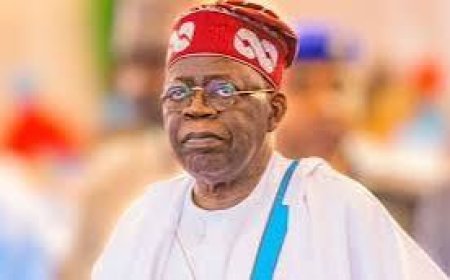
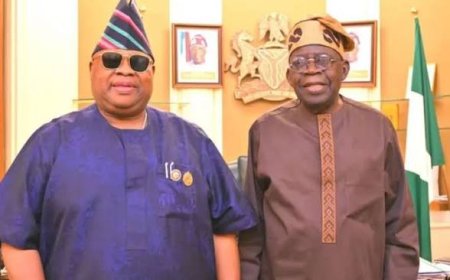
Saturday, 22 August 2026 is one of them. On that day, Nigeria's ruling All Progressives Congress, APC, unveiled its Presidential Campaign Council for the 2027 election. President Bola Ahmed Tinubu will chair the council. Among those appointed is the Minister of Defence, General Christopher Gwabin Musa, as Secretary, Security and Intelligence.
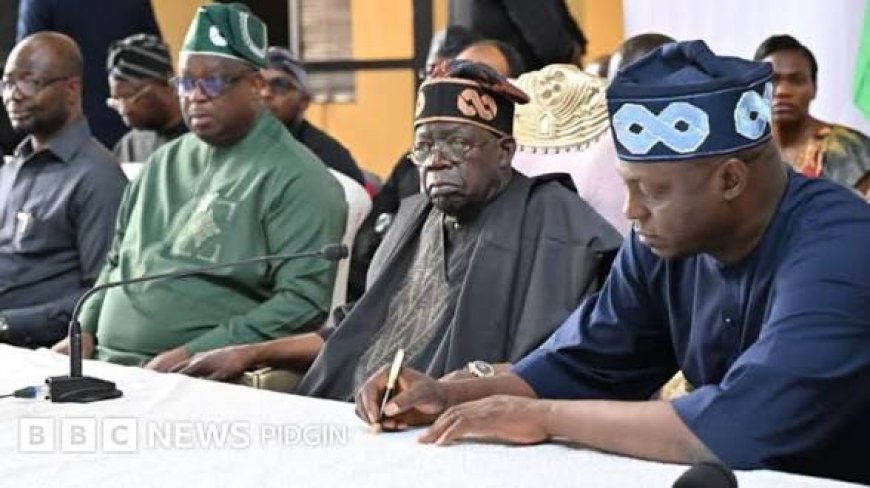
By Prof Bolaji Akinyemi
There are dates that tell a story.
Saturday, 22 August 2026 is one of them.
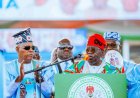
On that day, Nigeria's ruling All Progressives Congress, APC, unveiled its Presidential Campaign Council for the 2027 election. President Bola Ahmed Tinubu will chair the council. Among those appointed is the Minister of Defence, General Christopher Gwabin Musa, as Secretary, Security and Intelligence.
But while the political machinery for 2027 was being assembled, Mangu in Plateau State was still mourning.
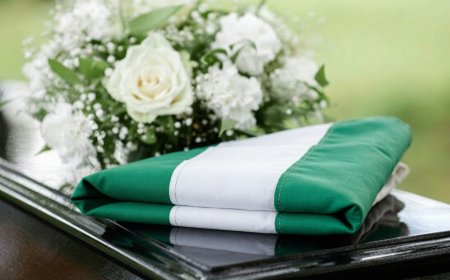
On August 18, armed attackers invaded Bin-Mper in Mangu Local Government Area, moving from house to house and killing residents. Reuters reported at least 25 people dead, with women and children among the victims. The Plateau State House of Assembly subsequently raised the figure to more than 26 across affected communities and reported the burning of 38 houses.
This coincidence deserves more than political commentary.
It deserves an interrogation through the lens of Performance Democracy.
Because Performance Democracy asks a simple question: What is government doing with the mandate it already has before asking citizens for another one?
And that brings us to Mangu.
MANGU: THE PERFORMANCE TEST
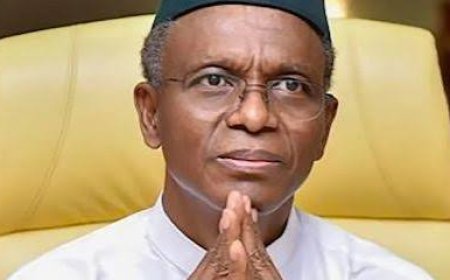
Mangu is not an obscure corner of Plateau State. It is the Local Government Area that once entrusted its leadership to the man who is today Governor of Plateau State.
Governor Caleb Manasseh Mutfwang was not born in Mangu—he was born in Wussasa, Zaria—but his early educational formation is rooted there. He attended LEA Primary School, Ampang-West, in Mangu LGA from 1973 to 1977, and later became Chairman of Mangu Local Government Area.
That history makes the present situation in Mangu particularly significant and unacceptable.
The man who once governed Mangu at the local level is today the Governor of the entire state.
And yet Mangu remains vulnerable to deadly attacks. That is not an accusation against Governor Mutfwang. It is a Performance Democracy question.
If a leader who knows the geography, communities and vulnerabilities of Mangu from his own political history is now the chief executive of Plateau State, and communities in that same LGA can still be invaded by armed men who move from house to house killing citizens, then Nigerians are entitled to ask:
What is comprising the security architecture of Plateau State? Where is the intelligence? Where is the early warning?
Where is the preventive capacity? Where is the rapid response?
And why does a community that should, arguably, be among the most familiar territories to its Governor remain vulnerable to terror?
These questions are not disrespectful to Governor Mutfwang.
They are the questions democracy must permit citizens to ask of every elected government.
THE GOVERNOR'S RESPONSE
To be fair, Governor Mutfwang did not ignore the attack.
His administration condemned the killings and directed security agencies to intensify surveillance and patrols in Bin-Mper, Kombun District, and other vulnerable communities in Mangu.
On 20 August, he visited the affected community, described the attack as barbaric and unacceptable, and assured residents that his government would do everything within its powers to keep them on their *ancestral land*. He also said the attack was not merely an attack on the community but an attack on him.
I welcome the response.
But Performance Democracy cannot stop at condemnation, sympathy and promises. It must proceed to measurement.
The question is not whether the Governor cares. The question is whether the security architecture is working.
Who Or What Is check Or What Is Comprising The Security Of Plateau?
This is where the conversation must become more sophisticated.
Governor Mutfwang is the elected chief executive of Plateau State and has a constitutional role in the state's security architecture. But he does not personally command the Nigerian Army or the Nigeria Police Force in the manner a military commander commands troops. National defence and policing remain substantially within federal institutions.
Therefore, Mangu raises a larger question than the performance of one Governor.
Who or what is actually comprising the security architecture of Plateau State?
The ancestral land narrative of the Governor deserves scrutiny.
But who and what is comprising the security of Plateau State?
The President and Commander In Chief of the Armed Forces?
The Minister of Defence?
The Governor?
The Police?
The Armed Forces?
The intelligence agencies?
The traditional institutions?
The local governments?
Community leaders? And, increasingly, the citizens themselves?
If all these components exist, why can armed men still penetrate vulnerable communities, attack sleeping citizens, burn homes and destroy farms?
Where does the chain break?
Is it intelligence gathering? Is it intelligence sharing? Is it deployment? Is it response time? Is it manpower?
Is it technology? Is it inter-agency coordination? Or is it simply the absence of a sufficiently integrated security architecture? Mangu demands an answer.
AND THEN CAME MUSA
Against this background, the emergence of General Christopher Musa in the APC Presidential Campaign Council creates another layer to the Performance Democracy conversation.
General Musa is not merely another campaign operative.
He is the Minister of Defence of the Federal Republic of Nigeria.
On August 22, as Mangu was still dealing with the aftermath of the killings, the APC unveiled its 2027 campaign council and appointed him Secretary, Security and Intelligence.
Again, there is nothing inherently wrong with political participation. But democracy must ask questions of priority. When citizens are dying, what should be the first performance priority of those entrusted with their security?
General Musa has now answered part of that question.
On August 24, while tears were yet to dry in Mangu, he accepts his campaign appointment, reaffirmed that his constitutional mandate to safeguard Nigeria's territorial integrity and protect the lives and property of citizens remains “absolute and uncompromising.” He also said national security remains the highest imperative and that ongoing operations, reforms and inter-agency collaboration would continue.
I welcome that declaration.
But Performance Democracy does not measure declarations.
It measures outcomes. So, Mangu asks General Musa:
If national security is absolute, what does that absoluteness look like in Mangu?
What security intelligence failed before the Bin-Mper attack? What early-warning mechanisms are being strengthened?
What has changed since the attack?
How quickly can vulnerable communities receive reinforcement?
How many attacks have been prevented?
How many perpetrators have been arrested?
How many have been successfully prosecuted?
And how many communities can now sleep with greater confidence than they could before?
These are not opposition questions.
They are performance questions.
TINUBU CANNOT ESCAPE THE QUESTION
President Tinubu cannot be separated from this conversation.
He is Chairman of the APC Presidential Campaign Council. General Musa, the Minister of Defence, is part of the council's security and intelligence structure.
The President has every democratic right to prepare for 2027.
His party has every right to organise.
The Minister has every right, within the applicable legal and constitutional framework, to participate in political activity.
But citizens have an equally important right:
The right to demand performance from today's government before being asked to renew its mandate tomorrow.
That is the heart of Performance Democracy.
Campaign Democracy asks:
Who will win?
Performance Democracy asks:
Who performed?
Campaign Democracy counts rallies, endorsements, structures, posters and political spending.
Performance Democracy counts:
Lives protected.
Communities secured.
Farmers returned to their farms.
Children able to attend school.
Roads delivered.
Hospitals functioning.
Jobs created.
Institutions strengthened. Public resources accounted for. And above all: Citizens alive.
MANGU MUST BECOME A NATIONAL BENCHMARK
Mangu should not be reduced to another Plateau tragedy.
It should become a national performance benchmark.
Let government tell Nigerians what the security architecture of vulnerable communities looks like.
Let the Federal Government and Plateau State Government jointly demonstrate how intelligence travels from information to prevention.
Let us measure response time.
Let us measure attacks prevented.
Let us measure communities secured.
Let us measure arrests and prosecutions.
Let us measure the safe return of displaced citizens.
Let us measure whether farmers can return to their farms without becoming targets.
Let us measure whether citizens can sleep without fear.
That is Performance Democracy.
Not propaganda.
Not image laundering.
Not condolences.
Performance.
THE QUESTION BEFORE 2027
President Tinubu and the APC are already preparing for 2027.
Nigerians must also prepare.
But not merely as voters.
As auditors of performance.
The question before Nigerians should no longer be:
Who campaigns best?
It should be:
Who performed? Who kept us safe?
Who protected our communities?
Who built institutions capable of surviving political transitions?
Who delivered measurable value?
Who can account for the resources entrusted to government?
And who can demonstrate that the Nigerian state works?
This is the spirit of the Lagos Declaration on Performance Democracy.
We are not against democracy.
We are demanding that democracy deliver.
We are not against elections.
We are demanding that elections become the mechanism for rewarding performance rather than merely renewing promises.
Therefore, Saturday, 22 August 2026 should not be remembered merely as the day the APC unveiled its 2027 Presidential Campaign Council.
It should also be remembered as the day Mangu placed a difficult question before Nigeria.
A question about the relationship between power, responsibility and performance.
Mangu has spoken through the blood of its citizens.
Governor Mutfwang has responded with condemnation, a visit and a promise of tighter security.
General Musa has responded with a declaration that his national security mandate remains absolute.
President Tinubu now has the larger responsibility of ensuring that the machinery of government produces the results those declarations promise.ñ
Because in the emerging age of Performance Democracy, Nigerians will not be satisfied merely with knowing who sits on a campaign council.
They will ask:
While you were preparing to win our votes, what were you doing to earn them?
And perhaps, for Plateau State, an even more immediate question:
If Mangu—the community whose political history is intertwined with that of its Governor—cannot yet be made secure, what must change in the security architecture of Plateau State?
That is not an election question.
It is a performance question.
And Mangu has put it on the table.
What's Your Reaction?