




















Killing Democracy Without a Coup d'état
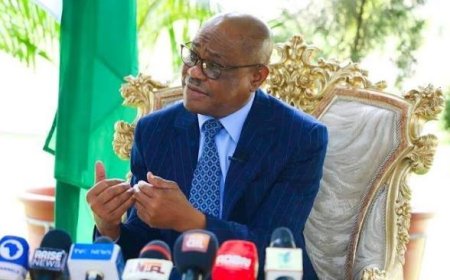
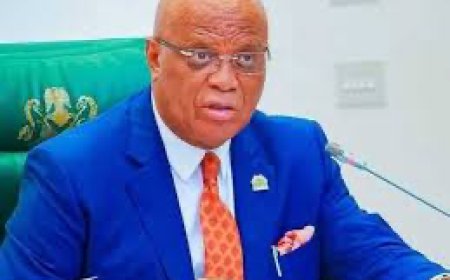
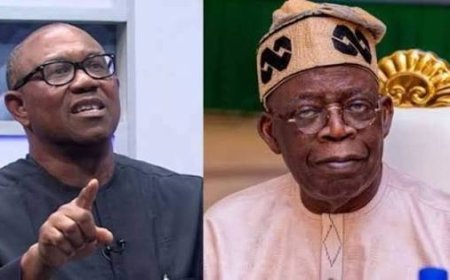
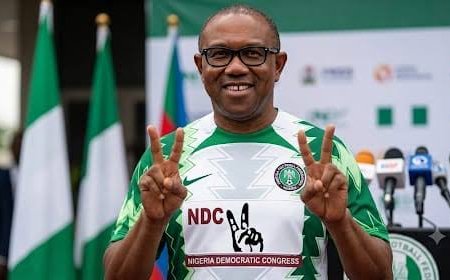
Alongside several other anti-democratic statements made by members of the ruling APC in Osun, Borno, and Yobe states, and the FCT, Tuesday's obstruction of Peter Obi, the Presidential Candidate of the Nigeria Democratic Congress (NDC), in Benue State by Governor Hayacinth Alia's thugs, organised by his aide, demonstrates the ruling party's deliberate effort to undermine democratic processes.
Political Musings of Thursday, September 10, 2027
By Ike Abonyi.
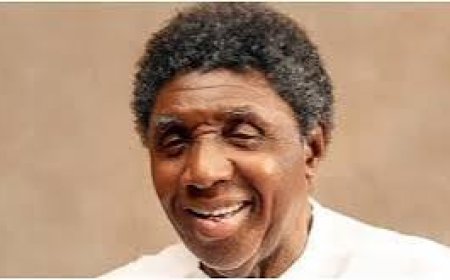
" Democracy dies when the opposition is silenced, leaving only the echo chamber of the ruling party."— Wole Soyinka
Alongside several other anti-democratic statements made by members of the ruling APC in Osun, Borno, and Yobe states, and the FCT, Tuesday's obstruction of Peter Obi, the Presidential Candidate of the Nigeria Democratic Congress (NDC), in Benue State by Governor Hayacinth Alia's thugs, organised by his aide, demonstrates the ruling party's deliberate effort to undermine democratic processes.
Following numerous military coups in Africa that brought democratically elected governments to an end, many people, including Nigerians, regard a coup d'état as the most significant means of destroying democracy. However, historical records indicate that democracy can be dismantled in numerous ways. Nigerians must therefore remain vigilant, because democracy can be destroyed without a coup, without soldiers taking to the streets, and without the Constitution being formally suspended. Democracy is not preserved solely by holding elections.
Democracy largely depends on citizens being free to make political choices without intimidation, coercion, threats, or fear of consequences for supporting an opposing candidate or party. Democracy can be hollowed out quietly through one threat, one intimidation, one abuse of power, one silenced opposition voice, and one frightened voter at a time. The most dangerous warning signs are therefore found not only in what political actors do but also in what they openly say, like those words that scare away voters from voting or piece them off, making them disinterested.
When political leaders or their supporters threaten voters, pressure public officials to produce electoral results, intimidate traditional institutions, or suggest that citizens should suffer personal consequences for refusing to support a particular party, Nigerians should not dismiss such language as ordinary campaign rhetoric. The ballot is supposed to be an instrument of freedom. The moment a citizen begins to fear what may happen to them for using it, democracy is already under pressure. This is the question Nigeria must confront: Are our politicians competing to win the confidence of citizens—or are some increasingly seeking to control the choices of citizens through fear, patronage, money, and political power?
That question is bigger than any political party. It is bigger than any candidate. It is a question about whether the Nigerian voter will remain the ultimate sovereign in the democratic process. Nigerians, therefore, should be deeply concerned when political language increasingly sounds less like persuasion and more like coercion. Such language exists when the government in power feels it has not done enough to win the heart of the people and decides to resort to intimidation and other undemocratic practices.
When a politician tells a woman to divorce her husband because he will not allow her to vote for a particular party; when a public official threatens traditional rulers with the loss of their positions for refusing to campaign; when elected officials are warned that their jobs depend on delivering votes; when voters are threatened with violence or told to leave their communities because they support the opposition—these are not merely colourful campaign statements. They raise a fundamental question about the future of democratic choice in Nigeria: Are citizens still being persuaded to vote, or are they being frightened into voting or staying away from voting? The distinction matters. Democracy is built on consent. Coercion is the opposite of consent. And when threats, patronage, state power, and overwhelming financial resources begin to converge around political competition, Nigerians must ask whether the playing field remains genuinely democratic—or whether politics is gradually becoming an exercise in controlling the voter rather than convincing the voter. "Out of the abundance of the heart, the mouth speaks" is a biblical proverb that shows what you care about deeply will show up in how you talk. If your mind is full of good thoughts, your words are kind. If your mind is full of anger or hate, your words show it. Therefore, when political language repeatedly becomes a language of threats, Nigerians have every reason to ask what it says about the state of democracy and its operatives. Consider the growing pattern of reported political statements from the ruling APC chieftains across the country—from Abuja to Osun, Ebonyi, Borno, and Yobe states. Party chairmen telling women to divorce husbands who prevent them from voting for his party; a senator allegedly threatening violence against members of an opposition movement; a commissioner warning traditional rulers that they could lose their official recognition if they failed to campaign for the ruling party; a governor threatening local government chairmen with removal if they failed to deliver votes; and a local government chairman reportedly warning voters who oppose the ruling party to leave the area. Whether these statements were intended as political rhetoric, mobilisation, or intimidation, they deserve scrutiny because democracy cannot coexist comfortably with threats against citizens for exercising political choice. The danger increases when political authority is involved. A traditional ruler should not have to choose between his traditional institution and political neutrality. A local government chairman should not have to choose between retaining his position and respecting the independent choices of voters. And no citizen should have to calculate the personal consequences of voting for an opposition candidate.
Elections are supposed to be competitions for the consent of the governed—not exercises in demonstrating who can intimidate the governed most effectively. A ruling party should have the advantage of incumbency, showcasing their achievements to sway voters, not using their position to intimidate citizens. What such acts from the ruling party translate to is that they have nothing to show the people. Then comes the extraordinary role of money. When political campaigns are reportedly capable of spending hundreds of millions of naira on billboards and other forms of political visibility, another democratic question arises: are Nigerians choosing their leaders through competing ideas, or are increasingly powerful financial machines determining whose voice is heard? Money alone does not invalidate an election. Political parties are entitled to campaign and advertise. But excessive financial dominance, particularly when combined with political intimidation, can distort the level playing field that democracy requires. This is bigger than APC, PDP, Labour Party, ADC, NDC, or any other political platform. The principle must apply to everybody. A democracy that tolerates threats today because they favour one's preferred party may discover tomorrow that the same instruments are being used against that party. Nigeria, therefore, needs to draw a clear line: campaign aggressively, persuade vigorously, mobilise extensively—but do not threaten citizens for exercising their constitutional choices. The ballot paper belongs to the voter. The choice belongs to the voter. The government belongs to the people. No party, politician, governor, senator, commissioner, traditional institution, or local government official should become more powerful than that fundamental democratic principle.
The greatest danger to democracy is not merely losing an election. It is creating an environment in which citizens become afraid to vote freely. And when fear begins to determine the ballot, an election may still take place—but democracy itself has already begun to lose.
The deeper issue, therefore, is not which party makes these statements or which candidate benefits from them. The issue is what kind of political culture Nigeria is creating ahead of 2027. A healthy democracy should make political persuasion more powerful than political intimidation; ideas more important than threats; citizens more important than political godfathers; and the ballot more powerful than the instruments of government. Political parties have every right to campaign vigorously and seek victory. But the democratic legitimacy of that victory ultimately depends on one simple principle: the voter must remain free. The real test of Nigeria's democracy is not whether elections take place. It is whether Nigerians can participate in them without fear or intimidation.
The founding fathers of our current political landscape envisaged things like this and had them in the Electoral Act. Section 97(1) of the Electoral Act specifically prohibits political actors from threatening violence or using force to compel voter behaviour. When chieftains utter these threats openly during public rallies without immediate, visible legal consequences, coercion is elevated into a standard campaign strategy.
Rather than reprimand, what is seen is a perceived pretentiousness of institutional neutrality. The Electoral Commission, INEC, indulging in regulatory foot-dragging and positioning itself as a neutral administrator, shows hesitation to invoke its powers against political actors who violate campaign rules. When the commission treats blatant voter suppression tactics as mere "political rhetoric" rather than statutory infractions, its neutral posture appears performative. Ditto for the law enforcement agencies — the police and DSS — who engage in selective law enforcement despite Article 214 of the Constitution mandating a national police force to maintain law and order impartially. However, when the police quickly arrest opposition figures or youth for online commentary while ignoring explicit threats of voter disenfranchisement made by ruling-party stalwarts, the public perceives the force as an enforcement arm of the incumbent party, not of the citizensensens.
Nothing kills democracy more than acts that discourage voters from participating through intimidation, with the supposedly neutral law enforcement copiously demonstrating obvious bias. Nigeria — this is where we have brought our democratic journey to the point of destruction.
In conclusion, I present American renowned political scientist Frank Wilhoit who captured it pointedly that "The law cannot protect anyone unless it binds everyone, and cannot bind anyone unless it protects everyone."
God help us.
What's Your Reaction?