


















Democracy and the Prognosis for 2026: A Shadow Year for 2027
The year 2026, which begins today, can be best described as a transitional year leading up to the significant milestone of 2027. This shadowing suggests substantial implications for both Nigeria’s political landscape and the global arena, particularly as we anticipate the planned return of humans to the lunar surface in 2027.

Political Musing of Thursday January 1,2026
By ike Abonyi.
“This year's book at midnight turns to a footnote in the next." – Terri Guilemets
The year 2026, which begins today, can be best described as a transitional year leading up to the significant milestone of 2027. This shadowing suggests substantial implications for both Nigeria’s political landscape and the global arena, particularly as we anticipate the planned return of humans to the lunar surface in 2027. The world is eagerly awaiting the 2027 lunar landing (Artemis III), but 2026 will be crucial in determining whether this mission can proceed as scheduled.
Far from being a quiet prelude, 2026 is poised to be a year marked by "firsts" and "biggests" that will transform the cultural and scientific landscape ahead of 2027.
In the sports sector, while 2027 will host the Women's World Cup, 2026 will hold the most ambitious sporting event in history: the FIFA World Cup. For the first time, this tournament will be hosted by three countries: the USA, Canada, and Mexico. This monumental event features an increase in participating teams from 32 to 48, resulting in 104 matches. The historic final, scheduled for July 19 at MetLife Stadium in New Jersey, is expected to become the most-watched single sporting event in history. Unfortunately, Nigeria, often regarded as the giant of Africa in terms of size, population, and football talent, will not be part of this landmark event, primarily due to poor leadership in both the political and sports sectors.
In Nigeria, 2026 will serve as a pivotal year in multiple ways. The political climate will shift dramatically from governance to full-scale "election mode." The year is widely viewed as a "litmus test" for the 2027 general elections, with several predictions and insights from key players and analysts shaping the narrative.
A significant topic of discussion in Nigeria’s political landscape for 2026 is the National Assembly's proposal to move the 2027 elections to November 2026. This change aims to ensure that all legal challenges are resolved before the swearing-in on May 29. However, if this proposal is enacted, 2026 will experience heightened pressure, as many political observers believe that changing the election date could derail governance, strain the readiness of the Independent National Electoral Commission (INEC), and undermine public trust. This political climate will lead to intense campaigning, leaving scant room for actual policy implementation.
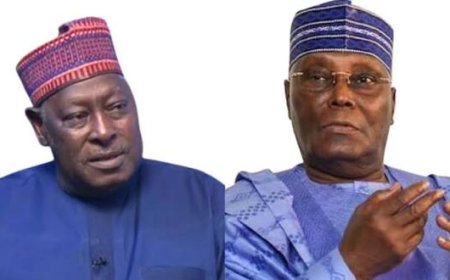
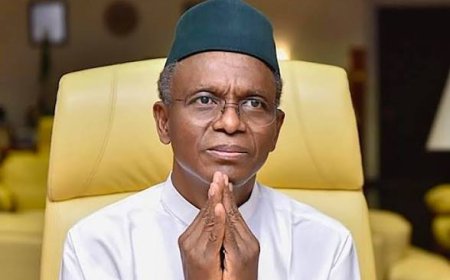
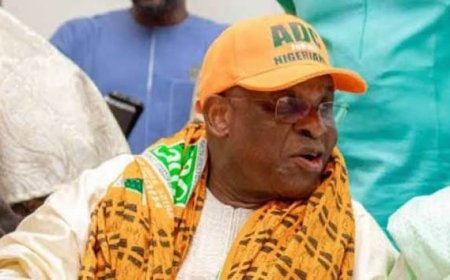
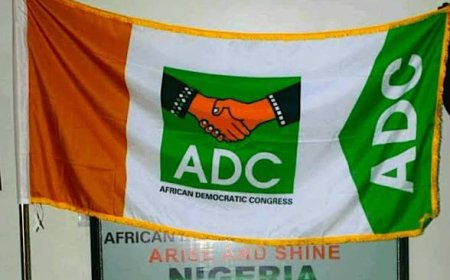
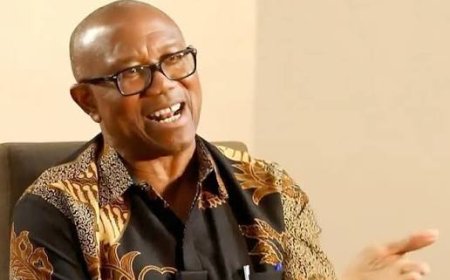
The year 2026 is also anticipated to be a defining moment for opposition politics, with predictions indicating either unity or disintegration among opposition parties. Recent moves suggest a potential "Mega Party" or coalition, involving prominent figures like Atiku Abubakar, Peter Obi, Nasir El-Rufai, and Rotimi Amaechi, under the banner of the African Democratic Congress, ADC. The formalisation of this coalition is expected to take place in 2026, with Peter Obi being the most significant player in opposition politics. He initiated this process with his long-awaited formal membership in the ADC announced in Enugu. However, the primary challenge for the opposition remains its fragmented nature. If they cannot unite and realistically address pressing issues such as zoning, the APC will have a smoother path to the 2027 elections.
For the major opposition parties, the People's Democratic Party, PDP, and the Labour Party, 2026 may prove to be their last chance to remain relevant. If they fail to break free from the constraints imposed by the Tinubu regime, they could be heading toward political obscurity.
Currently, the ruling APC is enjoying the benefits of incumbency, with 28 state governors and over 80 senators on board. However, 2026 is expected to redefine the political dynamics, as experts predict internal friction within the APC. Various factions will likely begin eyeing the vice-presidency and future succession plans. Public affairs analyst Prof. Nnah Simeon forecasts, "There will be an implosion within the All Progressives Congress, APC, by 2027, driven by internal power struggles and reform fatigue."
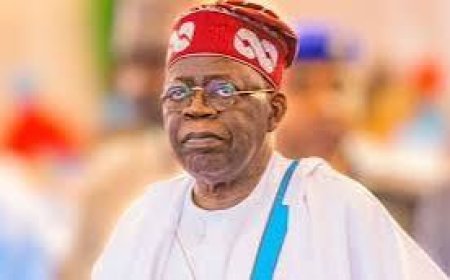
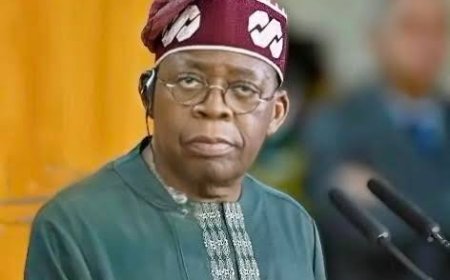
President Tinubu, who has prioritised political survival over governance, is expected to shift focus away from governance in 2026, abandoning his reforms as campaigning takes precedence. The ruling APC has scheduled its National Convention for March 2026, which will serve as a "cleanup" operation to solidify President Tinubu's grip on the party and marginalise potential challengers before the primary season begins; however, this strategy might also lead them toward an implosion.
Thus, in 2026, Nigerian democracy will effectively be "shadowing" 2027—a year where the lines between governance and campaigning will become increasingly blurred. By this time, political manoeuvrings will evolve from mere whispers to active blueprints for gaining or retaining power.
Moreover, 2026 will feature critical local and state-level contests that will serve as "war games" for the elections to come. As Tinubu and his team strategise to strangle the opposition and have a free ride. This year, 2026, will show whether his desire will be met or it will crash.
Those leaving their comfort zone to join the APC in the hope that Tinubu will be an omniscient electoral benefactor will realise within 2026 that in politics, all that glitters is no gold.
The Donald Trump factor has further multiplied the intrigues in the 2027 journey. Nobody can predict the outcome of the Trump noise in our polity. While APC is trying hard to benefit, the complications in it are not helping his situation. In 2026, Tinubu and APC will come to terms with the reality that the US, which helped to bring them to power in 2015, may be using the same template to remove them and bring another political party to power.
When all these issues are jammed together, it makes 2026 a unique year, a forerunner year for the country. Let us therefore rise and welcome the new year, full of things that have never been. Let us resolve within us as a country to find the opportunities hidden in each of the new days we will encounter starting today. Happy New Year.
What's Your Reaction?