



























Cash-and-Carry Ministers: Public Service for the Highest Bidder
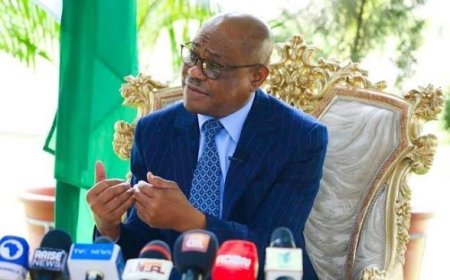
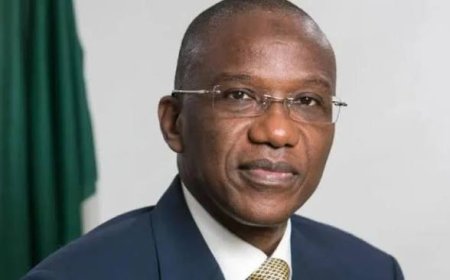
In an Arise Television interview, Alwan Hassan sought to justify the executive centralisation of governance.
Political Musing of Thursday october 29, 2026
By Ike Abonyi
" Bribery in the pursuit of public office is an investment in corruption, not a commitment to service” ----- Anonymous
In an Arise Television interview, Alwan Hassan sought to justify the executive centralisation of governance. Instead, he inadvertently confirmed a long-standing public suspicion: that political office in Nigeria often operates like a commercial transaction. “A lot of ministers pay billions to get themselves appointed... and the first thing they think of is how to recoup that money after being appointed.” Hassan’s disclosure was meant to support President Bola Tinubu’s decision to centralise financial authority, preventing ministers who had invested heavily in securing their appointments from recovering their money. Yet what this “Cash-and-Carry” bureaucracy effectively acknowledged is that ministerial positions are being treated as financial investments rather than trusts held in the public interest. Given Hassan’s strategic role in Tinubu’s second-term project, his defence of the President’s financial centralisation does not erase the damage to the regime, compounded by court cases
involving one Adeniyi Adeyemi, the alleged fake Director-General of the fictitious Presidential Foreign Intervention Promotion Council, PFIPC, and administrative frauds, as well as the drama that brought an early end to Dr Betta Edu's tenure as Minister of Humanitarian Affairs and Poverty Alleviation. She was suspended from office on January 8, 2024, by President Bola Tinubu over an alleged financial scandal involving the approval of approximately ₦585.19 million ($640,000) in public funds transferred into a private bank account belonging to a project accountant,
What all these do is underscore the alleged monetisation of cabinet positions in Nigeria.
This ‘asobi’ uniform stitched by corruption in Nigeria comes in many colours; Hassan’s disclosure that a minister is treated as a financial investment represents its most striking expression. The consequences are vast, especially the erosion of merit, the entrenchment of structural corruption, and the evident loss of confidence among the public and investors. When public offices are sold to the highest bidders, technical expertise gives way to financial strength.
This immediately undermines policy implementation across critical sectors such as health and education infrastructure. As Hassan observed, the first concern of a "cash-and-carry" minister is to recover the money spent securing the appointment. That incentive drives inflated budgets, contracts awarded to proxies, and institutional leakage. And this invariably leads to foreign investors and citizens losing faith in state institutions when official channels can be fabricated, as in the Adeyemi case. It is intriguing and raises a fundamental question about the purpose of public service in Nigeria. When ministers pay money, exchange favours, or deploy financial inducements to obtain appointments, the direct consequence is that public offices, which should be treated as responsibilities to serve the people, are instead regarded as investments for generating private wealth and political power. In a healthy democracy, a minister should earn an appointment through
relevant competence, integrity, experience, and the capacity to advance public policy. When bribery secures the position instead, the appointment can become a bargain among political elites rather than a judgment guided by the public interest.
Although corruption is deeply rooted in Nigeria, it has also made clear that public office has gradually been treated as a business investment rather than a public responsibility.
The consequences can be far-reaching. In our environment, an appointee who has paid to enter office may feel compelled to recoup that expense rather than focus first on serving citizens. For our democracy, the immediate result is that political loyalty and the ability to pay can determine who receives the position, while competence, superior knowledge, and diligence are pushed aside. Wealth, powerful connections, and political patronage may outweigh qualifications or experience in public service.
This, in turn, can set off a wider chain of corruption. Once money is exchanged for an appointment, the recipient may face pressure to demand kickbacks from contracts, manipulate procurement, favour associates, or misuse public resources to recover the initial outlay. This inevitably erodes accountability because an appointee who believes their position rests on the support of powerful patrons may feel more answerable to those patrons than to the public. The clear consequence is a decline in public trust, as citizens may come to view government appointments as privileges reserved for the wealthy and politically connected rather than opportunities available to qualified individuals. That this grave allegation has emerged at this moment, and from the ruling party rather than the opposition, speaks volumes about the state of our democracy. It reinforces a truth we already know: Nigeria's democracy is shaped not only by elections but also by the manner in which power is exercised between them.
When bribery influences appointments, several democratic principles are placed at risk. That is why, roughly eighty days before an election, President Tinubu is extensively appointing his kinsmen and women to strategic agencies and institutions of democracy; the Electoral Commission, the Judiciary, the Police and the DSS are likewise led by the President's tribesmen and women. In circumstances like these, public servants, including Ministers and other critical appointees who are expected to implement policies that serve Nigerians, may instead become instruments for advancing the political or financial interests of a small circle. Nigeria’s Constitution requires the president to nominate ministers and the Senate to confirm them, a procedure intended to give appointments a lawful foundation; bribery, especially when followed by a cash-and-carry arrangement, starkly erodes the integrity of that process. In a sane society that recognises fraud for what it is, grave allegations from a governing administration—whether made deliberately or through a slip of the tongue—should provoke more than political debate; they should demand verifiable answers. Identify the transactions. Who paid? Who received the money? How much changed hands, and what evidence substantiates the claim?
The appropriate anti-corruption agencies, if they did not pay for their positions also, should investigate credible evidence impartially, without favouring or shielding anyone because of political affiliation. In this way, scrutiny of appointments can be reinforced and public funds safeguarded, while placing the right people in the right positions supports transparent procurement, independent audits and effective legislative oversight that can limit opportunities to recoup illicit payments through government business.
The real takeaway, then, is not merely whether someone paid money to become a minister. The real question is whether entry into public power can be purchased and whether the public treasury is then used to recoup that private outlay. When that happens, the wider population, especially society’s most vulnerable, pays the price. It warps the bond between government and citizens. In such circumstances, public office can begin to look like a private investment, while government contracts become possible vehicles for repayment. Ordinary Nigerians may ultimately shoulder the burden through inferior services, squandered resources and eroded trust.
In conclusion, the deeper concern is that the decay in our political system is so entrenched that a democracy can conduct elections and still struggle with corruption, patronage and accountability. The true test is whether public institutions can examine allegations without bias, determine the facts and hold anyone accountable under the law.
Ultimately, Nigerians are entitled to ask: if a person must pay billions to secure a public appointment, who received the money, what obligations did that payment create, and how can citizens trust that the minister’s decisions will advance the public interest rather than private gain?
As these grave revelations are emerging on the eve of a presidential election, I would like to end this discussion with a warning from George Orwell that "A people that elect corrupt politicians, imposters, thieves, and traitors are not victims... but accomplices." God help.
What's Your Reaction?