













Nigeria World’s Multidimensional Poverty Capital------ UNDP, Oxford University
The United Nations Development Programme, UNDP, has placed Nigeria on top of the countries with highest multidimensional poverty level across the globe.
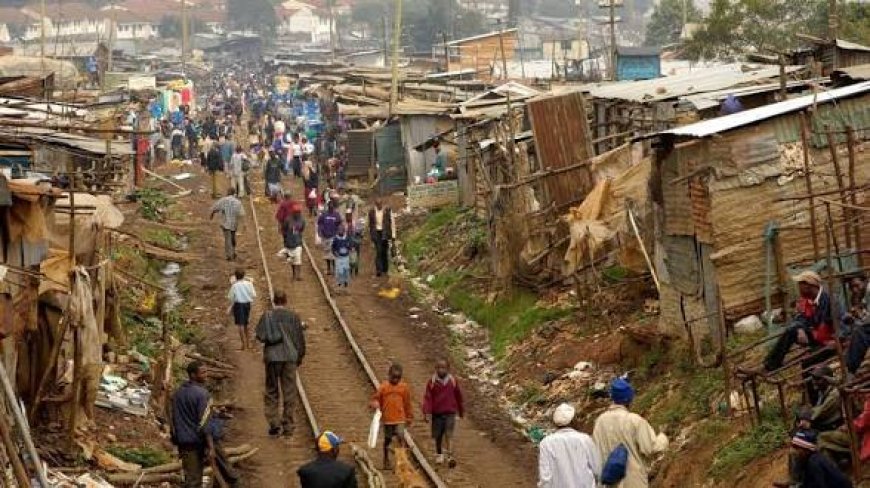
The United Nations Development Programme, UNDP, has placed Nigeria on top of the countries with highest multidimensional poverty level across the globe.
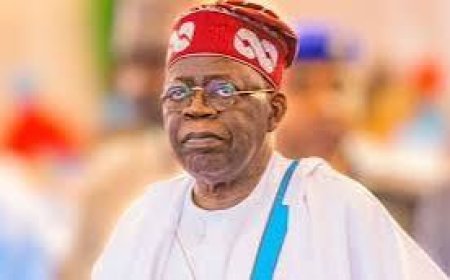
This means that under President Bola Tinubu’s administration, Nigeria’s multidimensional poverty rate soared to the highest level among countries assessed in 2026.
According to the UNDP and Oxford Poverty and Human Development Index, multidimensional poverty increased in Afghanistan, Nigeria, the Central African Republic, Kyrgyzstan and Guinea.
Peoples Gazette reports that findings by the UNDP showed that, Nigeria recorded the highest increase, with its multidimensional poverty rate rising from 33 per cent in 2021, during the late Muhammadu Buhari’s administration, to 38.7 per cent in 2024, after Tinubu assumed office.
According to the UNDP, multidimensional poverty represents not only the absence of income but also the deprivation of good life based on indices such as education, health, housing, nutrition, sanitation, and access to basic services.
The report found that many Nigerians still lacked electricity and that households owned only one of the assets like a television, radio, telephone, computer, bicycle, or car, evidencing a dimension of poverty.
“The household does not own more than one of these assets: radio, television, telephone, computer, animal cart, bicycle, motorbike or refrigerator, and does not own a car or truck,” the report explained.
Zambia, Egypt, Nepal, Angola and Tajikistan recorded significant reductions in their poverty rate.
The elimination of fuel subsidy drove the majority of already-struggling Nigerians into extreme poverty.
Tinubu’s naira devaluation and free float of the Naira, which allowed market forces to determine foreign exchange rates, led to its free-fall into dire straits and trade above N1,000 to a dollar for the first time.
The fuel subsidy announcement also triggered inflation that jacked up prices for essential goods and household items and roiled an economy which hasn’t recovered from the policy.
Meanwhile, amid rising poverty, Mr Tinubu’s administration announced the reintroduction of fuel subsidy in government-backed Nigerian National Petroleum Company Limited, NNPC, stations to cushion the impact of fuel supply pressures.
According to the UNDP, multidimensional poverty represents not only the absence of income but also the deprivation of good life based on indices such as education, health, housing, nutrition, sanitation, and access to basic services.
The report found that many Nigerians still lacked electricity and that households owned only one of the assets like a television, radio, telephone, computer, bicycle, or car, evidencing a dimension of poverty.
“The household does not own more than one of these assets: radio, television, telephone, computer, animal cart, bicycle, motorbike or refrigerator, and does not own a car or truck,” the report explained.
Zambia, Egypt, Nepal, Angola and Tajikistan recorded significant reductions in their poverty rate.
The elimination of fuel subsidy drove the majority of already-struggling Nigerians into extreme poverty.
Tinubu’s naira devaluation and free float of the Naira, which allowed market forces to determine foreign exchange rates, led to its free-fall into dire straits and trade above N1,000 to a dollar for the first time.
The fuel subsidy announcement also triggered inflation that jacked up prices for essential goods and household items and roiled an economy which hasn’t recovered from the policy.
Meanwhile, amid rising poverty, Mr Tinubu’s administration announced the reintroduction of fuel subsidy in government-backed Nigerian National Petroleum Company Limited, NNPC, stations to cushion the impact of fuel supply pressures.
Under the arrangement, petrol would be sold at N1,350 per litre, even as there are 900 NNPCL fuel stations that would carter for the over 230 million population.
Tinubu is seeking a second term at the nation’s presidential elections scheduled to be held in January 2027. His administration did not immediately comment on the UNDP and Oxford University multidimensional poverty index.
Tinubu is seeking a second term at the nation’s presidential elections scheduled to be held in January 2027. His administration did not immediately comment on the UNDP and Oxford University multidimensional poverty index.
What's Your Reaction?