





























Can Nigeria Realistically Add 10,000 Megawatts Of Electricity In Four Years?
Electricity remains the single most important factor determining whether a nation industrializes or remains trapped in underdevelopment.

...Being a technical assessment of Peter Obi's power sector promises
By Chinenye Nwaogu
Electricity remains the single most important factor determining whether a nation industrializes or remains trapped in underdevelopment. No country in modern history has achieved sustained economic growth without first solving its energy challenge.
Consequently, when former Anambra State Governor and Labour Party presidential candidate, Peter Obi, promised that Nigeria could increase electricity generation by approximately 10,000 megawatts within four years, the proposal generated considerable debate. Critics dismissed it as ambitious political rhetoric, while supporters argued that Nigeria's electricity crisis is more a product of poor governance than technical limitations.
The critical question therefore is not whether Nigeria needs an additional 10,000 megawatts. The country desperately does. The real question is whether such a target is technically, financially, and administratively achievable within a four-year presidential tenure.
A serious examination of available data suggests that while the target would be extremely challenging, it is neither impossible nor unprecedented if pursued through a coordinated national energy emergency programme.
Nigeria currently has an installed generation capacity estimated at over 13,000 MW. However, actual available capacity fluctuates between 4,000 MW and 6,000 MW due to gas shortages, transmission bottlenecks, aging infrastructure, poor maintenance, and weak market liquidity. For a nation of over 230 million people, this level of electricity supply is catastrophically inadequate.
To appreciate the scale of Nigeria's energy deficit, it is useful to compare with countries of similar population sizes. South Africa, with approximately 63 million people, possesses over 50,000 MW of installed electricity generation capacity. Egypt, with about 115 million people, has surpassed 60,000 MW. Turkey, with roughly 86 million people, operates more than 100,000 MW. Indonesia, whose population exceeds 280 million, has over 90,000 MW of generation capacity.
Nigeria, Africa's largest population centre, effectively delivers less than 6,000 MW to more than 230 million people. This means that many cities in smaller countries enjoy more reliable electricity than entire regions of Nigeria.
Using global benchmarks, Nigeria should ideally possess between 80,000 MW and 120,000 MW of dependable electricity supply to support industrialization and economic transformation. Against this background, an additional 10,000 MW should be viewed not as an ambitious luxury but as the minimum emergency intervention required.
Can it be done in four years?
The answer depends on three factors: financing, policy consistency, and infrastructure execution.
The first misconception is that Nigeria must build 10,000 MW entirely from new power stations. In reality, a significant portion can come from recovering stranded and underutilized capacity.
Several generating plants currently operate below potential due to gas supply constraints, transmission limitations, and market inefficiencies. Experts estimate that between 2,000 MW and 3,500 MW could be unlocked simply by rehabilitating existing facilities, improving gas supply agreements, completing ongoing projects, and resolving transmission constraints.
The second source would be gas-fired generation.
Nigeria possesses over 200 trillion cubic feet of proven natural gas reserves, ranking among the world's largest gas holders. Yet much of the resource remains underdeveloped. A determined government could rapidly expand gas-to-power projects because gas plants have shorter construction timelines than hydroelectric dams or nuclear facilities.
Combined-cycle gas plants can typically be delivered within 24 to 36 months. Adding 4,000 MW to 5,000 MW from gas-fired generation is technically achievable if financing and gas infrastructure are secured early.
The third source would be solar power.
Nigeria enjoys one of the highest solar radiation levels in the world. Northern states receive between 5.5 and 7.0 kilowatt-hours per square metre daily, making large-scale solar generation economically viable.
Countries such as India have demonstrated how rapidly solar capacity can be deployed. India added over 50,000 MW of solar generation within less than a decade through deliberate government policy and private-sector participation.
A serious Nigerian energy programme could target 2,500 MW to 3,000 MW of utility-scale solar projects distributed across northern states. Combined with battery storage systems and mini-grids, solar power could significantly reduce pressure on the national grid.
Hydropower should constitute the fourth component.
Nigeria possesses substantial hydroelectric potential estimated at over 14,000 MW. Several projects, including the Zungeru Hydroelectric Plant, have demonstrated that hydro remains a viable long-term source of stable baseload power.
Completing ongoing hydro projects and initiating medium-sized regional dams could contribute between 1,000 MW and 1,500 MW during a four-year period.
Wind energy could also provide supplemental capacity, particularly in northern corridors where wind resources are stronger. Although wind would likely contribute a smaller share, between 200 MW and 500 MW could realistically be added.
An optimal four-year energy expansion strategy could therefore resemble the following.
- Existing capacity recovery: 3,000 MW
- Gas-fired generation: 4,500 MW
- Utility-scale solar: 2,500 MW
- Hydropower: 1,000 MW
- Wind power: 300 MW
Total additional capacity: approximately 11,300 MW
Technically, therefore, the target is achievable. The greater challenge lies not in generation but in transmission and distribution.
Nigeria's transmission infrastructure remains one of the weakest links in the power value chain. Even if generation suddenly increased to 15,000 MW tomorrow, the transmission network would struggle to evacuate and distribute the electricity effectively.
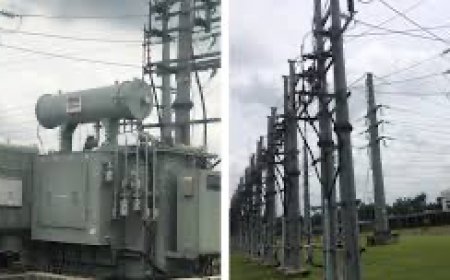
The Transmission Company of Nigeria would require extensive upgrades, including new substations, transformers, transmission lines, and digital control systems.
Experts estimate that achieving reliable evacuation of an additional 10,000 MW would require investments exceeding $5 billion in transmission infrastructure alone.
Distribution companies would also need major modernization programmes. Technical losses, energy theft, obsolete equipment, and poor metering continue to undermine efficiency.
Without simultaneous reforms in transmission and distribution, new generation capacity would merely create additional stranded power.
Financing represents another major consideration.
Depending on the energy mix adopted, adding 10,000 MW could require investments ranging between $15 billion and $25 billion.
Utility-scale solar typically costs between $800 million and $1 billion per 1,000 MW. Gas-fired generation often ranges between $700 million and $1.2 billion per 1,000 MW. Hydroelectric projects can cost considerably more due to civil engineering requirements.
For perspective, Egypt attracted over $20 billion in power-sector investments during a relatively short period and increased generation capacity dramatically. Saudi Arabia, the United Arab Emirates, India, Vietnam, and Indonesia have all demonstrated that large-scale electricity expansion becomes possible when governments establish clear policy frameworks and attract private capital.
The fundamental lesson is that governments rarely build such capacity alone. They create an environment that attracts investors.
A serious administration seeking to achieve Peter Obi's target would therefore need to implement several immediate measures.
First, declare electricity a national economic emergency.
Second, fully liberalize generation and transmission investment.
Third, guarantee cost-reflective tariffs while protecting vulnerable consumers through targeted subsidies.
Fourth, aggressively expand gas infrastructure and domestic gas supply.
Fifth, strengthen state participation in electricity generation following recent constitutional reforms.
Sixth, attract large-scale private and international investment through transparent procurement systems.
Seventh, aggressively deploy solar mini-grids to rural communities outside the national grid.
The ultimate verdict is that Peter Obi's promise of adding 10,000 MW within four years was ambitious but technically plausible. The proposal falls within the range of what has been achieved by numerous developing countries under competent leadership and stable policy conditions.
The real obstacle is not engineering. Nigeria possesses sufficient gas reserves, abundant sunshine, hydro resources, private-sector interest, and technical expertise.
The obstacle is governance.
If political will, regulatory certainty, investor confidence, and institutional discipline are present, Nigeria could realistically add 10,000 MW or more within a four-year period. If the current cycle of policy inconsistency, bureaucratic inertia, corruption, and infrastructure neglect persists, even an additional 2,000 MW could prove difficult.
The debate therefore should not focus on whether 10,000 MW is possible.The evidence suggests that it is.
The more important question is whether Nigeria can finally summon the political leadership required to make it happen.
...Nwaogu is a Public Affairs Analyst
What's Your Reaction?