






































"Nigeria At The Brink: How The Senate Legislating Electoral Theft In Broad Daylight, Says Protest Group
Nigeria is standing at a dangerous crossroads, and the Nigerian Senate has chosen the darker path.
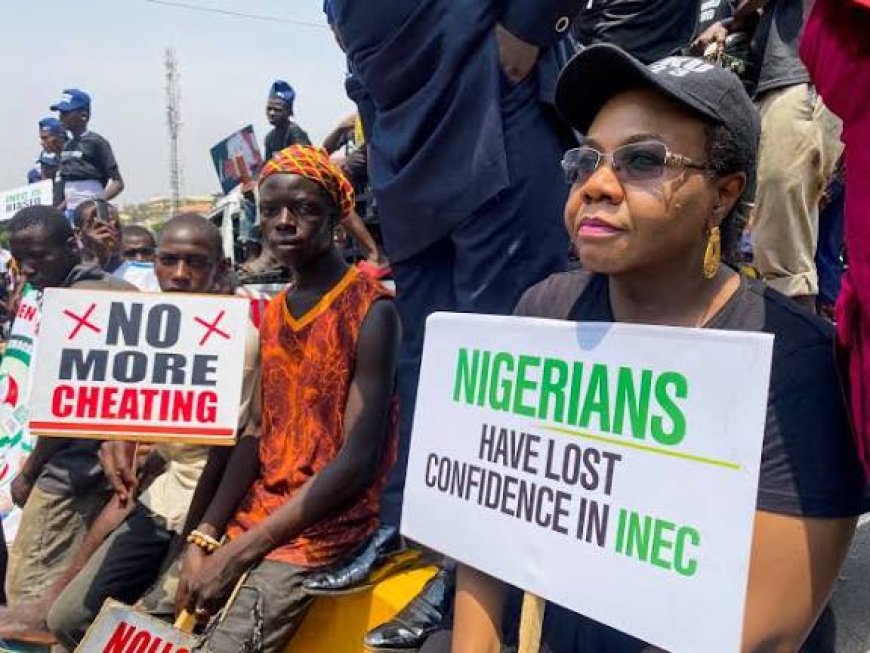
Nigeria is standing at a dangerous crossroads, and the Nigerian Senate has chosen the darker path. In 2026—after years of protests, court battles, international embarrassment, and the open wounds of the 2023 elections—the Senate had a rare chance to restore confidence in the ballot. They could have closed the door permanently against result manipulation by making real-time electronic transmission of polling unit results mandatory. They refused. Not by accident. Not by ignorance. But by design.
What they did is worse than rejection. They preserved a loophole. They kept alive the most poisonous sentence in Nigeria’s electoral law: “in a manner prescribed by INEC.” That single clause is the hiding place of electoral theft. It is the space where delays are manufactured, uploads mysteriously fail, figures are massaged, and Nigerians are told to go to court while mandates are stolen in daylight. That clause is not neutral. It is the crime scene.
Let us stop pretending this is about technical concerns. There is nothing technical about fear of transparency. Real-time electronic transmission is not a radical experiment. It is a basic democratic safeguard. It locks results at the polling unit. It limits human interference. It allows citizens to verify what they voted for before power rewrites reality. Any senator who opposes this in 2026 is not cautious; they are exposed. They are telling Nigerians, without shame, that they cannot survive a system where votes are seen immediately and verified by the public.
This is not a partisan fight. It is not APC versus PDP or government versus opposition. It is the people versus a political class addicted to discretion and darkness. Any lawmaker who votes against mandatory electronic transmission has declared allegiance—not to constituents—but to a system that thrives on ambiguity. They have chosen incumbency over integrity and manipulation over mandate.
The insult is compounded by the arrogance. These same lawmakers tweet about democracy, attend conferences on good governance, and quote the Constitution when it suits them. Yet they recoil when that same Constitution demands accountability. Section 69 is clear: senators are not untouchable. Representation is conditional. When a lawmaker loses the confidence of their constituents, recall is not rebellion—it is constitutional hygiene.
What the Senate has done is not reform. It is preparation. Preparation for another election season where Nigerians vote, wait, doubt, protest, and litigate. Preparation for another round of “technical glitches,” selective uploads, and judicial gymnastics. Preparation for a future where ballots are cast at polling units but finalized in backrooms. Anyone who still believes this was innocent is choosing denial over evidence.
Silence at this moment is collaboration. Posting angry tweets without organized pressure is surrender. Democracy does not defend itself with vibes and hashtags. It survives only when citizens confront power directly, persistently, and lawfully. Senators work for the people, not the other way around, and the people have every right to remind them—loudly—that public office is not a shield against consequences.
Nigeria cannot afford another stolen election dressed up as procedure. We cannot normalize a system where clarity is resisted and loopholes are celebrated. If real-time transmission is rejected today, then 2027 is already poisoned on paper. That is the truth no amount of spin can bury.
This is the line. Either elections are decided transparently at the polling unit, or democracy in Nigeria remains a ritual without meaning. The Senate has chosen ambiguity. Nigerians must choose action. Peaceful. Lawful. Relentless. Because a democracy that cannot protect its votes is already bleeding—and pretending otherwise will not stop the hemorrhage.
What's Your Reaction?