

























How the North Can reject Tinubu and still re-elect him Unintentionally?
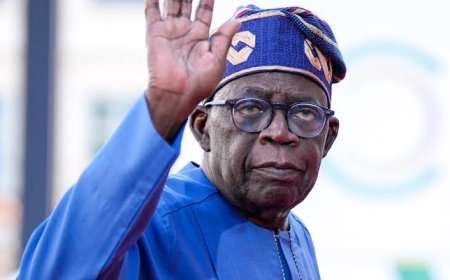
The geopolitical North, like every other region of Nigeria, is deeply dissatisfied and angry with President Bola Tinubu's administration.
Political Musing, Thursday, October 8, 2026
By Ike Abonyi
"An incumbent’s strength sometimes lies not in popularity, but in the disunity of the opposition"—Anonymous
The geopolitical North, like every other region of Nigeria, is deeply dissatisfied and angry with President Bola Tinubu's administration. It is equally clear that the region is preparing to subject President Tinubu to the same electoral treatment it gave President Goodluck Jonathan in 2015.
However, political observers fear that two factors could prevent the North from repeating the events of 2015. First, Tinubu is not Jonathan. Second, the politically unified North of 2015 no longer exists. If Jonathan was unwilling to risk bloodshed in pursuit of his ambition, the same cannot be said of a Jagaban who regards the Presidency as his turn and is determined to seize it at all costs.
Nevertheless, politically discerning observers argue that rejecting Tinubu in the North would represent a significant political setback for him, but would not, on its own, constitute his defeat.
The 2023 figures help explain the how and why, even though much has changed since then. For example, Nasir El-Rufai, a key figure in the political events of 2015, 2019, and 2023, has been restrained and imprisoned, demonstrating to the North that it can be demonised.
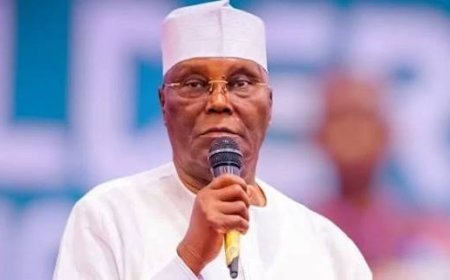
In 2023, across the North’s three geopolitical zones, Tinubu secured approximately 5.59 million votes, Atiku about 5.23 million, and Obi roughly 2.08 million. Tinubu’s lead over Atiku in the North was therefore only about 354,000 votes.
The essential point is that the North does not vote as a single bloc. In 2023, Atiku prevailed in the North-East, Tinubu led in the North-West, and the North-Central was considerably more competitive, with Obi receiving more than 1.4 million votes there. This pattern is unlikely to recur because Tinubu’s electoral standing in the North today is now abysmal. The question is: who will benefit from Tinubu’s 2023 votes in 2027—Atiku or Obi? Because of the zoning issue plus having a formidable Rabiu Kwankwaso as his running mate, many are rooting for Obi to take the lion's share of votes in the region in 2027. But if for any selfish reason the North rejects Tinubu in favour of Atiku because he is one of their own, it would be playing into Tinubu’s hands by reinforcing the zoning arrangement, which is not constitutional but remains binding. By fragmenting the zoning formula through support for Atiku, the North would be arming Tinubu with the means to fracture the country through his Emilokon agenda. If, however, the North decides to be just and let Tinubu know that the real emilokon is to the South East that has not been President since this dispensation that began in 1999, they will channel their vote to Obi, who incidentally is the best product in the market by all standards.
There are therefore two fundamentally different interpretations of “rejecting Tinubu”:
The North rejects Tinubu and unites overwhelmingly behind a single challenger: this could pose a serious threat to the incumbent.
North rejects Tinubu but disperses its votes among Atiku, Obi, and other candidates: Tinubu could lose considerable northern support without necessarily losing the presidency; this second possibility is especially important.
In 2023, Atiku and Obi together secured substantially more votes than Tinubu nationwide, but their support was split between separate candidacies. Tinubu nevertheless recorded the highest individual vote total. That outcome is unlikely to be repeated in 2027, given the paradox at the heart of the election, which can be stated as follows:
The North can defeat Tinubu only if its rejection of him produces a sufficiently concentrated alternative vote for Peter Obi, who is certain to receive substantial support from the South. Northern rejection alone does not amount to Tinubu's defeat if those votes are not properly directed. This is why the destination of the anti-Tinubu vote may be as important as its overall size.
If a northern voter says, "I don't want Tinubu," and votes for Atiku, while a southern voter seeking change casts a ballot for Obi, the two votes may together signify rejection of the incumbent while remaining electorally divided.
That is the central lesson of 2023.
Current reporting also characterises opposition fragmentation as a significant issue ahead of 2027, while the APC is seeking to preserve its northern advantage amid economic and security concerns.
The point, therefore, is that northern opposition to Tinubu alone will not suffice; those votes must converge if he is to be defeated. Otherwise, the North may reject Tinubu yet still return him to office. This reflects the paradox without presuming that the 2027 result has already been determined.
And perhaps the most significant lesson of 2023 is that, in a fragmented presidential contest, voters may collectively reject an incumbent's performance without collectively generating a single alternative strong enough to defeat him.
The central question, then, may not be, “Who does the North reject?” It may instead be:
“After rejecting Tinubu, where will the northern vote go—and what will happen to the votes elsewhere?”
If Atiku secures a very large share of the northern vote while Obi or another southern challenger wins substantial support in the South, the opposition could command enormous aggregate backing without any one challenger receiving enough of it to turn that support into victory.
That is essentially what the 2023 figures demonstrate.
However, it would be mistaken to assume that northern voters are automatically Atiku supporters, particularly given the strategic position of another formidable Northerner, Rabiu Kwankwaso.
The actual 2027 equation is not merely:
North rejects Tinubu = Tinubu loses. Rather, the more accurate formulation is: northern rejection + opposition consolidation + adequate national spread = a fundamentally different electoral equation.
In the absence of the second and third elements, widespread northern opposition to Tinubu could paradoxically occur alongside his continued position as the leading individual candidate.
That may be the most significant lesson of 2023. In a fragmented presidential contest, voters may collectively reject an incumbent's performance without collectively producing a single alternative capable of defeating him.
Perhaps to prevent such an outcome, some individuals have been making determined efforts to create a unified opposition ticket by urging Atiku Abubakar, who is clearly disadvantaged by zoning considerations and age, to step aside in favour of a younger, more dynamic Peter Obi. However, he has refused to yield.
The central strategic lesson is that the 2027 election should not be viewed simply as a contest between the North and the South or as a choice between northern rejection and Tinubu's victory. The decisive issue is whether voters dissatisfied with the incumbent will ultimately unite behind an alternative candidate strongly enough to convert that dissatisfaction into an electoral majority with the necessary geographical spread.
The central point is that Atiku’s entry into, or sustained strength in, the presidential contest presents opposition strategists with a dilemma on several fronts: if northern opposition votes are divided between Atiku and other regional figures such as Kwankwaso, while southern opposition votes gravitate toward figures such as Peter Obi or remain concentrated in local opposition strongholds, the broader anti-incumbent coalition fragments, enabling the ruling party to retain its pluralities.
The argument that votes cast for Atiku Abubakar in the North will ultimately assist Bola Tinubu rests on basic electoral arithmetic and the patterns of vote-splitting observed in previous elections.
Experience has demonstrated that, in Africa, when opposition leaders set aside personal ambitions to form broad pre-electoral alliances, they consistently undermine the traditional advantages associated with power and patronage. We saw it happen in Nigeria in 2015, in Ghana, Senegal, Kenya, etc. As the renowned political journalist Dorothy Thompson cautioned opposition politicians: "Do not reject an imperfect ally when you are working for a common aim in a time of great danger." President Tinubu's first term has put Nigeria in great danger, enough to make Nigeria's opposition unite for a common purpose.
In conclusion, if the geopolitical North genuinely and decisively wishes to remove President Tinubu from Aso Rock, a desire shared overwhelmingly by Nigerians, it must not disregard the electoral arithmetic involved. God help us.
What's Your Reaction?