




























France: The Assimilating Nigeria's 'Tax Collector’
During our early education, subjects such as history, geography, and social studies often covered the partition of Africa, commonly referred to as the Scramble for Africa.
Political Musing of Thursday, December 18, 2025
By ike Abonyi.
“The great success of the enemies of Africa is to have corrupted the Africans themselves.” - Frantz Fanon, 1961
During our early education, subjects such as history, geography, and social studies often covered the partition of Africa, commonly referred to as the Scramble for Africa. This period marked intense European imperial expansion into the continent during the late 19th and early 20th centuries, revealing to the world that Africa was rich in natural resources that were unavailable in the Western or developed world.
Initially, European presence in Africa was largely confined to coastal trading posts, as the vast interior remained mostly independent. Europeans were hesitant to venture inland due to the threat of tropical diseases like malaria. However, the motivation for partition was driven by several factors, primarily economic interests fueled by the Industrial Revolution in Europe, which created a high demand for raw materials (such as rubber, cotton, and minerals) and a need for new markets for finished goods. Africa was viewed as a crucial resource base. Additionally, political rivalry among European powers (Britain, France, Germany, etc.) further intensified competition for global dominance. Acquiring colonies became a symbol of national prestige and a strategic advantage.
This competitive scramble for Africa culminated in the famous Berlin Conference of 1884–1885, convened by German Chancellor Otto von Bismarck. The conference brought together 14 European powers to regulate colonisation and trade in Africa and to prevent conflicts among themselves over African territories. The United States was invited but did not attend the meeting. The conference established an agreement to create rules for claiming territory, famously known as the Act of Berlin. Claims to land required clear proof of effective occupation through administration, treaties, or military control, thus legitimising the rush to stake claims. The Congo and Niger River basins were designated as neutral and open for trade.
In contradiction to the late MKO Abiola's assertion that one cannot shave someone's hair in his absence, Africa’s 'hair' was indeed shaved without her presence, as no African representatives were invited or consulted at the Berlin Conference. Decisions were made solely by European powers, ignoring existing African political boundaries, ethnic groups, and cultural ties. In the aftermath of the Berlin Conference, the scramble for territories accelerated. European nations quickly dispatched expeditions to make treaties with local rulers, often acting deceptively to establish their presence and suppress indigenous resistance.
By 1914, nearly 90% of the African continent was under European control, with only Liberia and Ethiopia remaining independent (Liberia had strong ties to the U.S., while Italy later occupied Ethiopia in the 1930s). The partition of Africa divided the continent as follows: Great Britain held Egypt, Nigeria, the Gold Coast, Gambia, Sierra Leone, Sudan, and parts of East Africa; France controlled Algeria, Tunisia, Morocco, West Africa (including Mali and Senegal), and Madagascar; Belgium took over the vast Congo Free State (a personal property of King Leopold II, notorious for its brutality); Germany claimed German East Africa (Tanzania) and German South West Africa (Namibia); and Portugal acquired Angola and Mozambique.
The consequences of this partitioning were profound and long-lasting. The arbitrary borders drawn by Europeans often cut across ethnic and cultural groups or group rival factions, leading to internal political instability that persisted even after independence. Furthermore, it resulted in the economic exploitation of Africa, with resources systematically extracted to benefit European economies and minimal investment in African development. This process also dismantled traditional structures, as pre-existing kingdoms and governance systems were destroyed or suppressed, fundamentally altering African societies.
I have chosen to emphasise and unveil this history to enlighten the younger generation, who may not be taught about it, and to address questions often posed by frustrated Nigerians: How did we arrive at our current situation? Who is responsible for this? Understanding the factors that have contributed to our present is crucial. Without the Berlin Conference could the 1914 amalgamation of the Southern and Northern protectorates that became Nigeria have been possible? The destruction of old African kingdoms, which had homogeneity in culture, tradition, and religion, and the collapse of these into nations for the administrative convenience of Europe, laid the foundation for much of today's political instability on the African continent.
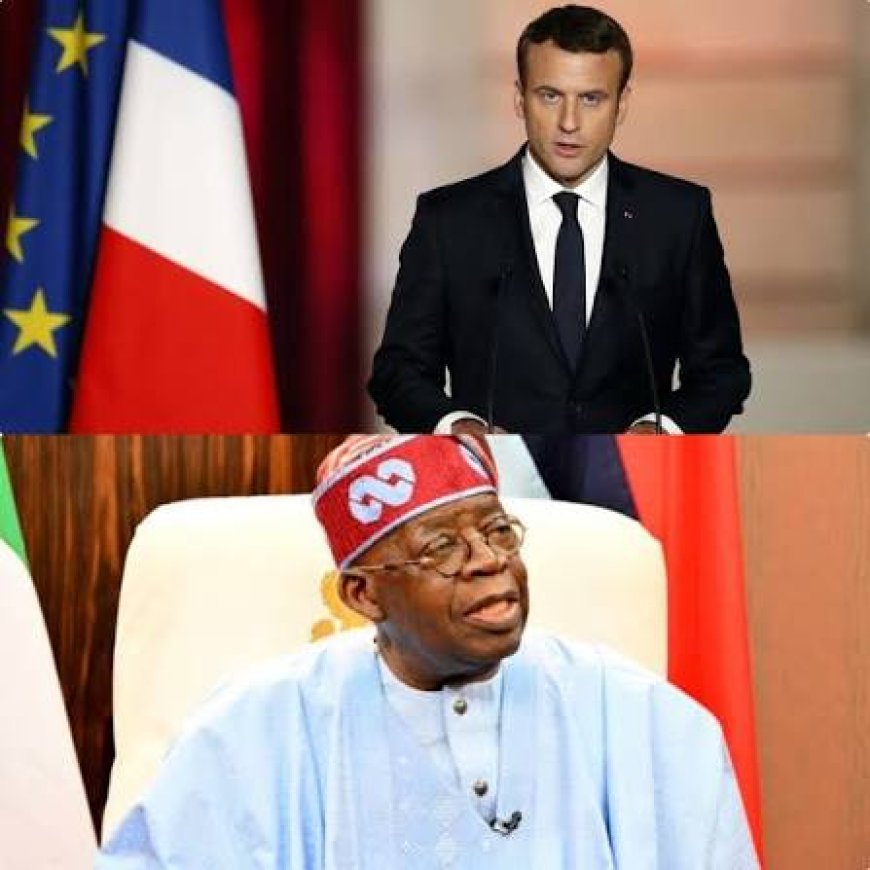
Additionally, I chose to mention this history as a prelude to our musing this week, which focuses on France's new assimilation policy as part of a neo-colonial mission in Nigeria, with President Bola Ahmad Tinubu facilitating this development. Among all colonial powers, we were taught that France was the most friendly, as it appeared to be open and inclusive toward their colonial subjects through their Assimilation Policy. The blending of French and Black populations was largely non-discriminatory, resulting in a significant number of Black individuals attaining French citizenship. Today, approximately 80% of the French national football team at all levels of competition are Black, a consequence of the assimilation policy.
Other colonies, like Great Britain and Germany, were not viewed in the same light. However, the fallout from the three revolutionary Sahel states of Mali, Burkina Faso, and Niger has exposed the true nature of France's colonial policy. This policy is emerging as a complex and often brutal system aimed at integrating colonised populations into French culture and society. In theory, the idea was to "civilise" indigenous peoples by imposing the French language, culture, and values. In practice, though, it became a tool for control, erasing native identities and suppressing local cultures. The assimilation policy led to the forced adoption of French customs, language, and laws, often displacing traditional practices and systems. This had devastating effects on indigenous populations, contributing to cultural loss and social dislocation.
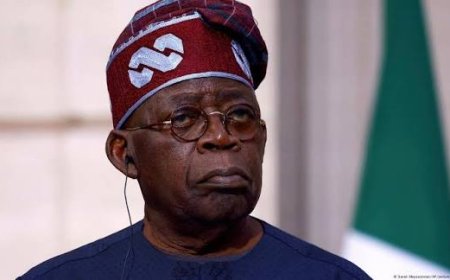
The concept of France as a "neocolonialist" force is frequently discussed, particularly in relation to its historically dominant role in its former colonies in Francophone Africa. This has been underscored by its deteriorating relationships with these countries. Growing anti-French sentiment and military coups have resulted in the expulsion of French troops and a reduction of influence in Francophone nations, particularly in Mali, Burkina Faso, and Niger. Against this backdrop, many diplomatic observers view President Tinubu’s increasing ties with France as concerning. Critics argue that France is now aggressively pivoting towards Nigeria to maintain its regional relevance and economic foothold in West Africa. Tinubu has not concealed his affinity for France, often prioritising it over Britain, Nigeria’s former colonial power. He has visited France nearly a dozen times in the past two years, treating Paris as a second home and workplace. The recent outsourcing of Nigeria’s tax data management to France is seen as a significant concern that could undermine Nigeria's economic sovereignty. Additionally, allegations that France pressured Nigeria into intervening in the Republic of Benin to quell a military coup are troubling. Such collaboration with France may expose Nigeria to undue military influence and could compromise its regional leadership aspirations.
Critics argue that this partnership could jeopardise Nigeria's independence, citing France's history of neocolonialism in West Africa. Many fear that Nigeria is becoming a pawn in France's efforts to maintain influence in the region. Diplomatic observers worry that agreements, such as a Memorandum of Understanding (MoU) on tax data administration, could give France insight into Nigeria's economy, further compromising the country's national economic sovereignty.
It's truly concerning to see the political connections forming between Nigeria and France, many interpret this as Tinubu's effort to secure a second term, potentially at any cost. This situation raises fears that Nigeria might become a pawn in what some view as France's neo-colonial ambitions, risking the nation's sovereignty and compromising its fragile democracy. It's disheartening to think that under Tinubu's leadership, Nigeria could be caught in a power struggle where France seeks to exert its influence. We can only hope for the best for Nigeria during this challenging time. May God help us.
What's Your Reaction?