











































European Union Restricts Airlines From 12 African Countries, Lists 89 Airlines
The European Union, EU, has restricted 12 African countries, with 89 African airlines individually listed on its latest Air Safety List following concerns over aviation safety oversight.
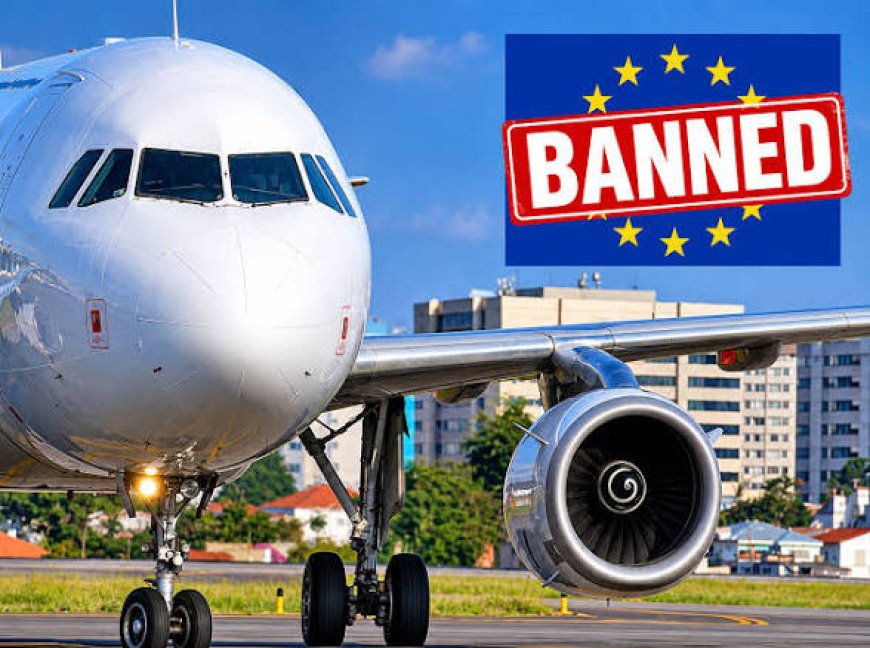
The European Union, EU, has restricted 12 African countries, with 89 African airlines individually listed on its latest Air Safety List following concerns over aviation safety oversight.
The move restricts airlines certified by the affected countries from operating within European Union airspace, except for two approved carriers from Angola.
The countries barred include Ghana, Angola, Djibouti, Republic of the Congo (Congo-Brazzaville), Democratic Republic of the Congo, , Equatorial Guinea, Eritrea, Liberia, Libya, São Tomé and Príncipe, Sierra Leone, Sudan and Tanzania.
The countries barred include Ghana, Angola, Djibouti, Republic of the Congo (Congo-Brazzaville), Democratic Republic of the Congo, , Equatorial Guinea, Eritrea, Liberia, Libya, São Tomé and Príncipe, Sierra Leone, Sudan and Tanzania.
The restrictions were imposed on countries whose aviation authorities have failed to demonstrate adequate safety oversight of airlines operating under their certification.
Furthermore, the European Commission’s updated Air Safety List, 87 named airlines from 10 of the affected countries as those affected by the restrictions. Liberia and Sierra Leone are also subject to blanket bans, although no individual airlines from the two countries are listed.
However, Tanzania accounts for the highest number of affected carriers, with 34 airlines, followed by the Democratic Republic of the Congo with 13, Sudan with 12 and Libya 10.
Also, Angola has two exceptions: TAAG Angola Airlines and Heli Malongo, which have been permitted to operate in the European airspace, even as the EU noted hat the blacklist does not necessarily mean that every affected airline has individually failed safety inspections. Rather, a country-wide ban may be imposed where the national aviation regulator cannot demonstrate that it has the capacity to effectively supervise its carriers in line with international safety requirements.
However, airlines seeking removal from the list must demonstrate compliance with internationally accepted aviation safety standards as well as satisfy the European Commission’s requirements.
The EU also allows certain operations through wet-leasing arrangements involving approved carriers.
Beyond the 12 countries facing blanket restrictions, the EU has separately banned Air Express Algeria and Air Zimbabwe from operating within its airspace, bringing the total number of individually named African airlines on the updated list to 89.
Air Express Algeria was added following safety concerns identified by European aviation experts, including shortcomings in its compliance with international standards. The airline has reportedly indicated its intention to address the identified deficiencies by the end of 2026.
The June 2026 revision was the 48th update of the EU Air Safety List since its introduction in 2006.
Globally, the update covered 154 airlines across 16 countries, including 126 carriers affected by concerns over inadequate national aviation safety oversight.
What's Your Reaction?