














































CJN Kudirat Kekere-Ekun, Swears -in 12 New Appeal Court Judges
The Chief Justice of Nigeria, Justice Kudirat Kekere-Ekun, has warned 12 newly appointed Justices of the Court of Appeal against political, financial, social and personal pressures, urging them to protect their judicial independence and uphold the integrity of the Bench.
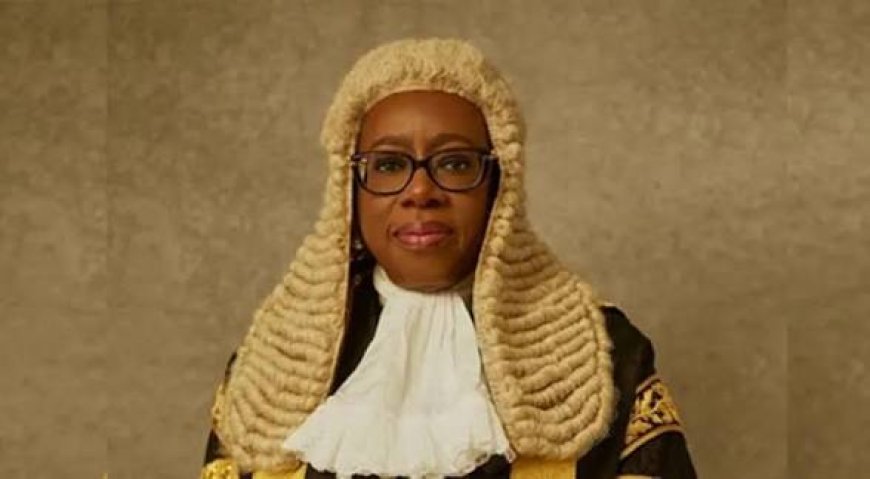
The Chief Justice of Nigeria, Justice Kudirat Kekere-Ekun, has warned 12 newly appointed Justices of the Court of Appeal against political, financial, social and personal pressures, urging them to protect their judicial independence and uphold the integrity of the Bench.
Kekere- Ekun also cautioned the justices against allowing public opinion, professional relationships or the desire for unanimous decisions to influence their judgments.
She spoke Tuesday during the swearing-in ceremony of the new justices at the Supreme Court complex , Abuja, adding that, that their elevation came with greater responsibilities, particularly the need to balance collective judicial deliberations with individual independence.
The 12 new justices include Yakubu Abdulhammeed Mohammed, Monisola Oluwatoyin Abodunde, Raphael Ajuwa, Elias Ojie Abua, Mbalamen Jennifer Ijohor, Sabiu Bala Shuaibu, James Kolawole Omotosho, Emeka Nwite, Dauda Njane Buba, Sanusi Kado, Enikuomehin Ademola and Julcit Veronica Dadom.
Her words, “Your judicial independence must be guarded against political, financial, social and personal pressures, including those that may arise through professional familiarity or established relationships.
“My Lords, judicial office is increasingly exercised in an environment in which decisions are subjected to immediate public commentary. You must remain conscious of this reality without allowing it to influence your adjudicatory responsibilities.
“Public approval must not be the basis for you to depart from the law, just as criticism must not deter you from reaching a decision that your conscience and the law require.
“Public approval must not be the basis for you to depart from the law, just as criticism must not deter you from reaching a decision that your conscience and the law require.
“You must decide according to the law and your conscience, without being unduly influenced by seniority, reputation, personal affinity or the desire for unanimity.
“Where, after careful consideration, your view differs from that of the majority, you must have the
courage to maintain and express it with clarity, restraint and respect.
“A well-reasoned dissent is a legitimate feature of appellate adjudication and may, in time, contribute to the development or reconsideration of the law...
“An appeal is not an invitation to rehear a case simply because another judicial officer might have reached a different conclusion.”
The CJN further warned that public approval must not determine judicial decisions, just as criticism should not discourage judges from reaching decisions required by the law, and then urged them to demonstrate courage in expressing dissenting opinions where necessary, stressing that judicial independence must not be sacrificed for collegiality.
Kekere-Ekun further noted that unlike their previous positions, where most exercised judicial authority as sole presiding judges, their new responsibilities would require them to sit in panels, deliberate collectively and arrive at decisions through consultations with other justices.
She also, urged them to approach such deliberations with intellectual openness, mutual respect and a willingness to reconsider their positions when presented with convincing arguments.
The CJN, however, insisted that differences in judicial opinions must not degenerate into personal disagreements, stressing that the strength of an appellate court depended on the quality of its reasoning rather than an artificial appearance of unanimity.
She further reminded the justices that the Court of Appeal played a critical role in Nigeria’s judicial system, exercising appellate jurisdiction over civil, criminal, constitutional, electoral, commercial and labour disputes, among other matters, just as she also, cautioned them against treating appeals as opportunities to rehear cases merely because they might have reached different conclusions from the lower courts.
She urged them to carefully examine records of proceedings, identify properly raised complaints and determine whether the law justified interfering with decisions of lower courts, even as she asked them to embrace continuing judicial education, particularly in emerging areas such as digital commerce, data protection, intellectual property, financial regulation and artificial intelligence.
She noted that although technology could assist judicial research and the organisation of court processes, even as legal authorities must be verified and judicial decisions remain products of independent judicial reasoning.
The justices were drawn from various courts, including the High Courts of Gombe, Bayelsa, Cross River, Benue, Kebbi, Taraba and Ondo states, the Federal High Court, the National Industrial Court of Nigeria and the Customary Courts of Appeal of Ekiti and Plateau states in a bid to fill vacancies arising from the elevation and retirement of judicial officers and strengthen the capacity of the courts for effective justice delivery.
What's Your Reaction?