




































“This Life No Balance”: The Hierarchy of Inequality
There is something profoundly unsettling about a society in which the circumstances of a person’s death appear to influence the scale of national attention the death commands.

By Chris Agbedo, PhD
There is something profoundly unsettling about a society in which the circumstances of a person’s death appear to influence the scale of national attention the death commands. A military aircraft crashes, and the national flag comes down. A passenger boat capsizes, carrying ordinary citizens to their watery graves, and the country receives another grim casualty update. Both tragedies deserve national sympathy. Both involve human lives abruptly terminated. However, the institutional rituals surrounding their deaths invite an uncomfortable question: does the Nigerian state grieve all its citizens with the same measure of national solidarity?
This life no balance: The expression, drawn from the everyday vocabulary of the Nigerian street, is at once a lament, a social diagnosis and an indictment of the unequal conditions under which human beings exist. It captures the popular perception that life’s opportunities, privileges, vulnerabilities and consequences are distributed unevenly. In the context of the recent Bayelsa boat disaster, however, the expression acquires a more disturbing institutional dimension. It invites us to examine not merely the inequality of living but also the hierarchy of dying, mourning and being remembered.
On Friday, November 20, 2026, a wooden passenger boat conveying mourners from Ayama community to Ukubie in Southern Ijaw Local Government Area of Bayelsa State capsized near the river junction between Oweikorogha and Otuan communities. The passengers were travelling to attend a burial ceremony. They were going to mourn somebody else’s dead. They became the dead, leaving their own families and communities to mourn them. The irony is as devastating as the tragedy itself.
The National Emergency Management Agency, NEMA, subsequently reported that 24 bodies had been recovered, with 24 survivors rescued, while search-and-rescue operations continued. Authorities had not established the full number of passengers aboard. Preliminary accounts suggested a mechanical problem, while allegations concerning overloading and inadequate use of life jackets also emerged. The absence of a passenger manifest, according to Reuters, further complicated the recovery operation.
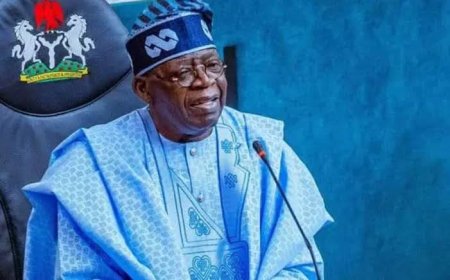
Governor Douye Diri visited the scene, ordered an investigation and announced measures intended to improve maritime safety, including plans to procure modern boats and establish a maritime task force. President Bola Tinubu expressed condolences, directed federal disaster-response agencies to support rescue and recovery operations, and instructed that the APC presidential campaign rally in Ibadan on November 21 should be conducted without much fanfare in honour of the victims. These responses deserve acknowledgement.
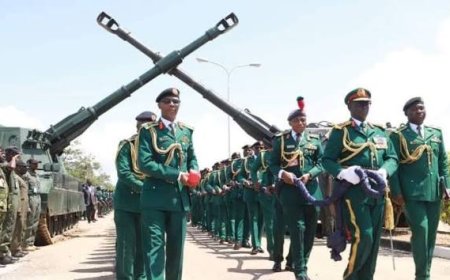
Nonetheless, as of November 22, no comparable three-day national mourning declaration or nationwide half-mast directive had been announced for the Bayelsa victims. The comparison becomes particularly compelling when placed beside the Nigerian Air Force aircraft crash near Igbokoda, Ondo State, on October 5, 2026. Following that tragedy, President Tinubu declared three days of national mourning and directed that the national flag be flown at half-mast throughout the country in honour of the fallen Air Force personnel. (State House, October 5).
To be clear, honouring military personnel who die in the service of their country is entirely legitimate. Their institutional service and sacrifice deserve public recognition. National mourning is not a zero-sum resource, and recognising one category of national loss does not require diminishing another. The issue, therefore, is not why the military personnel were honoured. They deserved it. The more fundamental question is why the deaths of ordinary citizens travelling through essential public transportation infrastructure do not appear to occasion an equivalent expression of national solidarity. Is there an implicit hierarchy in the public recognition of human suffering? Does the Nigerian state have different registers of grief for different categories of citizens?
The question is not whether every tragedy must produce identical ceremonial responses. It is whether the principles governing national recognition and public protection are consistent with the constitutional promise of equal citizenship.
The Hierarchy of Visibility: Whose Suffering is Seen?
The first dimension of this inequality concerns visibility. Some tragedies become national spectacles, commanding sustained media coverage, presidential attention and public conversation. Others remain geographically confined, receiving episodic attention that rises with casualty figures and gradually recedes as the news cycle moves on. Judith Butler’s Frames of War: When Is Life Grievable? offers perhaps the most illuminating theoretical framework for understanding this phenomenon. Butler interrogates the political and cultural frames through which certain lives become publicly recognisable as lives worth protecting and mourning. Her concept of grievability directs attention to the unequal conditions under which human suffering becomes visible and publicly consequential. A life may be biologically present and socially embedded, yet its vulnerability may remain insufficiently recognised within the dominant public imagination. This is not an argument that some lives intrinsically deserve more mourning than others. Butler’s point is precisely that the social and political frameworks through which lives are apprehended can produce unequal recognition. Her analysis invites us to ask whose suffering is made visible, whose loss is narrated and whose death risks becoming another anonymous statistic.
The Bayelsa victims were not abstractions. They were parents, children, spouses, siblings, breadwinners and community members. Their deaths have ruptured entire human networks. Yet the geography of their existence, a riverine community where waterways constitute indispensable transportation corridors, risks confining their tragedy to the margins of national consciousness.
The hierarchy of visibility is therefore the unequal distribution of public attention to human suffering. A tragedy does not become less nationally consequential because it occurs in a remote riverine community rather than in a major city or within a nationally prominent institution.
The Hierarchy of Recognition: Whose Death Becomes a National Loss
Visibility does not automatically translate into recognition. A tragedy may receive media coverage and presidential condolences without being accorded the same institutional rituals of collective mourning as another. The national flag flown at half-mast, a declaration of national mourning, a moment of silence and the suspension or modification of celebratory activities are not merely ceremonial arrangements. They are symbolic instruments through which the state communicates the significance of a collective loss. Émile Durkheim’s The Elementary Forms of Religious Life provides a sociological explanation of the significance of such rituals. His account of collective effervescence demonstrates how collective gatherings and shared symbolic practices generate and reaffirm the moral bonds that hold societies together. Rituals are not simply outward expressions of feelings already present in individuals; they also reproduce the collective consciousness through which individuals understand themselves as members of a community.
National mourning performs a comparable function. When a country lowers its flag, observes a moment of silence or declares an official period of mourning, it publicly transforms individual bereavement into collective loss. It communicates that the tragedy belongs to the entire political community, not merely to the families and geographical location directly affected. Consequently, differences in the performance of national mourning deserve sociological interrogation. A presidential condolence and a formal national mourning declaration are both expressions of sympathy, but they carry different institutional and symbolic weight. One communicates compassion; the other formally organises collective remembrance. Sophocles’ Antigone offers an even older and more compelling moral interrogation of the obligations owed to the dead. In the tragedy, Antigone defies King Creon’s prohibition against burying her brother, Polyneices. The conflict exposes the limits of political authority when it confronts fundamental human obligations and the dignity of the deceased. Creon’s attempt to regulate who deserves burial becomes an illustration of the danger of allowing political power to determine the boundaries of human dignity. The relevance to the Bayelsa tragedy is not that the circumstances are identical. It is that the dignity owed to the dead should not depend on their social standing, institutional identity or political significance. Sophocles reminds us that the treatment of the dead is also a test of the moral character of the living community.
Butler’s discussion of grievability makes this connection even more interesting. She herself invokes the Antigone tradition to interrogate the regulation of public mourning. The classical tragedy and contemporary political philosophy converge on a fundamental question: who possesses the authority to determine which losses receive public recognition?
This is the hierarchy of recognition: the unequal distribution of institutional honour and collective remembrance. Military personnel may appropriately receive special honours for their service, but such honours should not create the impression that the deaths of ordinary citizens carry a lesser claim on national solidarity.
The Hierarchy of Citizenship: Whose Life Receives Effective Protection?
The third dimension is perhaps the most consequential because it moves the argument from the politics of death to the responsibilities of government towards the living. Citizenship is not merely a legal status, a passport, a voting card or an obligation to pay taxes. It carries a substantive expectation that public institutions will protect the lives and welfare of those within their jurisdiction.
Section 14(2)(b) of the 1999 Constitution of the Federal Republic of Nigeria, as amended, states that the security and welfare of the people shall be the primary purpose of government. Section 17(2)(a) further affirms equality of rights, obligations and opportunities before the law.
These constitutional commitments invite a fundamental question: what does the promise of security and welfare mean to a riverine citizen whose everyday transportation depends on waterways where safe vessels, passenger manifests, life jackets, navigational facilities and effective regulatory enforcement may be inadequate? Hannah Arendt’s idea of the right to have rights, developed in The Origins of Totalitarianism, offers an important philosophical framework for examining this question. Arendt’s discussion emerged from her analysis of statelessness and the predicament of people deprived of effective membership in a political community. Her central insight is that abstract declarations of human rights are insufficient when individuals lack a political community capable of recognising and securing those rights. Applied to the Nigerian situation, Arendt’s argument directs attention to the difference between possessing formal citizenship and enjoying its practical benefits. A citizen’s rights become meaningful when public institutions translate them into effective protection, participation and accountability.
What does Nigerian citizenship mean to a person whose access to essential transportation exposes them to preventable dangers? What does constitutional equality mean when geographical location determines the quality of public infrastructure available to citizens?
The historical production of inequality offers another useful perspective. Colonial administration and postcolonial state formation left enduring patterns of uneven access to infrastructure and public services. Contemporary research by Belinda Archibong, particularly her study, Historical Origins of Persistent Inequality in Nigeria (2018), examines how historical and institutional arrangements contribute to the persistence of unequal access to public resources and services. The relevance is not that this research proves deliberate neglect in the specific Bayelsa incident. Rather, it helps situate the disaster within the wider political economy of unequal infrastructure and public protection.
For communities in the Niger Delta and other riverine parts of Nigeria, waterways are not optional recreational spaces. They are roads. Boats are not luxury alternatives to automobiles; they are essential public transportation. Their safety should therefore attract the same seriousness of regulation, maintenance, inspection and emergency preparedness expected of road transportation. Where unsafe vessels operate, passenger records are absent, life jackets are unavailable or unused, and regulatory enforcement is inadequate, the resulting vulnerability is not simply an unfortunate feature of geography. It becomes a question of public responsibility. The hierarchy of citizenship emerges when formal equality coexists with unequal access to the practical conditions necessary for survival. A Nigerian travelling in a wooden boat is not a lesser citizen than a Nigerian travelling in a military aircraft. Their transportation circumstances and institutional identities differ; their human dignity does not.
Aristotle and the Moral Arithmetic of Inequality
The three dimensions —visibility, recognition and citizenship — are not isolated phenomena. They reinforce one another. A population that is less visible in national discourse may receive less sustained institutional attention. Limited recognition can make its suffering appear less consequential in the national imagination. Unequal access to infrastructure and public protection can then reproduce the vulnerability that makes further tragedies possible. This is how the hierarchy of inequality becomes self-reinforcing.
Aristotle’s treatment of justice in Book V of Nicomachean Ethics provides a useful philosophical foundation for interrogating this arrangement. His distinction between distributive and corrective justice is particularly relevant. Distributive justice concerns how benefits and burdens are allocated within a political community, while corrective justice concerns the rectification of wrongs and imbalances. Aristotle’s conception of distributive justice involves proportional equality: people should be treated according to relevant criteria rather than through arbitrary or inconsistent distinctions. His formulation raises an important question for contemporary Nigeria: what criteria justify the distribution of public protection, institutional attention and collective recognition? The application here must be carefully distinguished from Aristotle’s own historically restricted conception of citizenship. His political community excluded substantial categories of people from full civic standing. Nevertheless, his analytical distinction between justifiable and arbitrary differences in distribution remains useful.
The point is not that every category of death must receive identical ceremonial treatment. A state may legitimately distinguish between military service, civilian life and other circumstances when designing official honours. But such distinctions require defensible reasons. They cannot be allowed to imply that some citizens possess a greater intrinsic claim to human dignity or public protection than others.
Aristotle’s framework thus brings the argument into sharper focus: the question is whether differences in public treatment are grounded in relevant institutional considerations or whether they reproduce an unjust hierarchy of human worth.
From Mourning to Accountability: Correcting the Imbalance
The danger is that the national conversation will stop at condolences, presidential statements, gubernatorial visits and promises of investigation. Such responses are necessary, but they are not sufficient. The ultimate tribute to the Bayelsa victims must be the prevention of similar tragedies. The governor’s proposed maritime task force and plans to procure safer boats must translate into measurable and sustained institutional reforms. These should include mandatory passenger manifests, enforceable passenger-capacity limits, compulsory life jackets, regular vessel inspections, operator certification, functional navigational aids, effective waterway patrols and accessible emergency-response arrangements. The Federal Government, through the relevant maritime and disaster-management institutions, must also work with state governments to establish consistent safety standards across Nigeria’s inland waterways. Investigations must establish the immediate and contributing causes of the disaster, identify any regulatory failures and ensure that responsibility is not dissolved into bureaucratic silence. Above all, riverine communities must not be treated as peripheral spaces in the national infrastructure imagination. Their transportation needs deserve deliberate public investment and institutional attention. The moral argument extends beyond maritime safety. A country that recognises the dignity of its citizens in death must demonstrate that recognition through the conditions it creates for their survival. National solidarity cannot be reduced to the occasional lowering of flags or the solemnity of official condolence messages. The national flag should not become a more visible symbol of human worth at the moment of an aircraft crash than at the moment a passenger boat disappears beneath the waters. The mothers of the Bayelsa victims will not grieve less because their children travelled by boat. Their children will not become less dead because the vehicle that carried them was made of wood. Their communities will not experience a lesser emptiness because their tragedy unfolded on a river rather than in the skies. The dead cannot demand equal treatment, but the living can. Their families can. Their communities can. And the Nigerian state must answer to the constitutional and moral obligations it owes them.
This life no balance. But governance should not institutionalise the imbalance. A nation cannot claim to value human life equally while allowing social position, geographical location and institutional identity to determine whose suffering becomes visible, whose death receives formal recognition and whose life enjoys effective protection.
The ultimate test of national solidarity is not how ceremoniously a country mourns its dead, but how conscientiously it protects its living.
My 2 kobo!
What's Your Reaction?