















Fake Agency: The Ding-Dong Drumbeat Continues
In this piece, I trace the connecting dots between the dog-goat praxis, contested institutions and Nigeria's forensic search for the holes in government.
In this piece, I trace the connecting dots between the dog-goat praxis, contested institutions and Nigeria's forensic search for the holes in government. There is something deceptively reassuring about the expression “heads are rolling.” A scandal breaks. An investigation begins. Officials are suspended. Somebody is arrested or ordered to be arrested. Newspaper headlines announce that heads have rolled. And the public is invited to infer that justice has begun its work. But the metaphor deserves closer examination. Literally, a rolling head evokes decapitation. Historically, the severed head represented the ultimate defeat of authority: somebody had fallen, somebody had been punished, somebody else's power had prevailed. Modern bureaucracy has civilised the imagery without entirely removing its political violence. Today, heads do not literally roll. They are suspended, removed, dismissed, redeployed, investigated or prosecuted. Yet, the ancient question survives: Whose head should roll?
Philosophy asks whether responsibility belongs only to the person who physically commits an act or extends to those who authorised, enabled, supervised or failed to prevent it. Psychology explains why societies hunger for visible culprits. Systems are abstract. A name is concrete. A bureaucracy cannot easily be handcuffed, but an official can be suspended before cameras and headlines. Sociology adds hierarchy to the equation. Authority and accountability do not always travel together. Authority often ascends towards the top of the pyramid; consequences frequently descend towards its base. And politics asks the most uncomfortable question of all: When institutions fail, does accountability follow responsibility or vulnerability?
That question takes us to an old but extraordinarily sophisticated proposition in Igbo proverbial lore: ‘Nkịta richaa nsị, eze eree ewu’. When the dog eats excrement, the goat's teeth decay. The dog commits the act. The goat suffers the consequence. The culprit and the casualty are not the same animal. This is what may be called the dog-goat praxis: the displacement of consequences from the actual source of wrongdoing to somebody more accessible, expendable or vulnerable. Nigeria's fake-agency controversy has become a remarkable contemporary laboratory for this ancient theory of injustice. And now, with President Bola Tinubu approving a comprehensive forensic audit of IPPIS, federal agencies, ministries and the internal control architecture of government, the scandal has acquired an even larger meaning. The question is no longer merely: Who created a fake agency? It is now: How many holes are there in the government compound - and who has been passing through them?
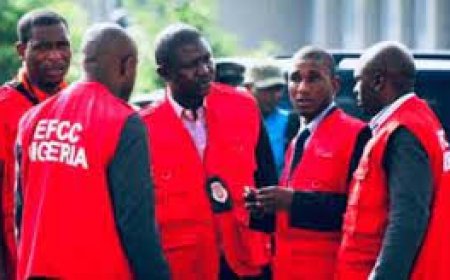
The controversy began with spectacular institutional drama. ICPC announced that it had uncovered what it described as fake government entities, including the controversy surrounding the purported Presidential Foreign Intervention Promotion Council and, subsequently, the National Brands Development and Made-in-Nigeria Special Project Office allegedly operating within the Office of the Secretary to the Government of the Federation. There were reports of presidential directives. There were suspensions. There were names. There were headlines. And, predictably, there was the familiar language: Heads were rolling. But the second controversy quickly became complicated. Officials within the OSGF disputed the description of the National Brands Development and Made-in-Nigeria Special Project Office as a fake agency. Their argument was that it was not an agency at all but a project office that had existed within the institutional environment for years. Its promoter, George Nwabueze, alleged bureaucratic sabotage, suppression of files and an internal struggle with officials within the OSGF. He cited executive instruments, official correspondence and a pending court action.
The Presidency, meanwhile, urged Nigerians not to reach premature conclusions, insisting that ICPC had not completed its investigation. Thus, the simple morality play became complicated. Was it a fake agency? Was it a legitimate project office? Was there administrative sabotage? Was ICPC misled? Or did bureaucratic ambiguity create the space within which something without proper legal authority could masquerade as a legitimate government institution? The answers remain matters for evidence. But then came Tinubu's latest directive. And suddenly, the entire controversy became larger than George Nwabueze, larger than three suspended permanent secretaries and larger even than the OSGF.
And at this point, one cannot resist recalling Fela Anikulapo Kuti's political satire about the “Unknown Government.” Fela used the phrase to capture a peculiarly Nigerian absurdity: a country with visible governments, known institutions and identifiable authorities, yet in which shadowy forces could exercise power without transparent identity or accountability. The fake-agency controversy gives that satire a fresh bureaucratic lease of life. What, indeed, is more absurd than an entity allegedly operating inside the administrative architecture of the Federal Government, enjoying some measure of official recognition, correspondence privileges, office facilities or institutional access, and yet subsequently provoking the question of whether it was government at all?
That is Unknown Government, bureaucratically remixed. The known government may have ministries, departments, agencies, commissions and councils created by law or executive authority. But somewhere within that official architecture, another institutional creature may emerge, an entity whose precise legal identity, constitutive authority, supervisory structure and administrative legitimacy become matters of controversy only after a scandal breaks. And so Nigeria confronts a surreal question: Can an “unknown government” exist inside a known government? Fela's satire suggests that Nigerians should not be too surprised.
The more disturbing question is not merely whether a particular office was fake. It is how an entity could acquire the practical appearance of government without the government possessing a universally accessible and definitive mechanism for answering a simple question: Who authorised you to be here? Who gave you the office? Who recognised your correspondence? Who processed your files? Who gave you access to official systems? Who acknowledged your mandate? Who inserted your name into the institutional bloodstream of government? If nobody can answer these questions promptly and conclusively, then the problem transcends one alleged fake agency. It becomes a problem of ‘Unknown’ Government inside ‘known’ Government. And that is where Fela's satire meets the Igbo proverbial wisdom: Nkịta richaa nsị, eze eree ewu. When the dog eats excrement, the goat's teeth decay. In Fela's bureaucratic Nigeria, however, another complication may arise. Nobody may even be certain which dog belongs to which government. One dog wears an official collar. Another has access to the government compound. A third occupies an office. A fourth appears in correspondence. And somewhere, the goat is still being presented with the bill.
And now, the presidential audit steps forward with a mandate to follow the holes in bureaucracy. President Tinubu has directed the Minister of Finance and Coordinating Minister of the Economy to oversee and coordinate a comprehensive forensic audit of Federal Government systems. The exercise is to examine IPPIS and related personnel and payroll systems; ghost workers and payroll fraud; fictitious or ineligible persons within government systems; access, identity, biometric and bank-account controls; interfaces between IPPIS and other platforms; GIFMIS; Remita; the Treasury Single Account; Sub-TSA arrangements; ministries, departments and agencies; commissions, councils, parastatals and other government bodies; internal audit and oversight mechanisms; procurement and governance controls; and, significantly, the legal basis of government entities themselves. The forensic audit is expected to establish how government bodies obtain official recognition, correspondence privileges, budgetary consideration, office facilities and access to government systems.
The presidential directive, no doubt, is an enormous and ambitious assignment. The government is about to conduct a forensic examination of the institutional architecture through which government itself functions. As commendable as the presidential directive might be, it still provokes a soul-searching question: Can a government forensically audit itself successfully? Can one of the organs of the body oversee the most comprehensive forensic diagnosis of the body without an independent diagnostic apparatus standing outside it? Can government discover its unknown government by looking only into its own mirror? These questions derive their relevance from the wisdom implicit in the Igbo proverb on dibia and his own illness. This explains why the forensic audit must therefore do more than discover fake agencies or ghost workers. It must answer Fela's question in institutional form: Who, exactly, constitutes the government, and how does government know its own? But that question immediately generates another. Who is sufficiently outside the government system to conduct a genuinely independent forensic examination of government?
It is here that the Igbo proverb enters the room with a rhetorical question that modern governance and professional ethics have wrestled with for centuries: Dibia, ọ na-agwọ onwe ya? Does the medicine man cure himself? The proverb is not an attack on the competence of the medicine man. It is a warning about the problem of self-reference. The healer may be highly skilled. But when the healer becomes the patient, a boundary becomes blurred. The person diagnosing is implicated in what is being diagnosed. The person administering the cure is simultaneously part of the organism under examination. And that raises the perennial ethical question: Can an institution conduct a genuinely independent diagnosis of its own pathology?
The problem is not competence; it is independence. A forensic audit derives much of its credibility not merely from the technical quality of its findings but from the demonstrable independence of those conducting it. The President's directive itself recognises this by insisting that the exercise must meet the highest standards of: independence, professionalism, and forensic integrity. But independence is not merely a word inserted into a presidential statement. It must have an institutional structure. Who appoints the investigators? Who controls their terms of reference? Who supplies the records? Who has access to the systems? Who can limit access? Who receives the preliminary findings? Who determines whether embarrassing discoveries are published? Who decides which recommendations are implemented? And perhaps most importantly: Can the investigator follow the evidence into the very offices and systems to which the investigator belongs without institutional inhibition? That is the point at which Dibia anaghị agwọ onwe ya becomes a theory of public accountability.
Medical ethics does not encourage casual self-diagnosis or self-treatment in serious situations precisely because professional knowledge does not automatically eliminate personal bias. The analogy should not be stretched into literal equivalence. Government is not a human body. A minister is not literally a doctor. And a forensic audit is not a clinical consultation. But the underlying ethical principle travels remarkably well: The credibility of a diagnosis increases when the diagnostician is sufficiently independent of the condition being diagnosed. A government may commission an audit. A government may provide access to records. A government may fund the exercise. But the forensic conclusions must not become the government's preferred version of its own innocence. Otherwise, the audit becomes a sophisticated form of self-examination in which the patient writes the medical report.
Who should audit the government? The answer need not be that government must surrender its sovereignty to outsiders. That would be absurd. Nor is the solution to exclude every serving public official from the process. Government records, systems and personnel obviously require internal cooperation. The stronger model would be a structure with clearly separated roles. Government can coordinate. Independent forensic professionals can investigate. Relevant anti-corruption and oversight institutions can provide statutory support. The findings can be subjected to external professional review. The final report can be published, subject only to legitimate national-security and privacy restrictions. That structure would allow the Finance Minister to play an important coordinating role without making the audit dependent upon the judgment of the very administrative ecosystem being audited. In short, the medicine man may arrange for the patient's treatment. But when the patient is the medicine man himself, another diagnostician must read the test results.
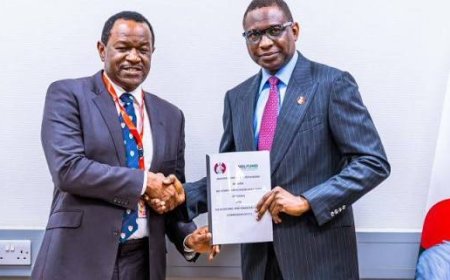
The foregoing explains why the Igbo proverb should therefore stand beside Fela's satire as the second conceptual pillar of this controversy. Fela asks us to confront the absurdity of an Unknown Government. The proverb asks us to confront the limitations of self-diagnosis. Together, they produce the central question facing Tinubu's forensic audit: Can the government discover the unknown government within itself by auditing itself through its own institutional organs? The answer should not be a categorical no. Government cooperation is indispensable. But government coordination is not the same thing as government self-exoneration. Taiwo Oyedele may coordinate the process. The systems may provide their records. The ministries may open their files. The agencies may surrender their data. But the forensic diagnosis must retain sufficient independence to say, without fear or favour. This is where the fraud occurred. This is where the controls failed. This is who authorised the breach. This is who benefited. This is who failed to prevent it. And: This is the part of government that government would rather not have us see. That is the real test of forensic integrity. The medicine man may know every herb in the forest. But when he falls ill, wisdom requires another hand to examine the pulse. Dibia anaghị agwọ onwe ya. And when the patient is the Nigerian state itself, the country deserves more than a diagnosis written by the patient. It deserves an independent reading of the symptoms. Only then can the forensic audit answer Fela's question: Who, exactly, constitutes the government—and how does government know its own? Otherwise, Nigeria may merely discover another Unknown Government, suspend a few goats, announce that heads have rolled—and leave the medicine man alone in the consulting room, prescribing another dose for himself.
What's Your Reaction?