













2027: Tinubu Cannot Use Umrah To Sanctify An Unjust Govt
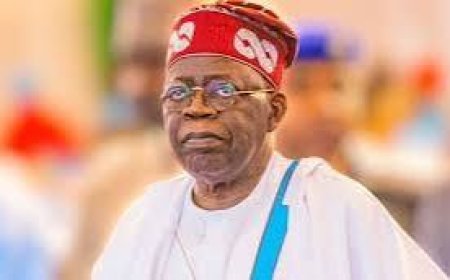
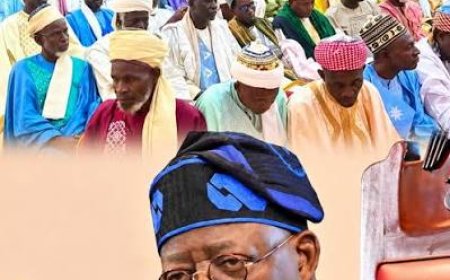
There is something deeply troubling about President Bola Ahmed Tinubu's apparent resort to religious sentiments and the publicity machinery surrounding his Umrah pilgrimage to Makkah.
By Mallam Banbagida Shehu Idris
There is something deeply troubling about President Bola Ahmed Tinubu's apparent resort to religious sentiments and the publicity machinery surrounding his Umrah pilgrimage to Makkah.
What ought to be a solemn spiritual exercise devoted to prayer, reflection, repentance and submission to Almighty Allah is increasingly being presented as a political communication spectacle, apparently designed to curry favour with the Muslim Ummah.
The sacred should never be reduced to a campaign prop, and worship should never become an instrument of political manipulation.
President Tinubu should understand that Nigerians are becoming increasingly discerning about the exploitation of religious sentiments for political advantage. We have seen this script before. In 2015, President Goodluck Jonathan similarly resorted to the publicity surrounding his pilgrimage to Jerusalem, apparently hoping to reassure and woo Christian faithful ahead of the presidential election. The political calculation did not save his presidency. Nigerians were more concerned about governance, security, economic welfare and accountability than religious symbolism. History is repeating itself, and Tinubu should learn from that experience.
The deception of the Muslim-Muslim ticket of 2023 has expired. Its electoral usefulness has been exhausted, and the religious sentiments upon which it was marketed can no longer insulate this administration from public scrutiny.
The rejection of Tinubu's style of governance increasingly transcends religious and regional considerations. Nigerians are frustrated with a government whose policies have subjected millions to crushing economic hardship, insecurity, poverty and indignity.
Tinubu cannot credibly invoke Islam as a political shield while presiding over a government whose appointments, policies and decisions raise serious questions about justice, equity, fairness and national inclusion. Neither his conduct in public office nor the political choices of his administration convincingly demonstrate the standards of integrity, compassion, accountability and piety that Islam demands of believers, particularly those entrusted with leadership.
The Qur'an is unequivocal about the responsibilities of leadership. In Surah An-Nisa (4:135), Allah commands:
“O you who believe! Stand firm for justice as witnesses for Allah, even if it is against yourselves, your parents, or close relatives.”
Similarly, Surah Al-Ma'idah (5:8) declares:
“Be just! That is nearer to righteousness.”
And in Surah An-Nahl (16:90), Allah expressly commands justice and good conduct while forbidding wickedness and oppression.
These are not decorative religious injunctions. They are fundamental principles of Islamic morality and governance. Islam does not celebrate avarice, greed, nepotism or oppression. It demands fairness, honesty, compassion, modesty and responsibility towards the less privileged.
The Prophet Muhammad (SAW), in Sahih al-Bukhari 7138, declared:
“Everyone of you is a guardian and is responsible for his charges. The ruler of the people is a guardian and is responsible for his subjects.”
This Hadith is a profound reminder that political leadership is an amanah (trust), carrying responsibilities for which every ruler will ultimately answer before Allah.
In another Hadith, recorded in Sahih Muslim 2578, the Prophet warned:
“Be on your guard against committing oppression, for oppression is a darkness on the Day of Resurrection.”
Tinubu should reflect deeply on these injunctions. No genuinely devout Muslim leader would impoverish his people, expose them to crushing economic hardship, preside over manifest inequalities and treat their suffering with apparent indifference, yet expect Almighty Allah to endorse his political conduct through religious subterfuge.
The Muslim-Muslim ticket was marketed to Nigerians as an arrangement supposedly anchored on shared religious values. But what is the value of religious identity without the corresponding obligations of justice, compassion and integrity? What is the value of pilgrimage if the moral lessons of faith are conspicuously absent from governance?
The Almighty cannot be manipulated through staged photographs, carefully choreographed publicity, social media impressions or the appropriation of sacred religious occasions. Genuine piety is demonstrated through conduct, not political theatrics.
Tinubu should therefore return from Makkah with more than photographs, headlines and social media impressions. He should return with a conscience awakened to the suffering of Nigerians, a commitment to justice and a determination to reverse the policies and practices that have impoverished the nation.
The Muslim Ummah does not need a presidential performance of piety; it needs a government that practises justice. Nigerians do not need religious theatrics; they need good governance. And Allah is not deceived by political propaganda.
What's Your Reaction?