

















That Shettima’s “Diminished Obi” Message to Diminutive Igbo Leaders.
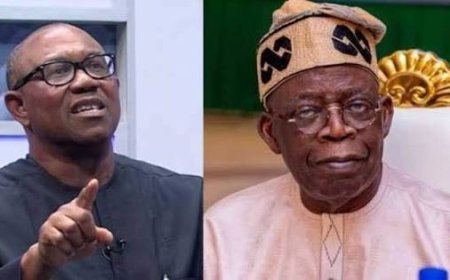
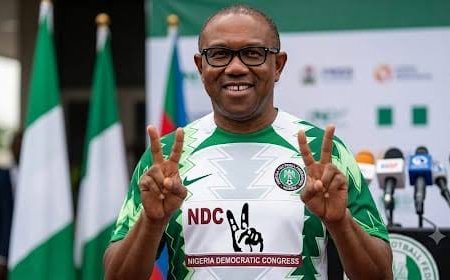
This discussion will focus on Vice President Kashim Shettima’s renewed efforts to denigrate the Nigeria Democratic Congress (NDC) presidential candidate Peter Obi, which I believe stem from his recognition that Obi is the leading contender to defeat.
By Ike Abonyi
This discussion will focus on Vice President Kashim Shettima’s renewed efforts to denigrate the Nigeria Democratic Congress (NDC) presidential candidate Peter Obi, which I believe stem from his recognition that Obi is the leading contender to defeat. We also observe Shettima’s desperate efforts to secure a place in President Bola Tinubu’s heart despite understanding that, politically speaking, his public statements on Tinubu may differ from his private hopes.
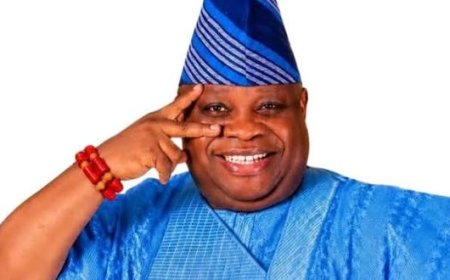
But those are actually not our focus now. Instead, this discourse is to examine Shettima’s message to the Igbo, particularly those aligned with the schools of Minister Dave Umahi and Governor Charles Soludo.
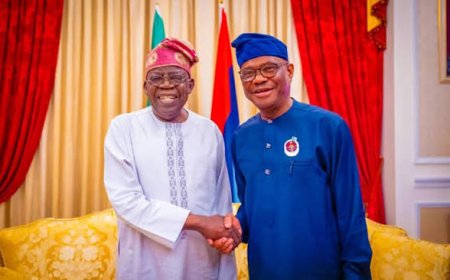
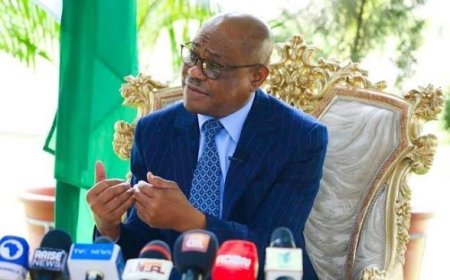
When Shettima urged Northerners to treat Atiku Abubakar with respect while describing Obi as diminished, he was passing a strong message to certain Igbo leaders on how to treat their brothers regardless of political differences.
Shettima was also trying to treat the Igbo the way his brothers regard him or how disgracefully his brothers act. With the likes of Umahi and Soludo, genuflecting and bowing disgracefully where they should not, why shouldn't Shettima, a Kanuri, describe an Igbo as diminished? These two men have rubbished the egalitarian, the foundational pillar of Ndigbo culture, their social structure, and historical governance.
For South-East politicians within the ruling All Progressives Congress (APC), Vice President Shettima’s comments provide important lessons about regional representation and internal party dynamics:
The central question in this analysis is not whether Vice President Kashim Shettima is entitled to criticise Peter Obi. In a democracy, he is. The more consequential issue is whether the language of political respect is being applied uniformly and what this episode indicates about ethnic identity, political solidarity, and the treatment of Igbo politicians within Nigeria’s power structure.
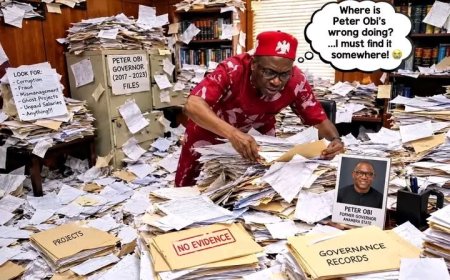
Recent reports offer two significant points of context. On October 14, 2026, Shettima criticised Obi’s economic arguments, calling him a “master of bogus statistics and incoherent economic prescriptions.” Meanwhile, he couldn't provide empirical evidence to dispute Obi's statistics.
On October 17, he spoke of a “diminished Peter Obi” while urging northern APC supporters to defeat Atiku Abubakar respectfully.
The Vice President’s latest comments about Peter Obi provide an important insight into Nigerian politics, especially for Igbo political leaders in the ruling APC and for those who have routinely attacked Obi from within his own ethnic constituency.
Shettima has the right to hold and express his political views. He may reject Obi’s economic prescriptions, dispute his statistics, challenge his interpretation of the 2023 presidential election, and oppose his 2027 ambition. Such actions are legitimate aspects of democratic competition. Political disagreement, however, should not serve as a pretext for selective respect, dismissive descriptions, or a political culture in which one opponent appears to receive less dignity than another.
The distinction between “respect” and “diminish” is noteworthy. It raises a legitimate question: why should political opponents be addressed differently in the language of respect, especially when both are experienced politicians seeking national leadership?
The issue is not whether Atiku merits respect. He does, as a former vice president and political opponent. Rather, the question is whether Obi is entitled to the same basic courtesy, irrespective of disagreements about his political standing, economic ideas, or electoral claims.
Igbo leaders in the APC should give this episode particular consideration. Their membership in a national political party is protected by their constitutional and democratic rights. No one should expect them to leave their party or automatically support Obi simply because he is Igbo.
Political loyalty, however, should not demand silence when the dignity of a fellow Nigerian, particularly someone from their own ethnic constituency, is questioned or diminished in public political discourse.
They should be capable of distinguishing legitimate criticism of Obi’s policies from language that may be understood as dismissive of his political relevance. They should also consider whether the standards of respect extended to political figures from other regions are being applied consistently to Igbo politicians.
Their responsibility is not to defend every statement Obi makes. The issue is defending a political culture in which every Nigerian is evaluated by the same standards and treated with the same fundamental dignity.
This is not a call for ethnic loyalty to supersede the national interest. It is a demand for fairness and consistency. When an Igbo politician errs, he should face criticism. When a northern, Yoruba, or any other Nigerian politician errs, that same standard should be applied.
The Shettima episode offers an important message to Igbo individuals who regularly insult, mock, or dismiss Obi, at times with more enthusiasm than opponents from other parts of the country.
Political disagreement is legitimate. Some may reject his policies, challenge his strategy, oppose his party, or favour another candidate. They are fully entitled to do so.
However, when criticism turns into personal abuse, when political differences are conveyed through contempt, and when someone's political value is rejected without serious consideration of his arguments, democratic culture is diminished.
The Shettima episode should prompt these critics to consider a fundamental question: does opposing a politician require abandoning fairness, self-respect, and the right to demand equal treatment?
If they consider Obi mistaken, they should explain why. If they regard his economic proposals as impractical, they should provide evidence. If they dispute his political strategy, they should advance a more compelling case that will be acceptable to the people. Personal abuse cannot replace serious political analysis.
Equally, being Igbo does not require anyone to support Obi. The freedom to oppose him deserves protection no less than the freedom to endorse him. What should be rejected is invoking ethnic identity to justify disrespect toward one politician while insisting that another receive courteous treatment.
Ultimately, this episode should prompt a broader assessment of Nigeria’s political practices. Do political leaders apply uniform standards of respect to those who oppose them? Are candidates judged primarily by their records, ideas, and conduct in public life, or do regional loyalties and political partnerships shape the language used about them?
These questions are significant because Nigeria requires a political culture in which disagreement neither denies a person’s humanity nor nullifies the legitimacy of his participation in the democratic process.
Political competition, however, should not devolve into a contest where respect is granted selectively.
For Igbo opponents of Obi, it is to express disagreement without descending into abuse. For Nigerian political leaders more broadly, the central lesson is that democracy is strengthened not by flattering allies or disparaging adversaries, but by holding everyone to the same standards.
The fundamental question is not whether one supports or opposes Peter Obi. It is whether one accepts that every Nigerian political leader should be evaluated fairly, irrespective of ethnicity, party affiliation, or political ambition.
Accordingly, for Igbo leaders across party lines, safeguarding regional dignity, securing equal political respect, and preventing self-inflicted political devaluation remain vital to maintaining long-term national relevance.
...Ike Abonyi is Editor @Large"
What's Your Reaction?